
US-Iran Tensions and the Emergence of a Risk-Based Economy
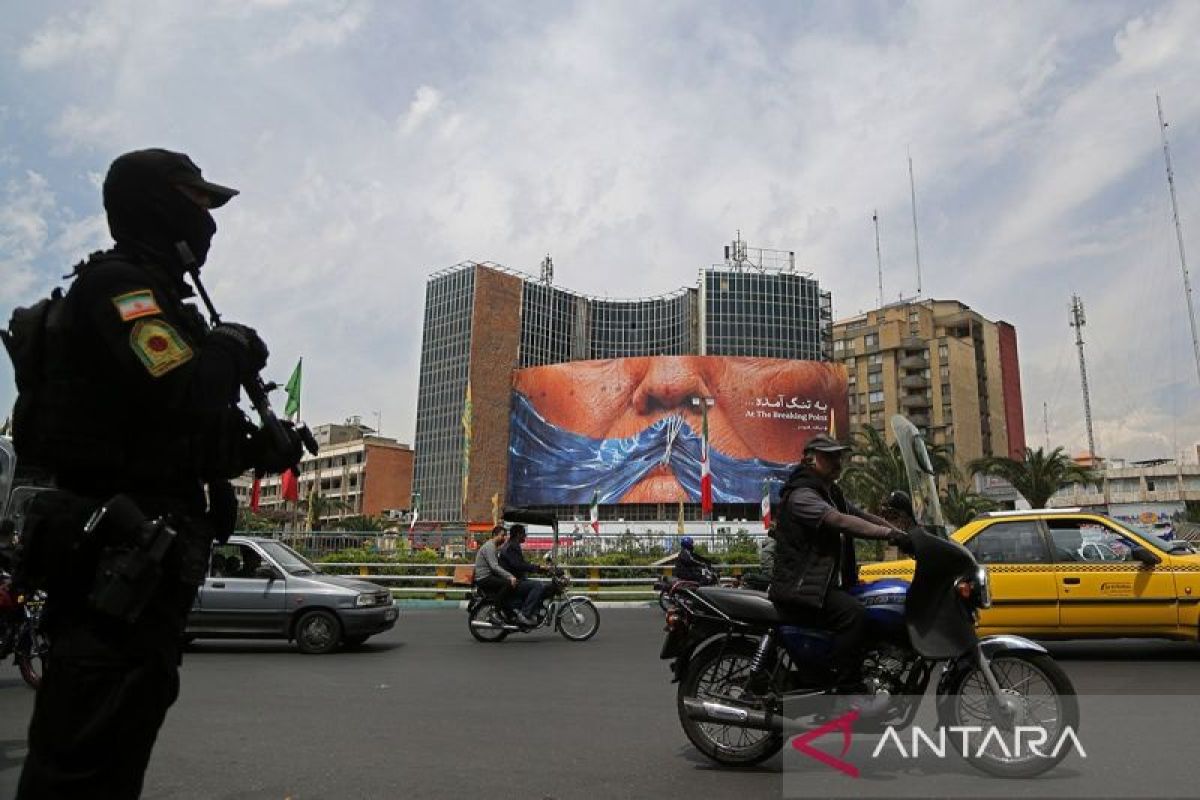
Diplomacy is no longer a swift path to resolution, but rather a means to keep tensions within manageable bounds. Jakarta (ANTARA) - The tensions between the United States and Iran are no longer merely a cause for concern. They have shaped the way the world prices goods, formulates policies, and interprets the direction of the global economy. On the surface, diplomacy continues. Communication is maintained through mediators and indirect channels. However, behind this, the pressure in the region has not truly subsided. Tensions do not cease; they are merely controlled to prevent escalation. This development indicates a significant change. Conflicts no longer progress towards resolution but persist as a condition that continuously affects the global system. The world is no longer awaiting the end of the crisis but is beginning to adapt to living with it. The Strait of Hormuz has become the most tangible point of this dynamic. This route, through which around 20 percent of the world’s oil supply passes, is now not only important geographically but also serves as a primary indicator of global risk. Each time tensions rise, markets respond not only to potential supply disruptions but also to the possibility of broader escalation. Energy prices thus fluctuate not only due to actual conditions but also because of expectations. At this point, risk is no longer outside the economic system. It has become part of the mechanism that shapes it. Risk Becomes Price The most fundamental change is evident in how energy prices are formed. In normal conditions, prices reflect the balance between supply and demand. However, in the current situation, geopolitical risk factors become an additional determinant that cannot be ignored. When tensions increase, markets immediately incorporate a risk premium into prices. This is reflected in oil price fluctuations whenever threats emerge to energy distribution routes in the Middle East region. The impact spreads quickly. Rising energy prices drive up production costs, increase goods prices, and strengthen inflationary pressures in various countries. Energy-importing countries become the most vulnerable to this pressure. However, more importantly, it is the behavioural changes in the economy that follow. Risk is no longer viewed as a temporary disruption but as a condition that must be anticipated continuously. Market participants begin to adjust their strategies. Investments are directed towards sectors more resilient to shocks. Distribution routes are chosen based on stability, not just efficiency. Economic policies also begin to consider worst-case scenarios as part of planning. As a result, economic costs rise structurally. The global system, previously built on efficiency, now bears an additional burden to manage uncertainty. In the short term, this condition pressures growth. In the medium term, it alters the foundations of the global economy. The world is beginning to move from the logic of efficiency towards the logic of resilience. This change is not always immediately visible, but its impact is real. When risk becomes part of the price, uncertainty is no longer temporary but becomes a permanent characteristic. The Global System Shifts