
US-Iran Talks to Resume After Supreme Leader's Funeral
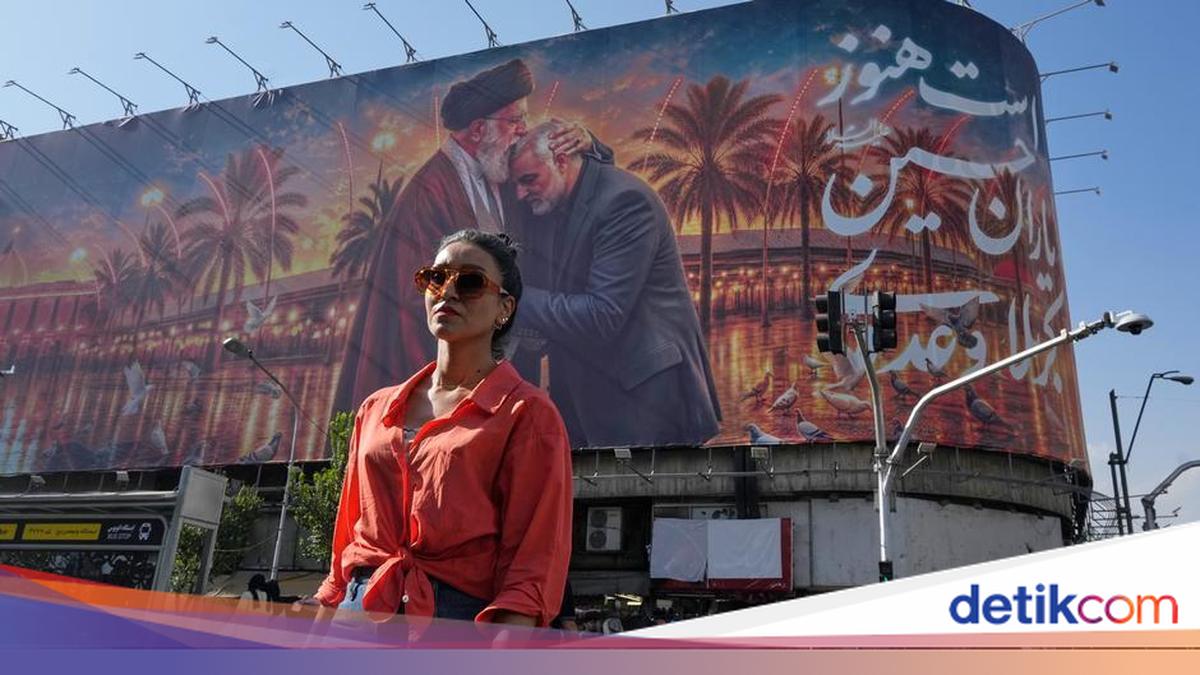
Indirect negotiations between the United States and Iran on Tuesday (1/7) in Doha, Qatar, resulted in ‘rapid progress’, according to a spokesperson for Qatar’s Ministry of Foreign Affairs. The next round of talks is expected to be held after the funeral of Iran’s late Supreme Leader, Ayatollah Ali Khamenei.
‘Mediators from Qatar and Pakistan have concluded separate meetings with US and Iranian negotiators in Doha today. The progress includes the Islamabad memorandum of understanding (MoU) which builds upon the results of the Lake Lucerne Summit,’ said Qatari Foreign Ministry spokesperson Majed Al Ansari via X on Wednesday (2/7).
‘Both parties agreed to continue discussions in the near future. This will be carried out as soon as possible after the funeral of the late supreme leader,’ next week, he added.
Approximately 30 countries are expected to send representatives to attend the funeral. Pakistani Prime Minister Shahbaz Sharif is scheduled to be present, whilst India is only sending a deputy foreign minister, Reuters reported.
The funeral procession is planned to pass through a number of symbolic locations for the Islamic Republic. The route begins from the seat of government in Tehran, then proceeds to the holy cities of Shia Islam—Qom, Karbala, Najaf—and ends in Mashhad.
Khamenei, a spiritual leader for many Shia Muslims, died at the age of 86 in his residential complex in the centre of the Iranian capital on 28 February, coinciding with the first day of US and Israeli strikes.
Iran insists there will be no direct negotiations. Previously, Iran and the US began indirect talks on Wednesday (1/7), mediated by Qatar and Pakistan in Doha. The effort sought to drive progress in negotiations and ease tensions, particularly after both sides exchanged attacks in recent times.
The two countries previously stated they would send officials to the talks to discuss the MoU for ending the war in the Middle East. However, Iran stressed it would not negotiate directly with the US.
A diplomat who declined to be named said talks between the two countries were ongoing. The diplomat had earlier said the US and Iran would participate in ‘indirect technical talks on Wednesday in Doha mediated by Qatar and Pakistan’.
According to the diplomat, the discussions were largely technical and focused on the details of implementing the MoU, as well as ‘continuing the progress achieved at the Lake Lucerne Summit’.
Last month, the MoU was agreed upon at a summit in Lucerne, Switzerland. The agreement includes a 60-day ceasefire, the reopening of the Strait of Hormuz, and the setting of a deadline towards a permanent agreement, all aimed at ending the conflict and reaching a deal on Iran’s nuclear programme.
Different public messages. The same diplomat told AFP that US envoys Jared Kushner and Steve Witkoff did not participate in the technical talks. They had met with Qatari Prime Minister Sheikh Mohammed bin Abdulrahman Al Thani on Tuesday (30/6).
Qatar’s Ministry of Foreign Affairs said the three discussed the ongoing MoU between the US and Iran, as well as developments in Lebanon.
Anna Jacobs, a non-resident fellow at the Arab Gulf States Institute, said the negotiation process was still in its very early stages and that rivalry was continuing both in front of and behind the scenes. ‘One of the positives is that they are continuing the dialogue after last week’s clashes,’ she said.
Meanwhile, H.A. Hellyer, an analyst at the Royal United Services Institute in London, noted a ‘lack of transparency’ in the talks, as both sides were ‘conveying very different messages to the public’.
Since the signing of the US-Iran agreement on 17 June, the two countries had exchanged attacks in the Gulf region. Iran attacked a commercial vessel that had deviated in the Strait of Hormuz. In retaliation, US Central Command (CENTCOM) stated it had struck 10 Iranian military targets the previous weekend.
Iran then retaliated by attacking US military bases in Kuwait and Bahrain. Both countries condemned the Iranian attacks.
Implementation challenges. On Tuesday (30/6), Iran’s chief negotiator Mohammad Bagher Ghalibaf said, ‘when a war of this magnitude ends, challenges in implementation, various incidents, and differences of opinion will remain, especially if it involves a party like the Israeli regime.’
He said the Iranian delegation in Doha would focus more on implementing the agreement relating to the Strait of Hormuz and the conflict in Lebanon. ‘The Islamic Republic is committed to ensuring this agreement is implemented, and the opposing party, namely the United States and its allies, must also fulfil their commitments,’ he said.
Clashes between the two sides appeared to be subsiding ahead of the start of the talks in Qatar. In Lebanon, fighting between Israel and Hezbollah had also relatively calmed.
Iran stressed that any agreement must include a cessation of the conflict in Lebanon and that Israel must withdraw its forces from the south of the country.
Ghalibaf also said Iran’s oil exports had risen sharply since the US lifted its blockade of Iranian ports, which had been imposed in retaliation for Iran’s closure of the Strait of Hormuz. ‘Since the blockade was lifted, we have exported more than 40 million barrels of oil,’ he told state television. ‘In contrast, during the 50 to nearly 60 days prior, we were completely unable to export a single barrel of oil.’