
US-Iran Peace: Israel Left Behind, Netanyahu's Grand Dream at Risk of Collapse
A peace deal between the United States (US) and Iran could leave Israel without strategic advantages. As Washington and Tehran prepare to sign a new agreement on Friday (19/6/2026), a difficult question arises in Tel Aviv: what was actually achieved from the war? The question emerges because several issues that have been Israel’s primary concerns remain unresolved in the latest draft agreement. Iran’s nuclear programme will still be discussed in follow-up negotiations over the next 60 days. Meanwhile, Iran’s ballistic missile capability and its network of proxy groups in the region are not included in the initial agreement. The war may have stopped, but some of the strategic objectives that were the main reasons for the conflict remain hanging.
The ceasefire between Iran and Israel was extended this week after Donald Trump’s administration and Tehran reached an agreement to continue the diplomatic process. The final document is scheduled to be signed in Geneva on 19 June. Even so, the details that have emerged so far have not answered Israel’s main concerns. Iran’s nuclear programme, which for years has been the focus of Israeli security policy, is not directly resolved in the agreement. The issue has instead been moved to the next round of negotiations scheduled to last 60 days. There is no guarantee those talks will produce a final deal. Negotiations could even be extended again if both parties fail to reach common ground. At the same time, Iran still maintains its ballistic missile capability, which has long been considered one of the greatest threats to Israel and several other countries in the Middle East.
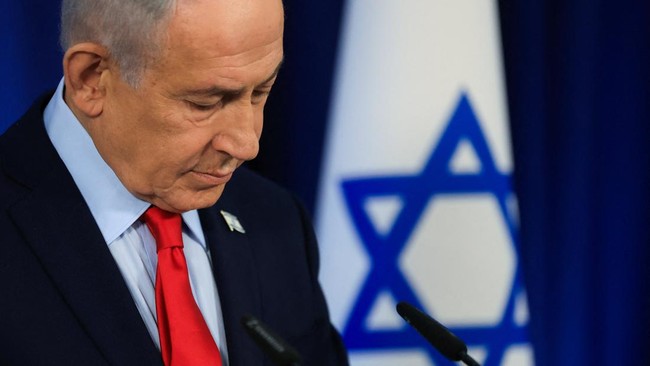
Prime Minister Benjamin Netanyahu continues to call the military operation against Iran a success. In a press conference on 15 June, he said the war had “saved Israel from the threat of nuclear annihilation.” However, developments on the ground show a more complex picture. Although a number of Iran’s strategic facilities and assets suffered damage, the regime in Tehran remains intact. Hardline groups are reportedly gaining greater influence after the conflict. Iran’s core military capabilities have also not been completely eliminated. This contrast is beginning to spark debate about the war’s final outcome.
At the start of the conflict, the United States and Israel appeared to be moving in the same direction. But the longer the war went on, the clearer it became that the two were pursuing different goals. For Netanyahu, the war was seen as an opportunity to permanently weaken Iran, even opening up the possibility of regime change in Tehran. In contrast, the Trump administration seemed more focused on one thing: reaching a deal that could stop the conflict. This difference became increasingly visible once the negotiation process began. According to a report by The Economist, Israel was not directly involved in the latest talks between Washington and Tehran. The Israeli government has not even received an official copy of the draft agreement being discussed. For many observers in the country, this development signals that Tel Aviv’s influence over the war’s final direction is waning.
Tensions are also beginning to show in the relationship between Donald Trump and Benjamin Netanyahu. One turning point occurred when Israel launched an attack on Beirut hours before the ceasefire was announced. The attack was carried out after Hezbollah launched drones again. Instead of derailing the diplomatic process, the move actually accelerated Washington’s efforts to finalise the deal. In several subsequent interviews, Trump openly showed his irritation with Netanyahu. He called his counterpart “not a good judge of character” and described him as “very difficult to work with.” Such statements are rarely heard from a US president towards an Israeli leader, especially when the two countries have just conducted joint military operations for more than a month.
Although directly involved in the conflict, Israel is not part of the negotiations determining its resolution. Several issues that have been primary concerns also remain without clear answers. Iran’s nuclear programme will still be discussed in follow-up talks. Its ballistic missile capability is expected not to be included in the initial agreement. Another concern comes from Hezbollah in Lebanon. The group, long considered one of Iran’s strongest proxies, could potentially gain additional protection from the new deal. Iran is also reportedly pushing for the withdrawal of Israeli troops from occupied areas in southern Lebanon to be included in the diplomatic process. Israel joined the war, but it did not join in deciding how the war ends.
For years, Iran has been one of the issues Netanyahu has most frequently raised in domestic politics. Because of this, expectations for the outcome of this war were already high. Netanyahu can still point to the damage Iran suffered during the conflict. But the regime in Tehran remains intact, its nuclear programme has not been resolved, and some key security issues are still awaiting negotiation results. The matter becomes increasingly sensitive because Israel is scheduled to face elections next October. Israel succeeded in inflicting significant damage on Iran’s military assets and capabilities. However, the final outcome of this conflict will likely not be determined by airstrikes, but by the contents of the agreement being negotiated in Geneva.