
US-Iran Peace Deal: Rupiah Still Awaiting Positive Impact
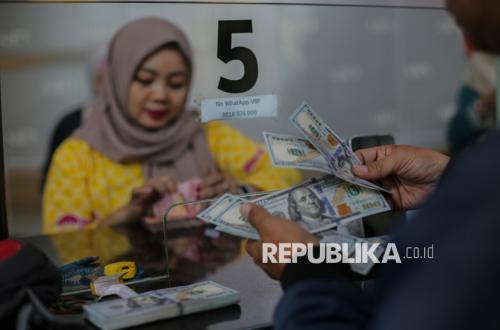
A peace deal between the United States (US) and Iran is considered to bring positive sentiment to the global economy. However, its impact on the strengthening of the rupiah exchange rate and domestic financial markets is not expected to occur instantly.
Dipo Satria Ramli, an economist at the Center of Reform on Economics (CORE) Indonesia, stated that the easing of geopolitical tensions in the Middle East has the potential to suppress energy prices and reduce uncertainty in global financial markets.
“Broadly speaking, the development of negotiations between the US and Iran is a very good signal for the global economy, including Indonesia,” Dipo said when contacted in Jakarta on Wednesday (17/6/2026).
According to Dipo, global markets responded positively to the negotiation developments between the two countries. One indicator is the decline in world oil prices following signals of a peace agreement.
“The market immediately responded positively, reflected in the falling world oil prices. Last night I checked, the price of Brent was around 80 US dollars per barrel,” Dipo said.
Nevertheless, Dipo cautioned that this positive sentiment does not necessarily directly boost the rupiah or the Jakarta Composite Index (IHSG). He believes the market still needs time to see the real impact of the normalisation of relations between the two countries on the global economy.
“For the IHSG and the rupiah, they may not improve immediately. There is indeed a reduction in risk, or risk-off, but it will take time for trade routes to return to normal and for Indonesia’s country risk to decline,” Dipo continued.
Dipo assessed that the weakening of the rupiah in recent times has not been influenced solely by external factors. A number of domestic factors remain a concern for investors when assessing the prospects of Indonesian financial assets.
“Because up to now, the Indonesian currency has weakened while neighbouring currencies like the Singapore dollar, Malaysian ringgit, and Thai baht have actually strengthened. This means the rupiah’s weakening is not solely due to global factors,” Dipo said.
According to him, the improvement in global sentiment due to the easing of geopolitical conflict can indeed provide room for financial market stabilisation. However, the strengthening of the rupiah in the medium term still depends on improvements in domestic factors that influence Indonesia’s risk perception in the eyes of investors.
Source: jawawa.id (https://jawawa.id/newsitem/us-iran-peace-deal-rupiah-still-awaiting-positive-impact-1781677209)
Originally published by Republika (https://ekonomi.republika.co.id/berita/tgrcf1416/asiran-berdamai-rupiah-masih-menanti-dampak-positif), translated from Indonesian