
US-Iran Negotiations Remain Stalemated, with China Holding the Key
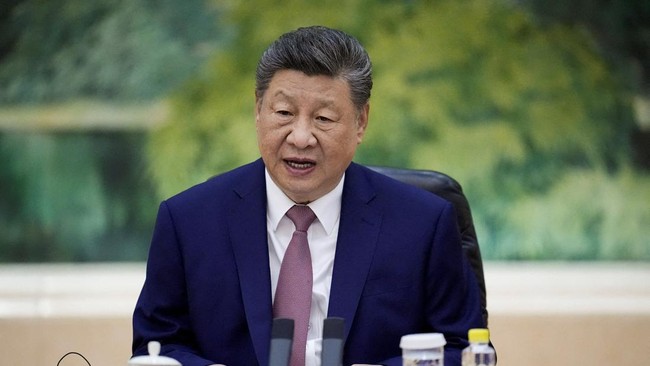
China is increasingly affirming its role as a key player in efforts to defuse the conflict between the United States (US) and Iran. This comes amid a fragile ceasefire situation fraught with uncertainty.
US President Donald Trump previously revealed Beijing’s involvement behind the achievement of a temporary ceasefire between Washington and Tehran. China is even said to have encouraged Iran to come to the negotiating table.
As time progresses, this role has become more apparent. The Chinese government is actively calling for an end to the conflict and emphasising the importance of maintaining the momentum of the achieved ceasefire. Chinese Foreign Minister Wang Yi stressed that the top priority now is to prevent the conflict from reigniting and to maintain regional stability.
Beijing has also shown support for the diplomatic path after the US extended the ceasefire period to give Iran time to prepare a joint proposal.
“The current situation is at a crucial stage. The urgent priority is to prevent the conflict from recurring,” said a spokesperson for the Chinese Foreign Ministry, as quoted by Newsweek on Thursday (23/4/2026).
On the other hand, economic interests are a strong factor behind China’s manoeuvres. The Middle Kingdom has a significant dependence on energy supplies from the Gulf region, including Iran. Disruptions in the Strait of Hormuz could pressure global energy supplies and directly impact China’s economy.
Indeed, the latest tensions highlight that this risk is becoming increasingly real. Iran has asserted that opening the Strait of Hormuz is impossible while the conflict and blockade persist, worsening disruptions to global trade.
In addition to energy interests, China also maintains strategic relations with Iran, including in economic and political sectors. These ties give Beijing a unique position as one of the few parties that still has strong communication access with Tehran, while maintaining relations with Washington.
A Chinese analyst from Planet Nine, Tuvia Gering, assessed that Beijing’s closeness to Iran’s power structures, particularly the Islamic Revolutionary Guard Corps (IRGC), provides a distinct advantage.
“With figures close to the IRGC, China likely views the organisation as remaining a dominant force in Iranian politics,” he said.
He added that economic ties through oil purchases allow China to indirectly support Iran’s power structures. “This is an advantage for Beijing because these relations are already institutionalised,” he stated.
Chinese President Xi Jinping has begun sending stronger signals by pushing for regional stability and calling for the reopening of strategic trade routes such as the Strait of Hormuz.
Meanwhile, spokesperson for the Chinese Embassy in Washington, Liu Pengyu, affirmed that his country will continue to play an active role in defusing the conflict.
“China has maintained an objective and fair position and has strived to help achieve a ceasefire and end the conflict,” he said. “To resolve the issue, the conflict must be stopped as soon as possible, and all parties need to exercise restraint.”