
US-Iran Negotiations Deadlocked, Arab Countries Begin to Panic and Worry
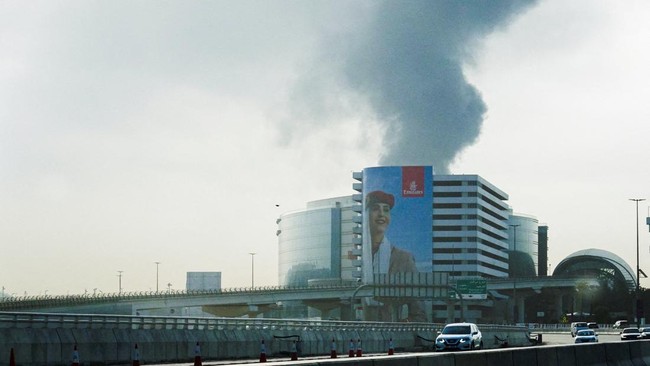
Gulf Arab countries are increasingly gripped by anxiety as the direction of negotiations between the United States (US) and Iran becomes ever more unclear. Rather than easing tensions, the talks are feared to strengthen Tehran’s strategic position over the Strait of Hormuz.
Several officials and analysts predict that the next round of negotiations will focus more on limiting uranium enrichment and managing Iran’s influence in the Strait of Hormuz, rather than addressing missile issues and regional proxies that have long posed direct threats to Gulf states.
Sources in the Gulf region view this shift in focus as dangerous. They worry that the approach merely “manages” Iran’s influence rather than reducing it, in order to maintain global economic stability.
“In the end, Hormuz will be the red line. It wasn’t an issue before, but now it’s a priority. The target has changed,” said a source close to Gulf government circles, as quoted by Reuters on Tuesday (21/4/2026).
This concern has intensified following a statement by Dmitry Medvedev, Deputy Chairman of Russia’s Security Council, who described the Strait of Hormuz as Iran’s “nuclear weapon” in a geopolitical context.
“It is unclear how a ceasefire between Washington and Tehran will proceed. But one thing is certain: Iran has tested its ‘nuclear weapon’. That is the Strait of Hormuz. Its potential is unlimited,” he wrote.
From Iran’s perspective, this view is affirmed. A senior Iranian security source described the Strait of Hormuz as a “golden asset” long prepared as a strategic deterrent tool.
“Iran has prepared itself for years for the scenario of closing the Strait of Hormuz. This is one of the most effective tools, a geographical influence that serves as a strong deterrent,” he said.
Even a source close to Iran’s Revolutionary Guard stated that the taboo on using Hormuz has now been “broken”, making it a real bargaining tool in international negotiations.
However, for Gulf countries, the excessive focus on Hormuz overlooks other major threats, such as missile attacks and activities by Iran’s proxy groups in the region. Ebtesam Al-Ketbi, President of the Emirates Policy Center, views the situation not as an effort to resolve the conflict, but as deliberate management of tensions.
“What is happening now is not a historic resolution, but engineered ongoing conflict,” she said. “Who bears the brunt of missiles and proxies? The Gulf states. But those issues are being ignored.”
Analysts also warn that this approach risks creating illusory stability that benefits the US and Iran, but leaves the Gulf in security uncertainty.
Since the conflict intensified on 28 February, Gulf countries have suffered significant economic impacts, from attacks on energy infrastructure to surges in export and insurance costs. Alternative distribution routes are more expensive and remain vulnerable to the same threats.
Gulf diplomats are now pressing Washington not to rush in lifting sanctions against Iran. They want a gradual approach to test Tehran’s commitments, particularly regarding its missile programme and proxy networks.