
US-Iran Deal Rocks Israel, Netanyahu Suddenly on the Brink
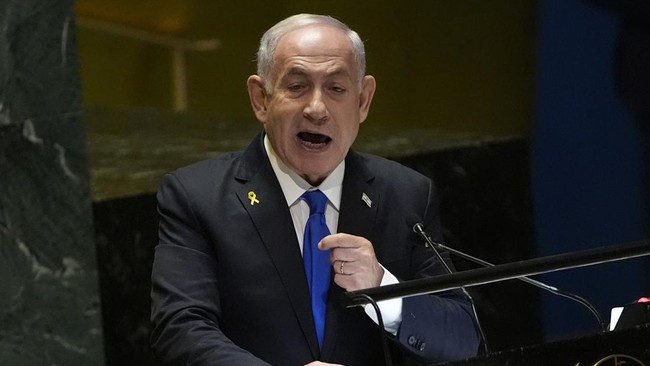
A unilateral move by the United States to end the total war against Iran has triggered severe political upheaval within the Israeli government. Prime Minister Benjamin Netanyahu is now under pressure after a draft peace agreement was released without any contribution from Tel Aviv.
The end of the three-and-a-half-month armed conflict has sparked a wave of sharp criticism from various quarters in Israel. The Tehran authorities, portrayed for decades as the greatest existential threat to Israel, have proven to remain firmly standing and are even considered stronger thanks to their full control over the Strait of Hormuz.
The situation near the domestic border is also increasingly complicated, with the Israeli military having to reconsider its operations in Lebanon to contain Hezbollah. Any new aggression risks damaging the framework of diplomatic relations between the US and Iran, which are scheduled to formalise the agreement this weekend.
Mass Rejection
A wave of strong rejection of this legal product came simultaneously from centrist factions and far-right groups in the Israeli parliament. Key opposition figure Gadi Eisenkot delivered an openly sharp critique of Netanyahu’s leadership failure ahead of the upcoming elections.
“This is the pathetic result of a failed government. There is a very wide chasm between Netanyahu’s empty promises of total victory and the outline of the agreement with the US and Iran,” Eisenkot criticised regarding the weakness of Israel’s diplomatic bargaining position, as quoted by Al Jazeera on Wednesday (17/6/2026).
An uncompromising stance was also shown by right-wing ministers such as Itamar Ben-Gvir and Bezalel Smotrich, who jointly labelled it a bad deal. Ben-Gvir stressed that Israel must not submit to the agreement made between Trump and Mojtaba Khamenei in order to preserve the dignity of its national sovereignty.
Netanyahu himself is acutely aware that stopping the war now is a highly unpopular move in the eyes of his domestic constituents. Consequently, he is working hard to build a narrative that he remains an equal partner of the US in the war, while shifting all responsibility for ending the conflict onto Trump’s personal decision.
“We have removed, for years to come, the danger that hung over us of the annihilation of the Israeli population. That is what we did. We saved the State of Israel from destruction,” Netanyahu claimed in his press conference in an effort to construct a narrative of historic victory.
However, Netanyahu’s unilateral claim is deemed not credible and has not been well received by the domestic public. Former Israeli government adviser Daniel Levy cited a colonial racist arrogance and hubris in thinking that dragging the US military into the war would automatically destroy the Iranian regime, which in reality did not happen.
Iran on the Front Foot?
The domestic debate in Israel has now shifted to Iran’s new status as a dominant regional power and its potential to become a nuclear state post-war. Although Trump has guaranteed that Iran will never possess nuclear weapons, the oversight mechanism for Tehran’s uranium stockpile is still being questioned by many military observers.
Many in Iran believe their country emerged victorious from the war, particularly after striking back at the global economy by closing the Strait of Hormuz. On this basis, the US is predicted to face immense difficulty in persuading Tehran to willingly surrender all of its enriched uranium stockpile.
“Netanyahu has brought a strategic disaster upon Israel. He started a war with Iran aimed at toppling its regime, but the regime still stands and has now become more radical. Iran will rebuild its missile arsenal,” asserted Ahron Bregman, a senior observer at the Department of War Studies at King’s College London.
Uncertainty also shrouds the future of Israeli military operations in Lebanon, given that Iran consistently demands a halt to aggression against Hezbollah as an absolute condition for peace. Diplomatic relations between Tel Aviv and Washington are predicted to cool further after Trump openly stated that Netanyahu must act more responsibly towards neighbouring countries.
Bregman even predicts that Lebanon will become the main flashpoint for a new, inevitable round of fighting between Israel and Iran in the future. He doubts any US president would be sane enough to be dragged back into a war against Iran, considering the geographical factors and the economic weapon of the Strait of Hormuz are entirely in Tehran’s favour.
Although Netanyahu is the longest-serving prime minister in Israel’s history and an expert at turning the tables ahead of elections, his record of failures is seen as mounting. Former Israeli Ambassador to New York, Alon Pinkas, concluded that the public now views Netanyahu as a leader who squandered a golden opportunity when all military factors and US support were in his favour.
“He is right that he has changed the political landscape of the Middle East. However, he did it to Iran’s advantage,” Pinkas concluded, summing up Netanyahu’s 30-year political legacy which has ultimately ended in a blunder.