
US-Iran Conflict Threatens Global Fertiliser Supply, Food Prices Could Soar
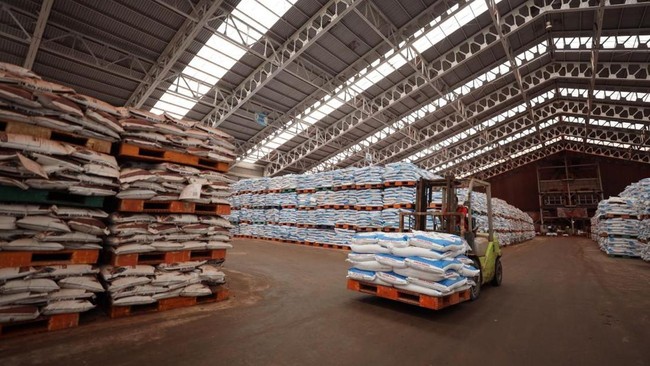
Chief Executive Officer of Fertiglobe, Ahmed El-Hoshy, has warned that governments worldwide must take immediate steps to ensure fertiliser trade continues to flow, as the conflict in the Middle East could trigger a spike in grain prices and worsen hunger among the world’s poor. Financial support for farmers is also deemed crucial so they can still afford fertiliser amid sharp price increases.
Fertiglobe, a fertiliser producer majority-owned by Abu Dhabi National Oil Company (Adnoc), uses natural gas as its primary feedstock. Since tensions escalated in the Gulf region, prices of nitrogen fertilisers such as ammonia and urea have risen significantly. The situation has been exacerbated by disrupted supply from the Middle East and soaring global gas prices due to energy infrastructure disturbances in the area.
El-Hoshy noted that around 30% of urea exports from the Gulf region are currently unable to be shipped out. Although Fertiglobe has rerouted some distribution via land to alternative ports, this capacity is insufficient to offset the bottlenecks caused by restricted access through the Strait of Hormuz. The company continues to produce fertiliser at its Abu Dhabi facilities and store it at various locations, while also operating large production sites outside the Gulf that remain unaffected.
“Failure to move fertiliser supplies or provide financial support risks worsening food shortages and triggering grain price increases that may take a long time to come down,” El-Hoshy said, citing the Wall Street Journal. He emphasised that fertiliser products play a vital role in the global food system, estimating that roughly half the caloric intake for over 8 billion people depends on fertiliser use. When prices rise and supply is limited, farmers tend to reduce application, ultimately suppressing agricultural productivity.
His assessment aligns with the United Nations Food and Agriculture Organisation (FAO), which has similarly warned that systemic shocks in agriculture and food could trigger a severe global food price crisis. As a preemptive measure, the European Union has prepared financial aid amounting to €540 million, or approximately US$625 million, to help farmers purchase fertiliser, aiming to safeguard food security amid soaring agricultural production costs.
Analysts view the conflict’s impact on the fertiliser and agriculture sectors as a slow-motion tragedy. The greatest threat is felt by countries in the Global South, which are currently entering their planting season. Limited access to financing makes farmers in these regions more vulnerable to fertiliser price hikes. “The time-lag effect makes this situation dangerous because it could take months for supplies leaving the region to reach farmers, and missing the main planting season in the Global South risks affecting harvests months down the line,” El-Hoshy said. “Farmers in Sub-Saharan Africa, Latin America, and India are heavily dependent on imports and may have to struggle without nitrogen fertiliser.” In some lower-income countries, food production could decline. “And that, with a continuously growing population, could become a very serious problem,” he added.
Meanwhile, markets still hold hope for a peace deal between the United States and Iran. The prospect of the Strait of Hormuz reopening briefly pushed Brent crude oil prices below US$90 per barrel. However, market participants remain cautious, given that several previous negotiations failed to yield results despite fleeting optimism.
Source: jawawa.id (https://jawawa.id/newsitem/us-iran-conflict-threatens-global-fertiliser-supply-food-prices-could-soar-1781358691)
Originally published by CNBC Indonesia (https://www.cnbcindonesia.com/news/20260613174052-4-742596/perang-as-iran-ancam-pasokan-pupuk-dunia-harga-pangan-bisa-melonjak), translated from Indonesian