
US-Iran Conflict 'Eases' as Major War Shifts to This Arab Country
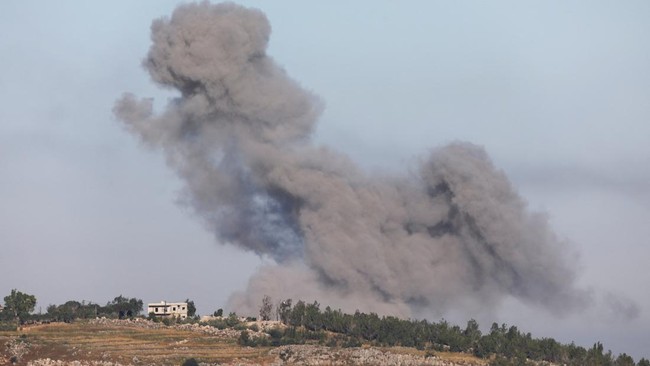
The Israel-Lebanon border conflict has entered a more dangerous phase. Israeli Prime Minister Benjamin Netanyahu has ordered his military to expand ground operations into Lebanon despite a ceasefire being announced over six weeks ago. The move marks a recent escalation in the fight against Iran-backed Hezbollah and has raised international concerns about the conflict spreading across the region. In a statement on Sunday (31 May 2026), Netanyahu confirmed he had instructed the Israeli military to deepen operations in southern Lebanon. ‘I have instructed the military to expand its ground maneuvers in Lebanon,’ Netanyahu said, according to Reuters. The war in Lebanon has become the largest spillover of the Iran conflict, which began when Hezbollah launched rockets and drones into Israel on 2 March in support of its ally Iran. Since then, Israeli airstrikes and mass evacuation orders have forced over 1.2 million Lebanese to flee their homes. Lebanon’s government reports at least 3,370 deaths from Israeli military operations, while Israel states 24 soldiers and four civilians have been killed during the same period. Tens of thousands of Israelis in the north have also been forced to abandon their homes due to Hezbollah rocket and drone attacks. In recent developments, the Israeli military announced its troops have captured the 900-year-old Beaufort Castle and strategic ridges in southern Lebanon. This success came a day after one of Hezbollah’s most intense attack waves since the April ceasefire struck northern Israel, prompting school closures and activity restrictions in several areas. The Israeli military stated the operation at Beaufort Castle focused on securing Beaufort Ridge and Wadi al-Saluki area, aiming to weaken Hezbollah’s combat capabilities and infrastructure allegedly built under Iranian guidance. One Israeli soldier was reported killed in the operation. Capturing Beaufort Castle provides significant strategic advantage for Israel. The historic site, situated at a high elevation, allows Israeli forces to monitor much of southern Lebanon and northern Israel. According to the Israeli military, this area was previously used to launch attacks on Israeli settlements. This marks the first time Israel has regained control of Beaufort Castle since May 2000, when it withdrew its forces from southern Lebanon after an 18-year occupation. Israeli Defence Minister Israel Katz vowed to maintain control of the castle as part of Israel’s security zone in southern Lebanon. ‘The campaign is not over,’ Katz said. ‘We are all determined to destroy Hezbollah’s strength.’ Katz also shared photos of Beaufort Castle adorned with Israeli and Golani Brigade flags on social media. No official response has been issued by the Lebanese government or Hezbollah regarding the latest developments. However, Talal Atrissi, a sociology professor at Lebanon University known to be close to Hezbollah, said the Israeli flag’s placement on Beaufort Castle carries broader political significance. Atrissi stated the images were intended to show the Israeli public that the military can still achieve key targets in Lebanon despite Hezbollah’s drone challenges. In addition to Beaufort, the Israeli military reported operations around Nabatieh, a major Hezbollah stronghold in southern Lebanon. Meanwhile, Hezbollah has increasingly deployed low-cost, easily assembled suicide drones that are hard to intercept by Israel’s air defence systems, reportedly killing several Israeli soldiers in southern Lebanon. Previously, Israeli forces had control up to the Litani River. They are now advancing further north towards the Zaharani River, about 10 kilometres from their previous position. Netanyahu stated the operation’s aim is to ‘deepen and expand our grip in areas previously under Hezbollah control.’ Pressure to expand operations also comes from Netanyahu’s political rival, Naftali Bennett, who is expected to challenge him in upcoming elections and has called for harsher action against Lebanon, including possible strikes near Beirut’s outskirts. On Sunday, the Israeli military issued evacuation warnings for residents south of the Zaharani River. According to Lebanon’s state news agency, eight people died in overnight airstrikes targeting Deir El Zahrani village on Saturday night. Throughout Sunday, Lebanese security sources and state media reported over 40 Israeli strikes across southern Lebanon. Rising combat intensity prompted France to request an emergency UN Security Council meeting on Monday. The French Foreign Ministry said the move was due to concerns over escalating violence in Lebanon. The request came just days after the US brought together Israeli and Lebanese defence representatives in Washington to push for a US-mediated peace plan and discuss Hezbollah’s disarmament. On 15 May, both sides had agreed to a 45-day ceasefire extension.