
US-Iran Conflict Causes GPS Signal Interference for Aircraft Reaching Jakarta
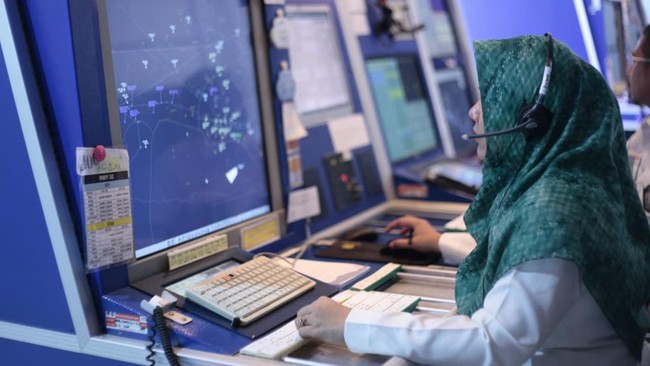
GPS signal interference in aircraft has become a significant challenge for the aviation industry. These disruptions are not limited to conflict zones but can persist even as aircraft enter the airspace of their destination countries.
Nurtjaheway Utomo, Director of Security, Safety, and Standardisation at AirNav Indonesia, stated that several aircraft arriving from the Middle East experienced GPS disruptions following the outbreak of the US-Iran conflict.
“Initially, following the start of the US-Iran war, many aircraft coming from the direction of the Middle East experienced GPS interference. After experiencing disruptions around the Middle East, the GPS signals remained abnormal even upon landing in Jakarta,” Nurtjahjo said during the Transport Journalists Forum (Forwahub) workshop in Bandung on Friday.
This condition prevented several flights from utilising the RNP approach, which relies on satellite navigation. Consequently, aircraft had to switch to available alternative navigation methods to ensure that flight and landing processes continued safely.
“As a result, they requested to revert to conventional flight procedures, using the ILS approach. However, similar interference was subsequently recorded around Jakarta’s airspace,” he added.
Unlike the RNP approach, which relies on satellite navigation to guide aircraft to the airport, the ILS approach uses radio signal guidance from ground-based equipment to assist aircraft during landing. Although AirNav cannot confirm the exact source of the interference, they have recorded the incidents and are making necessary adjustments to air navigation services.
Nurtjahjo emphasised that GPS signal interference does not mean aircraft lose all navigational capabilities. Ground-based navigation systems remain available as alternatives when satellite-based systems are disrupted.
“We do not know the source of this interference, but we can only record it and reiterate that due to the GPS disruption, these flights must revert to conventional flight methods, meaning they rely on ground-based navigation tools such as AVOR, ILS, and others,” said Nurtjahjo.
Under this mechanism, flight safety is maintained. However, the change in navigation procedures has consequences for air traffic management, particularly when the volume of flights requiring service is high.
“Therefore, safety is not compromised, but ultimately, queues for some flights have become longer. The disruption primarily affects air traffic management rather than flight safety,” Nurtjahjo concluded.