
US-Iran Conclude First Round of Peace Negotiations in Switzerland
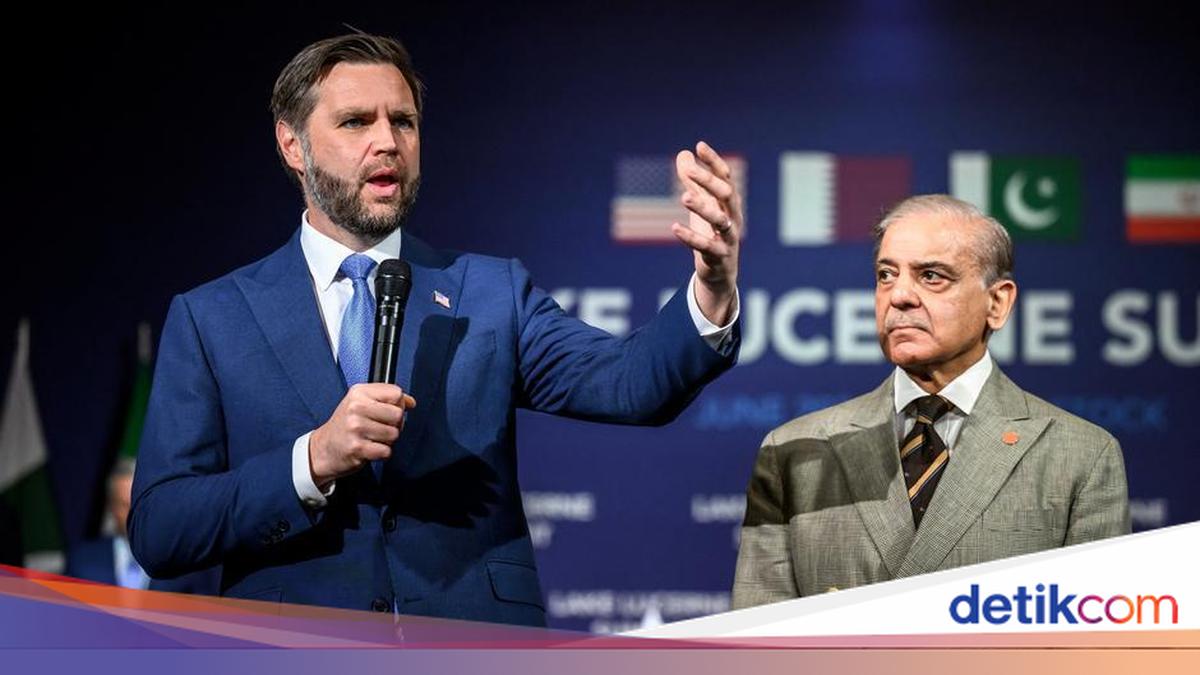
The first round of negotiations between the United States and Iran in Bürgenstock, Switzerland, has concluded. Mediators from Qatar and Pakistan stated that both parties made progress in the discussions and agreed on a roadmap towards a final agreement within the next 60 days.
“The Lake Lucerne Summit took place in a positive and constructive manner. There was progress on an agreement for further technical talks,” read a joint statement released by Pakistan’s Ministry of Foreign Affairs on Monday (22/6).
Mediators said the two delegations also agreed to form “a High-Level Committee that will provide political oversight during the mediation process.”
“The heads of the negotiating teams will report periodically to the High-Level Committee and lead agreements on nuclear issues, sanctions, as well as monitoring and dispute resolution groups to ensure the MoU is implemented effectively, and also address various other issues,” the statement read.
Both parties also agreed on a roadmap towards a final agreement within 60 days. After that, “technical talks” will follow. Meanwhile, technical discussions are scheduled to continue until the end of this week.
Hormuz and Lebanon included in the agreement
The statement noted that “communication channels between the two parties have been established in paragraph 5 of the MoU. This is done to avoid incidents and misunderstandings, as well as to ensure the smooth passage of commercial vessels through the Strait of Hormuz.”
The delegations also formed a de-confliction cell involving both parties, the Republic of Lebanon, and the mediators. This coordination mechanism is to be used “to ensure the cessation of military operations in Lebanon is adhered to in accordance with the MoU.”
Following the initial agreement, Iranian Foreign Minister Abbas Araghchi said on platform X that, “The mediation by Pakistan and Qatar has resulted in significant progress to end the war in Lebanon.”
“Oil and petrochemical exports are freed, the blockade is lifted, some frozen assets are released, and a major reconstruction and development plan is launched for Iran,” Araghchi added.
Tensions flared during the negotiations
Previously, amid the ongoing negotiations, tensions between the US and Iran were still visible through statements from officials of both countries.
United States President Donald Trump had said the US could launch attacks against Iran again. “Iran must immediately stop its proxy groups in Lebanon that are paid handsomely to cause trouble. If not, we will hit Iran very hard again, like we did last week, even harder!” Trump wrote on the Truth Social platform.
Head of the Iranian negotiating team and Parliament Speaker Mohammad Bagher Ghalibaf warned the United States not to threaten Iran during the negotiations. “Do they not think: if their threats were effective, they would not be in such a desperate situation as they are now? We do not take American threats into account,” Ghalibaf wrote on platform X.
“They had better be careful with their statements. Our armed forces are ready to respond in different ways. Whatever they say, we are the ones who act,” he continued.
Iran demands that Israel, a US ally, halt its invasion of southern Lebanon as part of the peace negotiations with the US. Before the peace talks in Switzerland began, Iran and the United States had signed a memorandum of understanding (MoU) stipulating that both parties must “refrain from threatening or attacking each other.”
Israel will not withdraw troops from Lebanon
On the other hand, during the negotiation process, Israeli Defence Minister Katz asserted that Israeli forces would remain in southern Lebanon. “There are no restrictions on the Israeli army in Lebanon to act when there is a threat. As Prime Minister Benjamin Netanyahu and I have said, Israeli forces will not withdraw from the security zone in Lebanon,” Katz said in a statement.
The security zone itself extends approximately 10 kilometres into Lebanese territory. Israel is therefore in the area to protect its northern region from the Hezbollah group, which is also backed by Iran.
Meanwhile, the Lebanese government considers the presence of Israeli forces in southern Lebanon as military control. Hezbollah also claims to have fought Israeli forces attempting to expand control in the region.
Iran has said it will not agree to further agreements with the United States before the conflict in Lebanon ends. In response to the tensions in Lebanon, Iran also claims to have closed the Strait of Hormuz.