
US-Iran Begin Peace Talks, Fate of the Strait of Hormuz in Focus
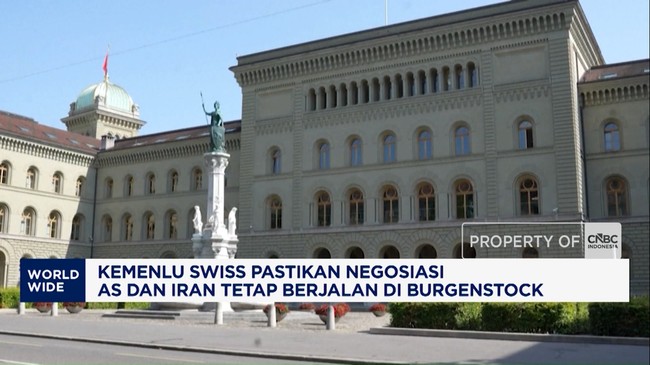
The United States and Iran began peace talks at the Buergenstock mountain resort in Switzerland on Sunday (21/6/2026). The meeting, led by US Vice President JD Vance and Iran’s chief negotiator Mohammad Baqer Qalibaf, aims to find a long-term solution to the war that has been ongoing for nearly four months.
According to Reuters, the negotiations are taking place amid differing views regarding the Strait of Hormuz, a vital global energy trade route. Iran claims to have closed the strait in response to Israeli attacks in Lebanon, while the US military maintains that commercial shipping traffic is proceeding normally.
Both countries previously agreed to a 60-day ceasefire to support the negotiation process. However, Iran’s Revolutionary Guard Corps announced the closure of the Strait of Hormuz on Saturday and warned that ships passing through would face security risks.
This situation could complicate the implementation of a temporary agreement mediated by Pakistan and signed by US President Donald Trump and Iranian President Masoud Pezeshkian last Wednesday. The agreement was designed to end the conflict that has shaken the Middle East region in recent months.
JD Vance arrived in Switzerland on Sunday morning after landing at Emmen Air Base with his wife, Usha Vance. He expressed hope that the talks would yield progress on the issue of Iran’s nuclear programme as well as the implementation of the ceasefire in Lebanon.
According to the Swiss Foreign Ministry, official discussions began on Sunday morning involving a number of international mediators. Vance also anticipated the negotiation process would last several days to address various issues still in dispute.
Tensions escalated after Iran’s Revolutionary Guard accused Israel of violating ceasefire commitments through attacks in Lebanon. Iran considers these actions contrary to the agreement previously supported by the United States.
Meanwhile, US Central Command stated that 55 commercial vessels transited the Strait of Hormuz on Saturday, carrying over 17 million barrels of oil to global markets. Washington affirmed it would guarantee the security of the shipping lane and ensure trade activities continue.
President Donald Trump stated he would not impose fees on ships transiting the Strait of Hormuz during the ceasefire period or afterwards. However, he opened the possibility of implementing transit fees if the peace talks fail to reach an agreement.
From the Iranian side, Mohammad Mokhber, an advisor to Supreme Leader Ayatollah Mojtaba Khamenei, accused the US of not yet implementing the initial points of the peace agreement, including halting the conflict on all fronts. He stressed that energy flows from the Middle East would remain disrupted as long as the agreement’s implementation has not tangibly progressed.
Nevertheless, Iranian Oil Minister Mohsen Paknejad expressed optimism about opportunities for economic cooperation if all parties adhere to the spirit of the agreement. According to him, Iran has prepared hundreds of investment opportunities and various contract schemes for international partners.
The Iranian delegation in Switzerland also included Foreign Minister Abbas Araqchi as well as several officials from security, central bank, and energy sectors. Meanwhile, the US negotiating team included special envoy Steve Witkoff and Jared Kushner, who is also President Trump’s son-in-law.
Pakistan, as the main mediator, also sent Prime Minister Shehbaz Sharif and Army Chief General Syed Asim Munir to the negotiation site. Their presence is expected to help bridge the differences between Washington and Tehran.
Although a ceasefire has been implemented, clashes in Lebanon continue. Lebanese civil defence authorities reported at least 20 people killed by Israeli attacks on Saturday, just hours after the ceasefire took effect.
Israel stated the attacks were a response to actions by the Iran-backed Hezbollah group. The Israeli government also stressed it is not part of the Iran-US agreement and will maintain its troops in the areas of Lebanon it currently occupies.
A survey conducted by the Hebrew University of Jerusalem showed that a majority of Israelis believe Iran gained more from the joint Israeli-US military campaign. Nearly 90% of respondents also felt the war’s objectives had not been achieved, and less than a third believed claims of major success made by Prime Minister Benjamin Netanyahu.
Lebanon’s Health Ministry stated Israeli attacks have killed more than 4,000 people since early March, including medical personnel, women, and children. Meanwhile, Israeli authorities reported at least 32 soldiers and four civilians killed in the fighting against Hezbollah.
Source: jawawa.id (https://jawawa.id/newsitem/us-iran-begin-peace-talks-fate-of-the-strait-of-hormuz-in-focus-1782046243)
Originally published by CNBC Indonesia (https://www.cnbcindonesia.com/news/20260621171355-4-744398/as-iran-mulai-perundingan-damai-nasib-selat-hormuz-jadi-sorotan), translated from Indonesian