
US Investors: Indonesia Remains an Investment Destination, but Policies Must Be Consistent
JAKARTA — The US-ASEAN Business Council (USABC) is optimistic that President Prabowo Subianto’s target of 8% economic growth can be achieved. However, the association of US companies stressed the need to improve the investment climate and provide policy certainty so that the target amounts to more than a figure on paper.
In an October 2026 white paper, USABC put forward eight policy recommendations to the Indonesian government. They draw on the experience of 175 US multinational companies and are aligned with the National Medium-Term Development Plan (RPJMN) and the Asta Cita development priorities.
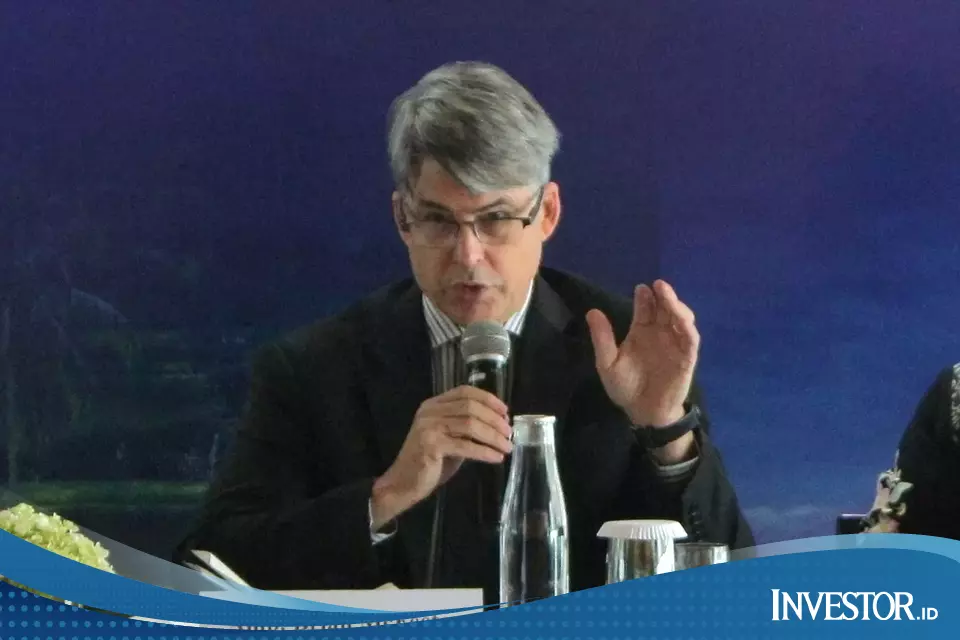
USABC President and CEO Brian McFeeters said Indonesia remained one of the leading destinations for US investment in South-east Asia, alongside Vietnam and the Philippines. Interest is underpinned by the country’s large young population, digital technology development and opportunities in healthcare, education, energy and agriculture.
Brian nevertheless emphasised that investors need regulatory certainty and consistency. Foreign companies seek profits while complying with the rules, he said, making clear government regulations essential to the long-term viability of businesses.
“USABC is looking for ways to build trust between the Indonesian government and our partner companies. Companies come to make a profit, but they also want to comply with the rules set by the government. They need clarity and consistency,” Brian said at a US-ASEAN Business Council media briefing at the Park Hyatt in Central Jakarta on Friday (30 October 2026).
Bhredipta Socarana, USABC’s country representative in Indonesia, similarly said the 8% growth target was not unrealistic. Achieving it would, however, require the government, businesses and the public to work together to increase investment and strengthen industrial activity.
“An 8% figure is not necessarily unrealistic. But it requires joint efforts by the government, businesses and the public,” Bhredipta said.
He noted that Indonesia recorded growth of more than 8% in the 1980s, when oil-sector revenues rose. Growth slowed towards the 1990s but still reached around 6.9%, supported by industrial development.
“Why? Because there was a process of industrialisation. This shows that the government and businesses trusted one another to pursue economic activity together,” he said.
Bhredipta said investment was among the most promising sources of growth to help Indonesia reach its 8% target. Household consumption and government spending have limits, while expanding exports and production also depend on business certainty.
The government therefore needs to build investor confidence through clear rules, consistent policies and the removal of barriers to business. These steps would enable companies to increase investment and expand production capacity.
“One of the key factors in growing investment is the trust built among the government, industry players and society in general,” Bhredipta said.
As well as attracting new investment, Bhredipta stressed the importance of retaining companies already operating in Indonesia. Some USABC member companies have been doing business in the country for decades, and some were present even before Indonesia’s independence, he said.
Policy certainty can help companies plan long-term investment, he added. Sudden regulatory changes can make it difficult for businesses to plan production, develop their operations and hire more workers.
“With stable economic activity and assurances that companies can continue operating without worrying about sudden policy changes, industry players can plan better and with greater certainty,” he said.
Bhredipta also highlighted the need for clear rules in the digital sector. Before introducing policies affecting businesses, the government should clarify their objectives and implementation, and ensure that regulators are prepared to enforce them.
“When it is difficult to understand what a regulation means, what its purpose is, how it will be implemented, or whether the regulator is ready, there needs to be discussion. We must be realistic about the policy’s objectives,” he said.
USABC also stressed that 8% growth should not be merely a numerical target. It must deliver tangible benefits to the public, particularly through job creation, improved welfare and greater opportunities for micro, small and medium-sized enterprises (MSMEs) and local companies. High growth does not necessarily signal improved welfare if its benefits are not widely shared.
USABC’s eight policy recommendations for the Indonesian government
To support faster economic growth and improve the investment climate, USABC set out the following strategic measures:
Simplify imports: Ease import procedures, set realistic processing deadlines, and establish clear monitoring and mechanisms for resolving problems.
Improve standards and certification: Make product certification transparent, recognise test results from credible overseas institutions, and expand the capacity of accredited testing bodies in Indonesia.
Strengthen the digital sector: Conduct regulatory sandboxes before issuing digital regulations, and promote the use of artificial intelligence (AI), cloud computing and cybersecurity.
Provide regulatory certainty: Involve industry in policy-making, issue clear implementing guidelines, allow adequate transition periods and harmonise central and regional government rules.
Support long-term investment partners: Strengthen the role of the Investment Coordinating Board (BKPM) in assisting investors and resolving investment barriers.
Promote knowledge transfer and domestic content: Expand partnerships between foreign and local businesses, and align domestic component requirements (TKDN) with the capacity of national industry.
Review natural-resource export proceeds rules: Review the natural-resource export proceeds (DHE SDA) requirements with industry and banks, to preserve foreign-exchange reserves without restricting working-capital flexibility.
Develop a trade roadmap: Turn trade commitments into a measurable implementation roadmap involving affected industries.
Source: jawawa.id (https://jawawa.id/newsitem/us-investors-indonesia-remains-an-investment-destination-but-policies-must-be-consistent-1793357442)
Originally published by investor.id (https://investor.id/macroeconomy/460081/investor-as-indonesia-masih-jadi-tujuan-investasi-tapi-kebijakan-harus-konsisten), translated from Indonesian