
US Intensifies Push to Block China’s Access to Advanced AI Chips
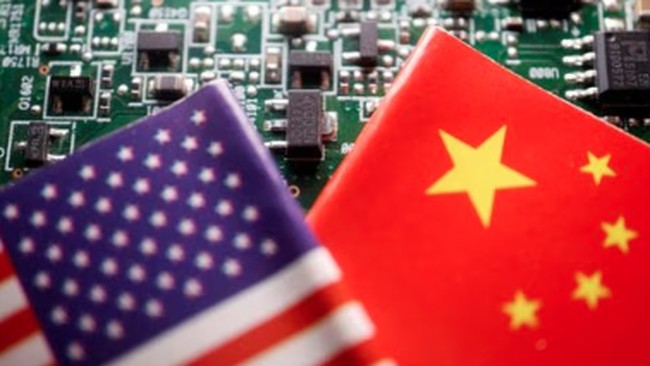
The United States is tightening restrictions on China’s access to artificial intelligence (AI) technology. Several US lawmakers are pushing to curb exports of advanced AI chips to China following the emergence of a spying scandal involving former Nvidia chief executive Jensen Huang.
The aggressive move could widen the technology divide between the world’s two largest economies. Market participants and investors are increasingly concerned that Chinese companies’ access to cutting-edge US-made chips will be further curtailed.
US House Speaker Mike Johnson said on Thursday (12 November), local time, that support in Congress for restricting chip exports to China was growing. Jensen Huang has long been a forceful advocate for Nvidia’s access to the Chinese market and has been close to US President Donald Trump.
Huang decided to step down after reports emerged of a romantic relationship with Alice Huang, a Chinese businesswoman suspected by US authorities of spying for Beijing.
Alice previously served as an executive at Megaspeed, an Nvidia partner suspected of helping China obtain advanced AI chips that were subject to US export restrictions. The Chinese government has denied that Alice is an intelligence agent.
Pressure to impose restrictions is not limited to Nvidia. Several lawmakers have sharply criticised US Commerce Secretary Howard Lutnick, arguing that the government is reluctant to add dozens of Chinese companies to its trade blacklist. They have also questioned the government’s effectiveness in monitoring the distribution channels for Nvidia chip exports to China.
Washington has restricted Beijing’s access to advanced Nvidia chips, concerned that the technology could be used to modernise China’s military. The chips are also vital components in developing the latest generation of AI models.
“Chip export controls to China have become a major issue here,” Johnson said at the US Capitol, according to Reuters on Sunday (15 November 2026).
“I think there is a growing consensus in Congress that this is an important position to take,” he added.
The geopolitical pressure immediately shook China’s technology shares. In Friday’s trading, shares in AI model developer Z.AI fell 12%, while MiniMax Group dropped 8.4%. Shares in data-centre infrastructure suppliers Zhongji Innolight and Eoptolink Technology also fell by more than 8%.
Reuters previously reported that some Chinese AI companies had begun circumventing the restrictions by renting computing capacity powered by Nvidia chips overseas. They are doing so amid concerns that Washington will soon close the remote-access loophole.
To permanently constrain China’s room for manoeuvre, Republican lawmakers are seeking to add restrictions on exports of advanced AI chips to the annual US defence authorisation bill.
At least four bills are being fast-tracked. The first, the AI Overwatch Act, would give Congress broader powers to oversee exports of advanced AI chips.
The second, the Chip Security Act, would require technology companies to track the physical locations of AI processors to prevent smuggling. The third, the Match Act, would pressure US allies to restrict sales and servicing of advanced chipmaking equipment for China.
The fourth, the Remote Access Security Act, would give the US Commerce Department full authority to stop Chinese companies from renting overseas data-centre services to access computing powered by Nvidia chips.
Jensen Huang still under scrutiny
Huang’s departure from the top job is not expected to end Congress’s close scrutiny of Nvidia. Sunny Cheung, an analyst at the Jamestown Foundation, said the former chief executive could still be summoned to give formal testimony.
“Congress can still summon him by subpoena, and Nvidia should conduct an independent investigation to determine whether the issue extends beyond Huang,” Cheung said.
Cheung said Huang’s departure could weaken Nvidia’s lobbying influence in Washington while strengthening political calls for tighter rules on advanced chip exports. Nvidia’s new management, he said, would need to reassess its China business strategy to restore the US government’s trust.
Huang is expected to testify before Congress ahead of Thanksgiving on 26 November. Brian Mast, chairman of the House Foreign Affairs Committee, said congressional staff had been in contact with Nvidia to arrange the timing and location of the hearing.
Source: jawawa.id (https://jawawa.id/newsitem/us-intensifies-push-to-block-chinas-access-to-advanced-ai-chips-1794729052)
Originally published by CNBC Indonesia (https://www.cnbcindonesia.com/tech/20261115094550-37-785326/amerika-makin-ganas-blokir-total-china-tanpa-ampun), translated from Indonesian