
US Intelligence Fears Putin May Test NATO, Is the Iran War Washington's Weak Point?
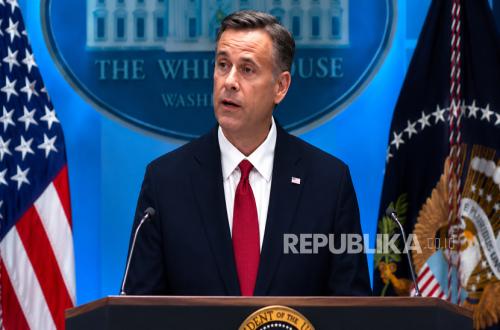
Concerns about the possibility of Russia testing NATO’s defences have risen again after CIA Director John Ratcliffe made a rare visit to Moscow amid the Ukraine war and the growing depletion of a number of US weapons stockpiles due to the war with Iran.
Ratcliffe met Russian intelligence officials in a visit confirmed by the Kremlin on Wednesday, 26 August 2026. Kremlin spokesman Dmitry Peskov said the CIA Director did not meet directly with President Vladimir Putin, but that Putin had received a report on the outcome of the talks.
Peskov did not disclose the detailed agenda of the meeting. US President Donald Trump described Ratcliffe’s visit as semi-routine and said the talks might help efforts to end the Ukraine war.
However, other reports about the trip suggest there is a far more sensitive issue behind the Washington-Moscow communication. The Telegraph reported that Ratcliffe delivered a warning to the Russian side amid intelligence concerns that Putin could escalate confrontation by testing NATO territory, including possible action on the alliance’s eastern flank.
The assessment is in line with US intelligence reports that emerged throughout August. A number of US officials told CBS News that Putin’s risk calculus is assessed to be shifting and that the Russian leader may be increasingly willing to authorise provocative actions reaching into NATO territory.
However, the scenarios under consideration do not automatically mean a large-scale Russian invasion of Europe. US intelligence is, among other things, considering the possibility of hybrid operations, cyber attacks and other actions whose involvement Moscow could deny. Such forms of provocation could be used to test how strong the response of NATO countries is without directly triggering a full-scale conventional war.
The Wall Street Journal previously also reported a US intelligence assessment that Putin could potentially try to test NATO’s resolve through limited attacks in the coming years. The scenarios range from cyber attacks to possible small-scale ground incursions into the territory of alliance members.
The development has drawn increasing attention to the ability of the United States to carry out its defence commitments in Europe when a large portion of its military resources is being drained to the Middle East.
Iran War Drains US Weaponry
The United States is now entering its sixth month of war with Iran. The conflict has not only imposed political and economic costs on the Trump administration, but has begun to raise questions about Washington’s military readiness if a major crisis emerges in another region at the same time.
Reuters reported in early August that the US Army has used most of its global stockpile of long-range precision missiles during the Iran war. The weapons primarily include the Army Tactical Missile Systems, or ATACMS, and its successor generation, the Precision Strike Missile, or PrSM.
Two Reuters sources even said the US has used nearly the entire stockpile of those weapons. The missiles are important because they allow forces to strike targets precisely from long range and are the type of capability also needed if the US faces a military power such as Russia or China.