
US Import Tariffs for Indonesia Remain Proposed, Not Final
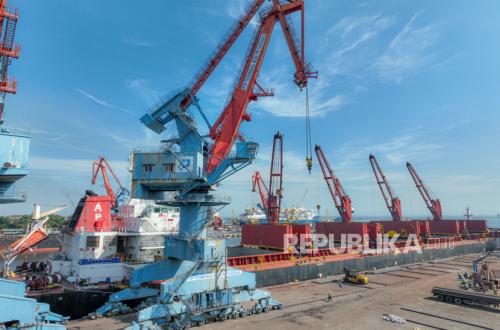
The Minister of Trade, Budi Santoso, stated that the import tariff rates for Indonesia proposed by the United States Trade Representative (USTR) are still dynamic and have not been finalised. The Indonesian government continues to maintain communication and approach the US government to obtain a tariff scheme that is more advantageous for national export products.
“It is still a proposal from America, which remains dynamic, and the Indonesian government is continuously approaching America to certainly obtain better tariffs,” B/said Budi at the Ministry of Trade office in Jakarta on Monday (8/6/2026).
Budi explained that the previous US reciprocal tariff policy was cancelled by the US Supreme Court. As a replacement, the US government has imposed a general tariff of 10 per cent on all countries for a 150-day period, which ends on 24 July 2026.
Following the conclusion of this period, the US government is preparing a new policy through investigations based on Section 301 of the US Trade Act of 1974, concerning issues of forced labour and manufacturing capacity.
Furthermore, on 2 June 2026, the USTR released the preliminary results of these investigations, proposing import tariffs of 10 per cent and 12.5 per cent against 60 countries subject to the investigation.
From that number, 14 countries—including Indonesia, Canada, Ecuador, the European Union, Mexico, Pakistan, Argentina, Bangladesh, Cambodia, El Salvador, Guatemala, Malaysia, Taiwan, and the United Kingdom—have been proposed for a 10 per cent tariff. Meanwhile, 46 other countries are subject to a 12.5 per cent tariff.
“Indonesia is included in that group of 14 countries. This is because, regarding forced labour, Indonesia already has a legal framework, and secondly, Indonesia already has an ART (agreement on reciprocal trade),” he explained.