
US Holds Midterm Elections Today — But It Was Once Colonised by Eight Nations
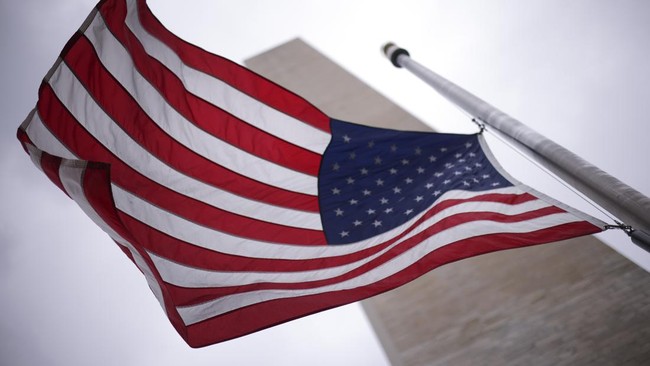
The United States will hold its midterm elections today, Tuesday, 3 November 2026. This major election would have been unimaginable when Uncle Sam was still a colony hundreds of years ago.
The US midterms are not simply a contest for power between political parties. Their results can affect people’s everyday lives, from the cost of basic goods to healthcare costs and taxes.
The election, held today, Tuesday, 3 November 2026, will determine the make-up of the US Congress: all 435 seats in the House of Representatives and some Senate seats are up for election. The results will determine how much room President Donald Trump has to pursue his government’s agenda.
Congress matters greatly to the public because it has authority over budgets, tax policy, healthcare and education funding, and social assistance programmes.
The results may also affect US immigration, defence and trade policies, as well as its foreign relations.
If the Democratic Party wins control of the House or Senate, the Trump administration’s agenda could face greater obstacles. A Republican victory, by contrast, could strengthen legislative support for the president’s policies.
The midterms are therefore an important opportunity for US voters to determine the country’s policy direction and hold the president to account until the end of his term.
The US was once colonised
Before becoming the superpower it is today, the territory that now makes up the US was once subject to the influence and control of several European nations.
US Independence Day commemorates the Declaration of Independence, adopted on 4 July 1776. On that day, 13 British colonies in North America declared themselves independent and no longer subject to the British Crown under King George III.
England had been establishing colonies along the eastern coast of North America since the early 17th century. These settlements developed into the 13 colonies that later became the foundation of the United States.
Discontent arose because the colonies had to pay taxes to Britain but had no representatives in the British Parliament. This fuelled anger among colonists, who felt they were being taxed without having a voice in decision-making.
Tensions between the colonies and the British government escalated after London imposed various taxes, including levies on tea and official documents. The situation eventually sparked the American Revolution in 1775, when colonial militias began fighting British forces.
The decisive moment came on 4 July 1776, when the Second Continental Congress in Philadelphia formally approved the Declaration of Independence. It was drafted largely by Thomas Jefferson, with the support of prominent figures including John Adams and Benjamin Franklin.
The document declared the American colonies an independent country. It also affirmed the idea of fundamental human rights, including the rights to life, liberty and the pursuit of happiness.
Independence did not immediately bring the war to an end. The American Revolutionary War concluded in 1783 with the Treaty of Paris. However, 4 July remained an important date because it marked the formal declaration of US independence.
Was America really colonised?
In simple terms, the territory that is now the United States was colonised by European powers. But the modern country itself was not colonised, because it did not yet exist.
Rather, North American territory, including areas that later became part of the US, was colonised. Before the country became independent in 1776, much of this land was under European colonial control or influence.
It is also important to note that North America was not empty when Europeans arrived. It had long been inhabited by diverse Indigenous peoples, often referred to in Indonesia by the general term ‘Indian tribes’.
The arrival of Europeans dramatically changed the balance of power, local communities’ lives, trade and the region’s political structures.
European colonisation of North America began well before England established the colonies that later formed the US.
When the London Company sent an expedition to colonise Virginia on 20 December 1606, it was not the first European attempt to exploit North America. France and Spain had already sought to establish influence in parts of the region.
In 1564, for example, a group of French Protestants, or Huguenots, established a colony near what is now Jacksonville, Florida. Their presence did not last long, as Spain also claimed the territory.
The following year, Spain established a military outpost at St Augustine, Florida. Spanish forces then destroyed the nearby French colony.
Meanwhile, fishing fleets from the Basque region, England and France began regularly visiting the North American coast, from Newfoundland to Cape Cod. They came to fish, dry their catch and trade with local people.
This trade generally involved exchanging animal furs for European-made goods. At first, European activity in the region was limited and had not yet developed into large, permanent settlements.
It was not until the late 16th and early 17th centuries that Europeans began making more concerted efforts to establish permanent colonies. England tried to found a colony on Roanoke Island, in what is now North Carolina, in the 1580s. The attempt failed, and the settlement became one of the early mysteries of English colonisation in America.
European colonisation accelerated in the 17th century. England established Jamestown in Virginia in 1607, France founded Quebec in 1608, and the Dutch began extending their influence in the area that would later become New York.
Over the next generation, various European colonial companies sent thousands of settlers to North America. They included the Plymouth Company, the Massachusetts Bay Company, the Company of New France and the Dutch West India Company.
The settlers were not only traders or soldiers, but also families seeking to build new lives. Their arrival helped European colonies become more established and permanent in North America.
Many countries once controlled parts of the US
Historical maps show that the territory now within the United States was not controlled solely by Britain. Several other nations also ruled or claimed land that is now part of the modern US.
Spain once controlled extensive areas in the south and west, including Florida, Texas, California, New Mexico and neighbouring regions. France held considerable influence in central North America through the Louisiana Territory. The Dutch controlled New Netherland for a time, before it was captured by England and became New York.
Mexico also once controlled a large area that is now part of the US, particularly in the south-west. California, Texas, Arizona, Nevada, Utah, New Mexico and parts of Colorado were linked to Mexican rule before passing to the US through war, treaties or territorial acquisition.
As it approaches its 250th anniversary, the US is known as a superpower with the world’s largest economy, a strong military and considerable influence in global politics.
Its long history, however, shows that the country emerged from colonisation, resistance to British rule, a war of independence and centuries of territorial expansion.
Source: jawawa.id (https://jawawa.id/newsitem/us-holds-midterm-elections-today-but-it-was-once-colonised-by-eight-nations-1793692278)
Originally published by CNBC Indonesia (https://www.cnbcindonesia.com/research/20261103125542-128-781880/as-gelar-pemilu-jeda-hari-ini-ternyata-pernah-dijajah-8-negara), translated from Indonesian