
US Expert Says Small Nuclear Reactors, Not Oil or Coal, Are the Solution for Indonesia's Electricity
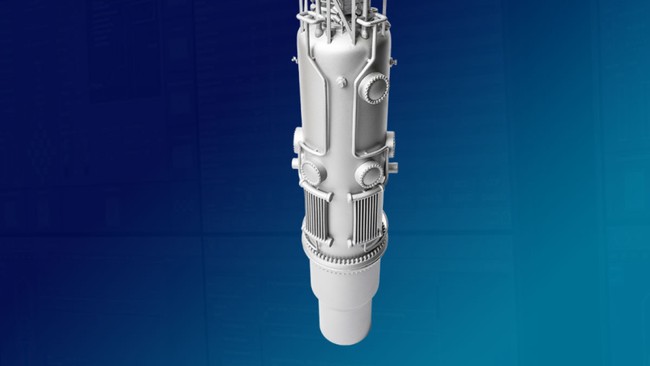
Jakarta, CNBC Indonesia - Indonesia is currently seeking a precise solution to overcome the challenge of reliable electricity supply across its vast archipelago. Amid these efforts, United States nuclear energy expert Kelle Barfield believes Small Modular Reactors (SMRs) could be one of the answers. “Small reactors offer an opportunity because of their more compact size. So, these reactors can be placed in more remote locations or in areas with intensive energy needs, such as mining operations,” Barfield said during a discussion titled Powering the Future: American Leadership in Clean Nuclear Energy at @america, South Jakarta, on Tuesday (23/6/2026). According to Barfield, Indonesia’s challenge is not only generating electricity but also ensuring that energy can be reliably distributed to communities spread across thousands of islands. Because of their smaller and more flexible size, the technology is considered easier to deploy to meet the electricity needs of remote areas and industrial zones requiring large energy supplies. “You must have the ability to generate electricity, but also to deliver it to the people who use it. Small reactors offer an opportunity because they can be placed in more remote locations,” she stated. She added that reciprocal trade cooperation between Indonesia and the US has the potential to accelerate nuclear energy development in the country. According to her, several reactor designs developed by US companies have already undergone licensing and evaluation processes by the US nuclear regulator, which can help speed up the development process for similar projects in Indonesia. Furthermore, she mentioned that cooperation between the two countries also opens access to a broader industrial supply chain, from vendors to the support services needed for building nuclear energy infrastructure. Despite the significant opportunities, Barfield cautioned Indonesia against waiting for every aspect of a project to be completely finalised before beginning preparations. She believes that workforce development, financing, and cooperation networks need to be established early so that projects can proceed more quickly once an investment decision is made. In terms of technical support, Barfield noted that the US has been running the Foundational Infrastructure for Responsible Use of Small Modular Reactor Technology, or FIRST, programme, which helps partner countries build the foundation for SMR development. The programme includes assistance in technology selection, site studies, and strengthening human resource capacity. “That support is not just about technology. There is also site selection and a number of other categories where American experts are actively working and want to continue supporting Indonesia’s growth,” Barfield said. Regarding construction timelines, she cited the example of the BWRX-300 SMR project in Darlington, Canada, which has now entered the construction phase. The project is targeted to begin operations within about three years, much faster than the construction of conventional large-capacity reactors, which generally require more time. Barfield is also optimistic that more US energy companies will turn their attention to Indonesia. According to her, the success of initial projects will become a model that can be replicated by other companies, thereby accelerating the entry of new investment. At the same time, cooperation in education, training, and student exchanges is also believed to continue growing to prepare the workforce needed for Indonesia’s future energy industry.