
US Expands Strikes, Iran Threatens Regional Infrastructure
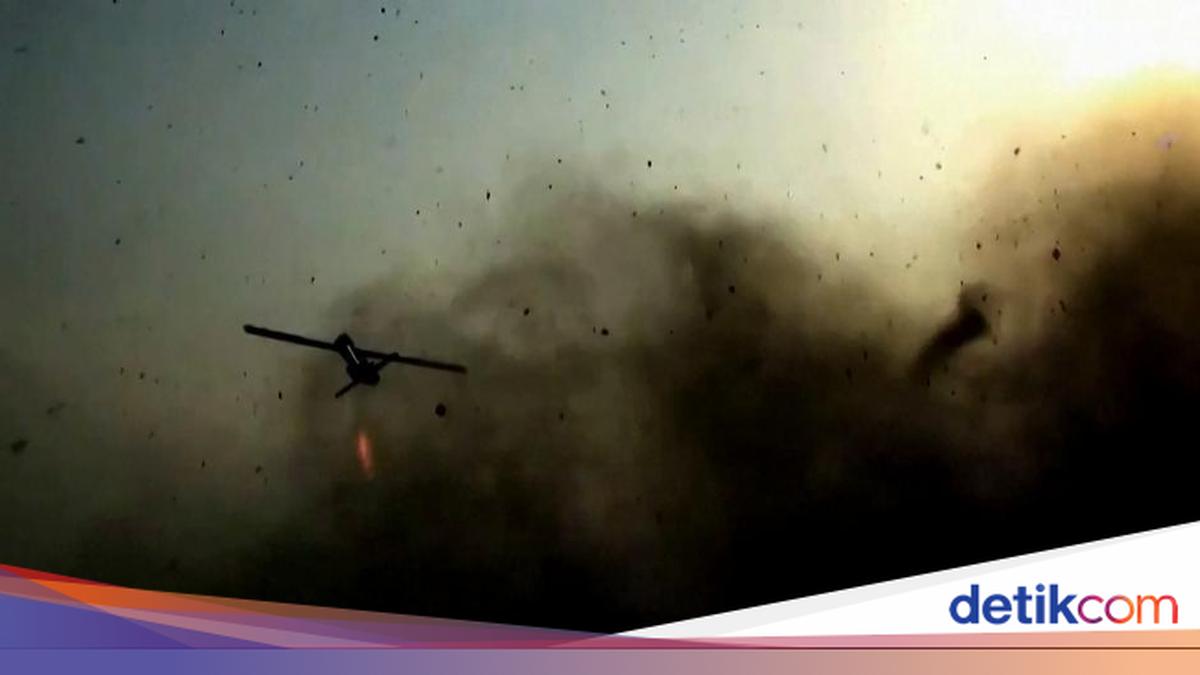
The United States expanded its strikes against Iran in the early hours of Thursday, hitting targets further north while its military also fired on a ship accused of attempting to breach a naval blockade imposed by Washington against the Islamic Republic. In retaliation, Iran launched missiles and drones towards Bahrain, Jordan, and Kuwait before dawn. The series of tit-for-tat strikes between the United States and Iran across various parts of the Middle East, coupled with renewed threats to the Strait of Hormuz, has effectively scuppered a temporary agreement previously intended to end the Iran war. The situation threatens to drag the region back into open conflict. According to Iranian officials, the American strikes have killed more than 35 people and wounded over 300 others. For the first time in this latest wave of conflict, the strikes also reached areas around the capital, Tehran. A military spokesman threatened that ‘all infrastructure in the region’ would be ‘destroyed, struck by the steel’ of Iran’s armed forces. Since the US and Israeli war against Iran erupted on 28 February, Tehran has effectively closed the Strait of Hormuz to shipping traffic. The closure of the strategic waterway has triggered a surge in the price of oil, fertiliser, and various other commodities, whilst simultaneously strengthening Iran’s bargaining position in negotiations. Supreme Leader’s advisor, Ali Akbar Velayati, affirmed that the Iranian government would continue to maintain control over the Strait of Hormuz. On Thursday, he described Tehran’s control over the world trade route as a ‘very valuable achievement’. The closure of the Strait of Hormuz is slowly becoming the biggest challenge for US President Donald Trump in the Iran War. The surge in fuel prices is increasingly burdening domestic issues, where Trump must maintain a majority of seats in Congress in the upcoming November midterm elections. On Wednesday, Washington reimposed a naval blockade on Iranian vessels in the Gulf of Oman, closing access to the Arabian Sea and international waters. Iranian Parliament Speaker and chief negotiator, Mohammad Bagher Qalibaf, said his country was prepared for a wider military confrontation if the United States did not comply with the terms of the temporary agreement. The Revolutionary Guard Corps also threatened to shut down all energy exports from the Middle East in response to the US blockade. ‘Oil and gas exports from this region will apply to all, or to no one,’ the Revolutionary Guard stated. Trump reiterated that Iran wants to reach a peace deal, though he did not elaborate further. ‘They don’t like what we are doing, and they do want to resolve this matter. We will see if we can reach a deal with them, or if we just end it all,’ Trump said on Wednesday in a speech at the U.S. Army War College in Pennsylvania. Separately, Trump claimed via social media that Tehran had shown good faith by releasing a US citizen detained since 2024, without disclosing further details. Human rights lawyer Jared Genser later identified the detainee as his client, Dena Karari, a dual American-Iranian national who reportedly managed a non-profit organisation and was previously charged with espionage. The Iranian government has yet to confirm the release. The Karari case had also not been previously publicised, as is common with several detentions in the Islamic Republic. Meanwhile, efforts to stitch back together US-Iran negotiations continue behind the scenes, particularly by Pakistan, which has been acting as a mediator. ‘Although the implementation of the memorandum of understanding faces various obstacles, Pakistan will continue to encourage all parties to cease violence and resume technical-level negotiations in accordance with the provisions of the MoU,’ Foreign Ministry spokesman Tahir Andrabi told reporters in Islamabad. According to Iranian state media, the US strikes in the early hours of Thursday hit several areas around Tehran. The strikes also targeted Semnan Province, the location of Iran’s ballistic missile production facilities and space programme. Iranian media also reported strikes in Hamedan, Hormozgan, Khuzestan, Lorestan, Markazi, and Sistan and Baluchistan provinces. A day earlier, America launched further strikes during the day. US Central Command stated that the strike on Greater Tunb Island, a strategic point in the Strait of Hormuz, targeted Iranian defence and missile facilities. The US military also claimed it fired on the Curacao-flagged oil tanker Belma, which was sailing towards Kharg Island, Iran’s main oil export terminal in the Persian Gulf. After the ship reportedly ignored several warnings, a US fighter jet disabled it by firing a missile into its funnel. Another strike on Wednesday hit the barracks of Iran’s 388th Mechanised Infantry Brigade in Sistan and Baluchistan Province, a unit that operates tanks and armoured vehicles. Iranian state television reported that America fired at least 13 missiles. Seven people were killed, comprising conscripts and active personnel, while several others were injured. In retaliation, Iran launched missile and drone attacks towards Bahrain, Jordan, and Kuwait in the early hours of Thursday. The three countries, which host US military bases, have not reported any casualties or damage. In Iraq, Prime Minister Ali al-Zaidi condemned a drone attack on the city of Irbil in the autonomous Kurdistan region on Thursday evening. Local authorities said the drone was intercepted. The incident occurred while Prime Minister al-Zaidi was in the United States and stated that Iraq would seek to disarm Iran-backed armed groups.