
US Election Watchdog’s System Hacked Ahead of Midterms, Leaving Billions in Dark Political Money Untraced?
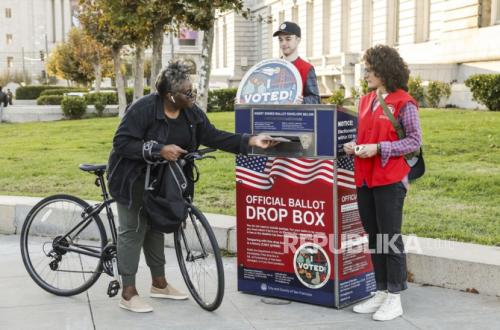
JAKARTA — The United States’ election campaign-finance reporting system was targeted in a cyberattack ahead of the midterm elections on 3 November 2026. The incident forced the Federal Election Commission (FEC), the body that oversees federal campaign financing, to temporarily disable electronic reporting services for nearly 41 hours. As a result, some recent political spending could not be reported or accessed by the public immediately, while billions of dollars were flowing into political contests across the United States.
Reuters reported on Wednesday (28 October 2026) that the FEC’s electronic reporting system was restored after an outage that began on Monday evening (26 October) local time. The disruption came at a critical point, when campaign committees, political organisations and independent-spending groups faced deadlines to report certain transactions within 24 to 48 hours.
The incident disrupted transparency in US election financing just days before voters went to the polls to decide the make-up of Congress. Campaign-finance watchdogs voiced concern about delayed disclosure, saying the public needed information on the sources and use of campaign funds before making its choice.
According to an email obtained by Reuters, an FEC official informed a campaign-finance compliance services provider that an unknown party had attempted to breach the agency’s systems. To manage the security risk, the FEC temporarily suspended several services accessible via public networks.
The move prevented political organisations from filing certain reports through the usual electronic system. However, previously published campaign-finance records remained searchable on the FEC website.
The restoration of services on Wednesday evening ended the technical disruption. But the nearly two-day reporting delay raised a separate concern, as information about transactions during the final phase of a campaign is particularly important for public scrutiny.
Political spending tops $50 million a day
The incident at the FEC occurred as campaign financing in the United States reached its most intense period ahead of the midterm elections.
Brendan Glavin, research director at campaign-finance watchdog OpenSecrets, said super political action committees (super PACs) and other political funding organisations spent an average of more than US$50 million a day during the week before the outage.
The figure illustrates the scale of the funds used to support or oppose candidates in US elections. The spending was primarily associated with independent campaign activities, including political advertising and communications with voters.
According to data cited by Reuters, reported political spending on 20 October alone exceeded US$250 million. The volume of transactions underlines the importance of a reporting system that can operate without disruption as a campaign nears its end.
The FEC system is a key source for journalists, researchers and civil-society organisations seeking to track federal campaign finances. It allows the public to examine disclosures of receipts and spending required under US law.
When reporting services were disabled, political transactions and campaign activity did not stop. However, the latest spending could not be submitted through the usual electronic channels.
This created a gap between when political spending took place and when the information became available to the public.
Molly White, a campaign-finance transparency activist who monitors political spending by the technology and cryptocurrency industries, said the FEC outage had deprived watchdogs of access to information about the latest political spending.
White said the need to monitor transactions was growing more urgent as political spending increased ahead of polling day. Delayed publication made it harder for watchdogs to follow campaign funding at the point when the information was most needed.
The issue was not simply the amount of money spent. Transparency also enables the public to understand which organisations are funding political activity, which candidates are receiving support and what interests are involved in the electoral contest.
24-hour reporting requirements disrupted
The FEC imposes special disclosure requirements on campaign transactions made in the run-up to an election.
According to an official notice issued by the agency on 13 October 2026, candidate campaign committees must file notices within 48 hours for certain contributions of at least US$1,000 received between 15 and 31 October.
A separate rule applies to political committees and organisations making independent expenditures. These are expenditures expressly intended to support or oppose a particular candidate, without coordination with the candidate or their campaign team.
Under FEC rules, independent expenditures of at least US$1,000 in the same election, made between 15 October and 1 November, must be reported within 24 hours.
The reports include the amount spent, the recipient of the payment, the purpose of the transaction and the candidate being supported or opposed.
These requirements form part of a transparency mechanism intended to ensure the public can learn about political financing activity as polling day approaches.
However, the FEC system’s suspension from Monday evening prevented some organisations from submitting reports through the usual electronic channel.
As a result, information that should have been promptly filed with the watchdog was delayed. The outage also restricted public access to recent transactions that had not yet been entered into the system.
Steven Mele, an executive at political-finance compliance consultancy MBA Consulting Group, told Reuters that he had never experienced a similar disruption in 26 years in the field.
He predicted that the suspension would reduce the amount of information disclosed to the public while the system remained offline.
His comments highlight the importance of timely campaign-finance reporting. Disclosure before an election serves a different purpose from reports that become available only after voting has taken place.
Information about recent political spending can help voters and watchdog organisations understand how campaigns are developing before political decisions are made.