
US Dollars in Indonesian Banks Are Safe, OJK Reveals Latest Conditions
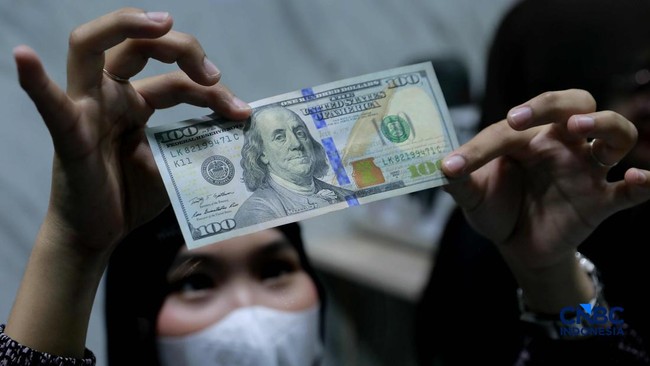
Jakarta, CNBC Indonesia — The Financial Services Authority (OJK) has assured that foreign exchange (forex) liquidity in Indonesia’s banking industry is abundant, amid the trend of rupiah depreciation.
The Executive Head of Banking Supervision at OJK, Dian Ediana Rae, confirmed that forex liquidity needs can still be met without disrupting overall financial system stability.
To ensure adequate foreign exchange liquidity in domestic banking, particularly to serve corporate needs for foreign debt obligations, Dian stated that they continuously adopt an integrated approach through coordination with Bank Indonesia (BI) as the monetary authority.
This coordination is aimed at maintaining domestic forex market stability, including through monetary instruments such as swaps, repos, and market interventions to ensure sufficient forex liquidity in the financial system remains maintained.
“OJK ensures that banks have strong and adequate forex liquidity risk management, including through regulations and monitoring of liquidity ratios such as the Foreign Exchange Liquidity Coverage Ratio (LCR) and monitoring of the Net Foreign Exchange Position (PDN) to assess the sufficiency of banks’ buffer capacity in meeting short-term forex needs or potential market pressures,” Dian said in his statement, quoted on Monday (27/4/2026).
As recorded in February 2026, the banking PDN ratio was at 1.46%, still well below the threshold. Dian noted that with the PDN maintained within prudent limits, the banking sector has sufficient room to meet customers’ forex needs without increasing vulnerability to exchange rate volatility.
In addition, OJK has asked banks to implement prudent asset and liability management, including maintaining adequate balance between forex funding sources and forex credit disbursement.
Dian explained that as of February 2026, forex third-party funds (DPK) were recorded at Rp1,525 trillion, while forex credit was Rp1,241 trillion. Thus, the foreign currency loan-to-deposit ratio (LDR) remains optimal at 81.35%.
Furthermore, Dian said banks are encouraged to expand and diversify forex funding sources, both through forex DPK, interbank loans, and utilisation of access to global markets.
“On the other hand, OJK encourages corporations with foreign debt to continuously apply prudence principles such as hedging obligations, liquidity sufficiency, and maintaining debt quality and ratings to mitigate exchange rate risks and funding risks,” Dian stated.
Meanwhile, the rupiah exchange rate closed stronger against the US dollar in the last trading session of the week, on Friday (24/4/2026). Referring to Refinitiv data, the rupiah ended trading in the green zone with a 0.53% appreciation to Rp17,190/US$.
This strengthening brought the rupiah back below the psychological level of Rp17,200/US, afterthepreviousdayitclosedatRp17, 280/US, which was the weakest closing position ever.
Although able to rebound at the end of the week, the rupiah still recorded a weekly weakening of 0.06%.
Meanwhile, the majority of Asian currencies weakened against the US dollar throughout the week. However, pressure on the rupiah was relatively more limited compared to many other regional currencies.