
US Dollar Surge: Indonesian Packaged Beverage Producers Raise Alarms
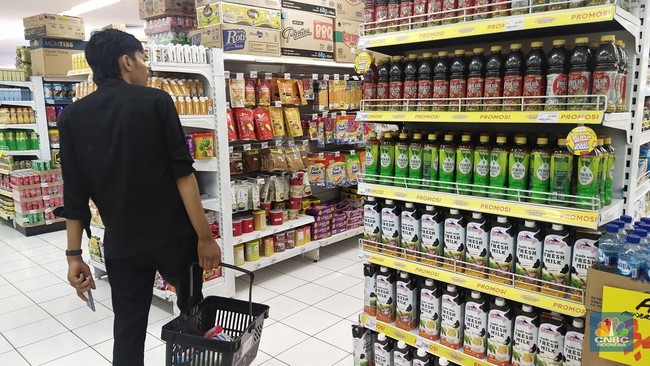
The Soft Drink Industry Association (ASRIM) has requested that the government take strategic steps to ensure the sustainability of the packaged beverage industry in Indonesia. This follows the weakening of the rupiah, which has reached Rp 18,000 per US dollar, significantly impacting raw material production costs.
The General Chairman of ASRIM, Triyono Prijosoesilo, explained that the downward trend of the rupiah is projected to increase the industry’s Cost of Goods Sold (COGS) by approximately 10% to 30%, driven by rising costs for fuel and imported raw materials. He noted that the currency has weakened by roughly 90% since the beginning of the year.
“It is ultimately the government’s domain to ensure that this exchange rate does not decline too deeply, as it directly affects raw materials,” Triyono stated during a press conference regarding the future of the Indonesian packaged beverage industry in Jakarta. He added that while price increases for ready-to-drink beverages are possible, the industry can currently absorb a 10% increase, though the duration of this stability remains uncertain.
ASRIM hopes the rupiah’s value can be stabilised to allow for better industrial planning, as exchange rate fluctuations disrupt national production schedules, especially since several raw materials must still be imported. The association is seeking more active collaboration with the government to maintain a healthy industrial and investment climate.
In addition to currency volatility, the industry faces several sustainability hurdles, including the planned sugar-sweetened beverage (SSB) excise tax, logistics and energy costs, and Front of Pack Labelling (FOBL) regulations. The implementation of the SSB tax poses a risk of additional tax burdens amidst existing declines in sales volume. Furthermore, high inter-island distribution costs continue to impact product affordability.
ASRIM Secretary General, Tri Junanto Wicaksono, confirmed that the rupiah’s weakness directly increases production costs due to the industry’s dependence on imported raw materials and packaging. “Our raw materials will rise, and our Cost of Goods Manufactured (COGM) will certainly increase, which will impact company operational costs,” he added.
While national beverage producers are attempting to reduce import dependency by utilising local sources, domestic raw materials currently cannot meet the industry’s total requirements due to specific standardisation needs. Tri Junanto, who also serves as the Director of Corporate Affairs & Legal at PT Amerta Indah Otsuka, explained that businesses are currently focusing on production efficiency while developing local sources that meet corporate standards.
Despite the challenges, Tri Junanto remains optimistic about growth this year, provided the government offers consistent policy support. He urged authorities to temporarily delay policies regarding labelling and excise taxes to allow the industry to recover. Consequently, beverage producers are adapting through internal efficiencies, portfolio diversification, and investing in product innovation, such as low-sugar variants, to maintain consumer affordability and ensure the continued operation of the national food and beverage economy.