
US Dollar Strengthens, Yet Indonesians Still Choose Imported Fruit — Here's Why
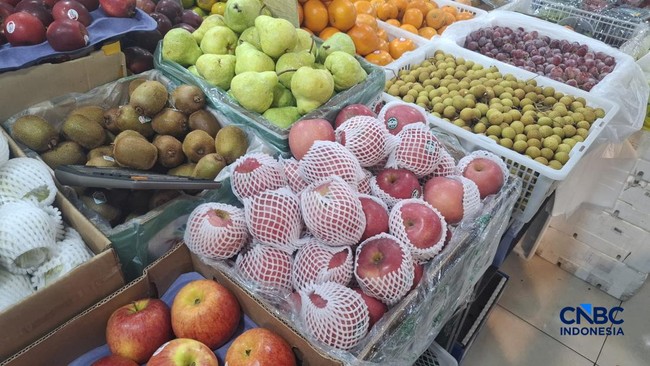
Traders at Pasar Senen in Central Jakarta have revealed that demand for imported fruit remains quite high, even though purchase volumes are declining due to price rises caused by the weakening rupiah. Several traders say imported fruit is still preferred over local produce because of its superior quality, meaning buyers worry less about taste and texture. On the other hand, purchasing imported fruit means being exposed to exchange rate fluctuations, particularly now with the rupiah under increasing pressure against the US dollar. The currency has now breached the psychological level of Rp18,000 per US dollar, hitting an all-time record low. According to Refinitiv, as of 09:11 WIB, the rupiah weakened to Rp18,015 per US dollar, depreciating 0.42%.
Despite this, fruit traders maintain that interest in imported fruit remains high, albeit with affected purchasing patterns as consumers cut the volumes they buy compared to usual amounts. Kurnia, a fruit trader met at his stall in Pasar Senen, stated that many people are still buying, but quantities have reduced, with typical minimum purchases dropping from one kilogram to half a kilogram. He noted that green grapes are most popular because they come pre-packed, allowing purchasers to consume them immediately at Rp60,000 per kilogram. Another trader, Yani, said Chinese mandarin oranges are a top seller at her stall, even at slightly high prices, possibly for religious gatherings or celebrations. She added that the fruit is easy to peel with just fingers and tastes fairly sweet. The primary reason imported fruit remains in demand is its maintained quality even out of harvest season. Quality is seen as most important; imported fruit is often sweet with a soft texture, so customers are less concerned about sour or inconsistent taste. Statistics Indonesia previously recorded a surge in imports for April 2026 of 22.49% year-on-year, totalling US$25.2 billion. Deputy for Methodology and Statistical Information Pudji Ismartini detailed that consumer goods imports rose 42.90% in April 2026, from US$1.70 billion to US$2.43 billion, driven by a 109.32% increase in fruit imports.