
US Dollar Strengthens Further, Rupiah Falls to Rp17,080/US$
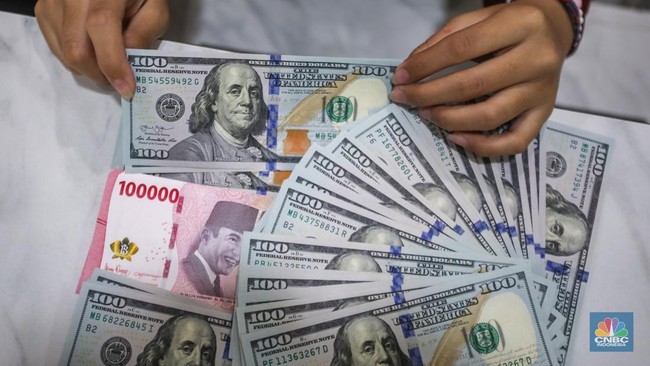
Jakarta, CNBC Indonesia - The rupiah exchange rate ended trading today, Thursday (9 April 2026), in a weakening zone against the US dollar.
According to Refinitiv data, the rupiah closed down 0.44% at Rp17,080 per US dollar. Today’s weakening also reversed the rupiah’s direction after it had strengthened 0.50% to Rp17,005 per US dollar in the previous trading session.
Throughout the trading day, pressure on the rupiah was evident from the opening. At the open, the rupiah weakened slightly by 0.06% to Rp17,015 per US dollar, before coming under deeper pressure until near the close.
On the other hand, the US dollar index (DXY), which measures the greenback’s strength against six major world currencies, was observed to weaken slightly by 0.05% to 99.078 at 3:00 PM WIB.
The rupiah’s weakening in today’s trading was influenced by a combination of external and domestic sentiments. Externally, the market is still overshadowed by global uncertainties despite the US dollar index trending slightly weaker.
Meanwhile, domestically, sentiment came from the latest World Bank report, which cut Indonesia’s 2026 economic growth projection to 4.7%, lower than the previous estimate of 4.8% and also below the government’s target in the 2026 state budget of 5.4%.
In the April 2026 edition of the East Asia & Pacific Economic Update report, the World Bank assessed that Indonesia’s economic growth will be pressured by rising oil prices due to escalating conflicts in the Middle East. This pressure is seen as only partially offset by commodity revenues and government investment initiatives.
“Indonesia’s economic growth is projected to slow to 4.7% due to pressures from higher oil prices and risk-averse sentiment, which will only be partially offset by commodity revenues and government investment initiatives,” the World Bank wrote in its report, quoted on Thursday (9 April 2026).
The World Bank also highlighted pressures on the rupiah, among other things triggered by market concerns over fiscal policy and capital outflows following MSCI’s decision to freeze Indonesian securities from its index. This condition is seen as contributing to Bank Indonesia’s interventions to maintain exchange rate stability.