
US Dollar Breaches Rp17,500: What About Indonesia's Fuel Prices? ESDM Speaks Out
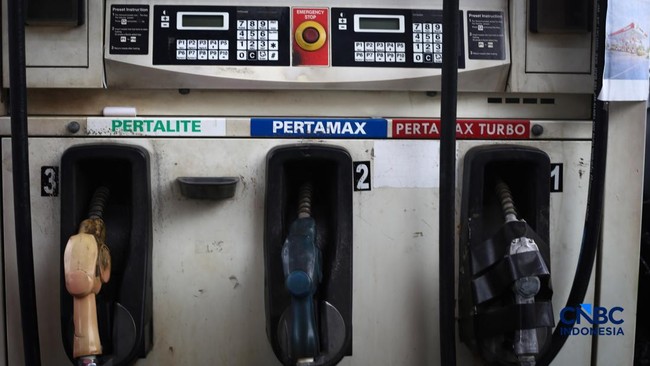
Jakarta, CNBC Indonesia - The Ministry of Energy and Mineral Resources (ESDM) has commented on domestic fuel prices amid the rupiah’s depreciation that has breached the Rp17,500 per US dollar level.
According to Refinitiv data, the rupiah opened trading with a 0.06% depreciation to Rp17,500/US$ this morning. This weakening follows a sharp 0.49% correction to Rp17,490/US$ at yesterday’s close, marking the rupiah’s weakest closing level ever.
The Director General of Oil and Natural Gas (Dirjen Migas) at the Ministry of ESDM, Laode Sulaeman, revealed that the government is currently engaged in intensive discussions on fuel pricing policy. These discussions involve several ministries, including Energy Minister Bahlil Lahadalia.
“That’s it, coincidentally the Minister and his ministerial team are meeting on that matter (the impact of the dollar at Rp17,500). So we’ll just wait,” Laode said when met at the Ministry of ESDM on Wednesday (13/5/2026).
When asked whether the rupiah’s weakening would directly lead to fuel price increases in the near term, Laode did not provide certainty. Certainly, the government is still monitoring developments before making a decision. “That’s still, right, there are no other updates besides what’s current. So we’ll see the subsequent developments,” Laode stated.
Previously, Bank Indonesia (BI) commented on the rupiah’s weakening exchange rate. The rupiah’s depreciation is influenced by conflicts in the Middle East.
BI Senior Deputy Governor Destry Damayanti explained that the ongoing conflict in the Middle East with increasing intensity is driving up oil prices and global uncertainty.
“From the domestic side, the rising seasonal dollar needs such as external debt payments and dividend payments, as well as needs for the Hajj pilgrimage, are increasing dollar demand in the domestic market,” Destry told the media on Tuesday (12/5/2026).
To this end, Destry emphasised that BI remains committed to staying in the market with smart interventions in the spot market, DNDF, and NDF, as well as optimising all monetary operation instruments to hopefully reduce pressure on the rupiah.
In line with these efforts, Destry said the central bank sees improving foreign investor confidence, with foreign capital flows starting to return to the domestic money market.
“BI also sees improving foreign investor confidence in portfolio assets, reflected in inflows, particularly to the SBN and SRBI markets during April amounting to Rp61.6 trillion,” she said.
According to Destry, the availability of foreign exchange liquidity in the domestic market is also sufficiently high, with foreign savings growth at the end of March reaching 10.9% year to date (ytd). Therefore, BI estimates that this seasonal pressure will ease, allowing the rupiah exchange rate to return to its fundamental level.