
US Demonstrates Sea Drone Capabilities as Chinese Warship Comes Under Scrutiny
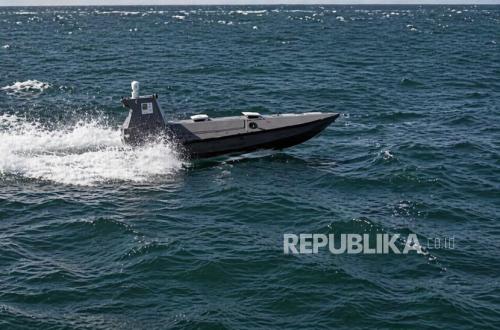
A small unmanned surface vehicle (USV) owned by the California-based maritime technology company, Seasats, successfully approached a guided-missile destroyer of the Chinese People’s Liberation Army Navy (PLAN) in strategic waters near the Philippines. This event serves as the latest signal that unmanned maritime vehicles are beginning to transform the landscape of military competition in the Indo-scific, while simultaneously presenting new challenges for global maritime security.
The incident occurred in the Luzon Strait, approximately 73 nautical miles northeast of Luzon Island, Philippines. This region is one of the world’s most strategic shipping lanes, connecting the Pacific Ocean with the South China Sea and situated between Taiwan and the Philippines. For years, this area has been viewed as one of the most vulnerable flashpoints should an armed conflict in the Taiwan Strait erupt.
According to Seasats CEO Mike Flanigan, the USV, named Lightfish, detected the Chinese warship using radar from a distance of about 10 nautical miles, before approaching to within just a few hundred metres while recording video of the Type 052D guided-missile destroyer. The Chinese warship was reportedly aware of the USV’s presence and performed manoeuvres to alter its course before both parties separated without further incident.
The event, which took place on 15 June, was first reported by Reuters and later detailed by Seasats. Although no confrontation occurred, the incident demonstrates how civilian unmanned vessels are now capable of operating in very close proximity to one of China’s most modern combatant ships.
The occurrence also highlights a new dilemma faced by navies worldwide. Unlike manned ships, USVs do not carry human crews, making it difficult to immediately ascertain their purpose, ownership, or level of threat. In a crisis situation, the decision to engage or allow an unmanned vessel to approach can become a strategic issue with the potential to trigger conflict escalation.
Lightfish itself is not designed as an attack vessel. The USV, measuring approximately 3.6 metres in length and weighing around 138 kilograms, prioritises extremely long-range endurance through a combination of solar panels and a hybrid propulsion system. According to Seasats, the vessel is capable of operating at sea for up to six months with a range of over 8,000 nautical miles without needing to return to base.
However, Lightfish’s ability to approach a warship reminds many of Ukraine’s success in utilising armed USVs in the Black Sea war. Since 2023, Ukrainian drone boats have repeatedly attacked the Russian Black Sea Fleet, forcing Moscow to move much of its main fleet from Crimea to bases deemed more secure. This development has changed how many nations view the effectiveness of unmanned vessels in modern warfare, as reported by The War Zone recently.
Prior to Ukraine, Houthi groups in Yemen also utilised USVs laden with explosives to attack ships in the Red Sea. Similar technologies continue to evolve and are now a focus for almost all major navies in the world, including the United States, which has begun integrating armed drone ships into various operations and combat exercises.
Source: jawawa.id (https://jawawa.id/newsitem/us-demonstrates-sea-drone-capabilities-as-chinese-warship-comes-under-scrutiny-1785470177)
Originally published by Republika (https://news.republika.co.id/berita/tj0pu3451/as-tunjukkan-kekuatan-drone-laut-kapal-perang-china-jadi-sorotan), translated from Indonesian