
US Democracy Criticised as Excessive, Citizens Forced to Vote on Everything
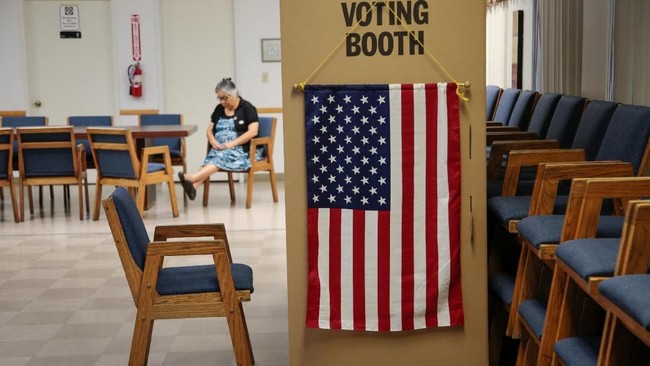
The United States is being criticised for taking democracy to an extreme, forcing its citizens to make direct decisions on a bewildering array of issues and public offices, making the electoral process far more complicated than in other developed nations. It is often said that Americans love democracy, which might explain why a fundamental civic duty has become akin to a part-time job. A voter in Houston could find themselves visiting the polls six times in a single year, while in California, voters are asked to decide on multiple competing wealth tax proposals. In Idaho, the ballot not only includes the president and legislators but also 49 judges, county coroners, and even a vote to designate an official state firearm.
This system is the product of two major waves of political reform. The first, during the era of President Andrew Jackson in the early 19th century, shifted many appointed positions to elected ones. The second wave, during the early 20th century Progressive Era, expanded the use of referendums and ballot initiatives to give the public more direct influence over policy. David Schleicher, a professor at Yale Law School, notes that both movements stemmed from a fear of power being too concentrated among political elites, with the solution being to disperse power to the voters as a check on authority.
However, the sheer volume of choices has become a burden. Todd Donovan, a political science professor at Western Washington University, explains that voters are expected to understand the function of each office and distinguish between candidates, a task repeated dozens of times on a single ballot. Consequently, many end up making decisions while ‘flying blind’. A 2018 Johns Hopkins University survey highlighted this problem, finding that about a third of Americans could not even name local offices up for election beyond governor, lieutenant governor, and state legislators. While more choices offer wider participation, they do not guarantee informed decision-making.
This system also erodes accountability. David Schleicher argues that democracy functions when voters know whom to reward or punish for a policy. When numerous officials are elected separately, the link between government performance and political responsibility becomes blurred. Even for those familiar with local government, assessing the performance of an official like a county comptroller is a difficult task. The more offices that are directly elected, the greater the risk that voters lose sight of who is truly responsible for a government’s successes or failures.
Furthermore, the modern referendum is no longer a cheap, grassroots tool. Todd Donovan points out that today’s ballot initiatives are rarely driven by volunteer groups. Getting a proposal onto the ballot often requires significant funding to collect signatures, draft legal texts, and run campaigns. The process is now backed by corporations, unions, ideological organisations, and billionaires. In California, a wealth tax proposal on the upcoming ballot was not born from a grassroots movement but was sponsored by a healthcare workers’ union and drafted by a legal team. Opposition to the measure is also heavily funded, with Google co-founder Sergey Brin contributing approximately US$82 million to the campaign against it. While referendums expand the space for public input, the resources required to reach the ballot are often beyond the reach of ordinary citizens.