
US Defence Secretary Pete Hegseth: American Economy Depends on Military Superiority
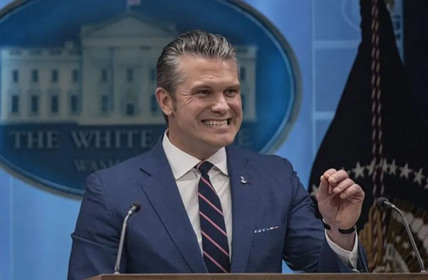
United States Defence Secretary Pete Hegseth has issued a stark warning about his country’s economic future. In an opinion piece published in the New York Post on Tuesday (23/6), Hegseth asserted that US economic stability cannot endure without the backing of undisputed military superiority.
Hegseth argued that the nation’s fiscal health does not solely depend on budget cuts, but rather on the Pentagon’s might. According to him, for decades the US military has served as the primary foundation of national prosperity, from safeguarding the dollar’s dominance in global markets to protecting international trade routes.
“If America loses its undisputed military edge, no amount of fiscal austerity will be able to preserve the health of this nation’s economy,” Hegseth wrote in his opinion piece.
He further explained that America’s status as the world’s greatest military power provides nearly limitless economic stability and advantages. He warned that without this superiority, financial markets, investment, and jobs in the United States would face serious threats of instability. Hegseth even stated that the greatest threat to national security today is not the budget deficit, but rather a lack of investment in military spending.
Hegseth’s statement aligns with the policy direction of President Donald Trump, who previously announced radical steps to strengthen defence. Trump plans to involve American automotive companies in large-scale weapons production, including Tomahawk cruise missiles and Patriot air defence systems.
However, this move has drawn external criticism. Kremlin Spokesman Dmitry Peskov assessed the policy as a clear manifestation of the increasing militarisation of the US economy. According to Peskov, this step was taken after the conflict in the Middle East and massive arms shipments to Ukraine significantly depleted Washington’s military stockpiles.
This economic dependence on weapons strength is now a subject of heated debate, with Washington viewing the military as a protector of assets, while critics see it as a sign of an economy increasingly reliant on the war industry.