
US Crackdown on China Widens, with Effects Already Reaching Indonesia
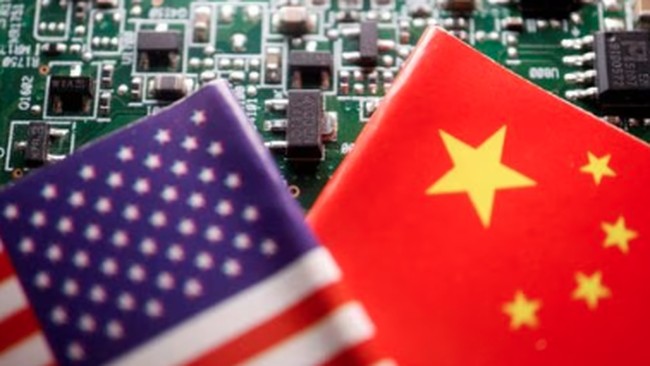
US efforts to close loopholes giving Chinese companies access to advanced technology are beginning to affect Indonesia. This week, US technology giant Nvidia instructed its manufacturing partners to freeze shipments of artificial intelligence (AI) servers to Indonesia, Malaysia, Singapore and Thailand.
The move was prompted by new rules issued by the US Department of Commerce’s Bureau of Industry and Security (BIS) on 19 November 2026. The rules tighten export permits to cut off Chinese companies’ access to advanced computing power through regional cloud service providers. The situation could also threaten data-centre investment flows in Southeast Asia, including Indonesia.
In response, Communications and Digital Affairs Minister Meutya Hafid said the government had prepared three strategic measures to safeguard the national AI ecosystem:
Coordination across ministries and agencies: The government will bring together ministries, agencies and relevant industry players to formulate a common position.
Law enforcement and stronger governance: Meutya has instructed domestic data-centre operators to strictly apply know-your-customer principles, to ensure that prohibited Chinese entities do not misuse their computing resources.
Dialogue with the US government: Indonesia will speak directly with authorities in Washington to clarify the technical details of the rules and the requirements for applying for export licences, so compliant local companies can continue to access the technology they need.
“Indonesia is choosing the path of dialogue. The relationship between Indonesia and the United States is a strategic and constructive partnership,” Meutya said in an official statement cited on Friday (27 November 2026).
Meutya stressed that US supplies of AI chips and servers to Indonesian companies had not been completely cut off; licence applications would now be assessed on a case-by-case basis.
She also said the AI ecosystem used by the public would not be affected, as most everyday services, such as content and product recommendation systems, fall outside the scope of the US restrictions.
Airlangga says Indonesia is secure and not a transshipment route
Echoing Meutya, Coordinating Minister for Economic Affairs Airlangga Hartarto said he believed Indonesia was relatively safe from the threat of tighter US semiconductor export controls. He based this confidence on the bilateral trade agreement known as the Article of Reciprocal Trade (ART), which also contains a digital clause.
“Indonesia’s position with the United States is relatively secure because we already have the ART, which also includes a digital clause,” Airlangga said in Jakarta last Thursday (26 November).
Airlangga further assured that Indonesia was not involved in the re-export, or transshipment, of chips to third countries—a practice that has been a focus of US concern. All Nvidia semiconductors brought into Indonesia, he said, were being used for domestic data-centre infrastructure development.
“Our position is clear: Nvidia semiconductors are used for domestic data-centre needs, not resold overseas. What the US has been concerned about is transshipment, in which Nvidia chips enter one country and are then sent on to another,” he said.
Risk of disruption to regional investment
The Financial Times previously reported that major server assemblers Dell Technologies and Super Micro Computer (Supermicro) had formally notified buyers in four ASEAN countries to hold all orders for hardware containing Nvidia chips and prevent them from leaving factories.
The aggressive tightening by Washington emerged shortly after a leadership crisis involving Nvidia chief executive Jensen Huang over alleged chip smuggling by a Singaporean cloud company. It requires cloud service providers in Southeast Asia to obtain export licences within a strict 90-day period.
The lack of clear guidance on how to apply for licences is seen as a potential cause of panic in the regional hyperscale data-centre industry. It has already derailed major business deals, including a hold on a US$500 million bank credit facility for Singapore cloud company Aolani, which was finalising a computing supply contract for TikTok parent company ByteDance.
Source: jawawa.id (https://jawawa.id/newsitem/us-crackdown-on-china-widens-with-effects-already-reaching-indonesia-1795920642)
Originally published by CNBC Indonesia (https://www.cnbcindonesia.com/tech/20261128211929-37-789381/amerika-menggila-blokir-china-dampaknya-sudah-meluas-ke-indonesia), translated from Indonesian