
US Considers Emulating Iran by Building Underground Command Centres
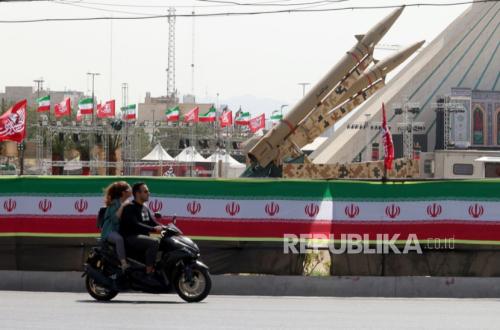
The United States is considering moving parts of its military command centres in the Middle East to underground facilities after Iranian missile and drone attacks caused serious damage to the US Fifth Fleet base in Bahrain. This option resembles the strategy used by Iran for years to protect its command centres, missiles, launchers, and military facilities from airstrikes.
The Wall Street Journal reported that US defence officials are evaluating several major changes after Naval Support Activity Bahrain was repeatedly hit throughout the war. The options under discussion include not rebuilding some of the damaged structures, moving command centres underground, dispersing capabilities across multiple locations, and reducing reliance on a single large base.
These considerations have gained renewed attention after US Acting Secretary of the Navy Hung Cao openly acknowledged the extent of the damage caused by Iran. Cao has served as Acting Secretary of the Navy since 22 April 2026.
“Iran really hit Bahrain very hard,” Cao said in an interview with The Epoch Times, as quoted by Reuters on Thursday, 10 September 2026. The statement referred to Naval Support Activity Bahrain, the base that serves as the headquarters for the US Navy’s Fifth Fleet.
Cao’s remarks represent one of the most candid admissions from a senior American official regarding the impact of Iranian attacks on its military infrastructure. While Cao did not state that the base was totally destroyed, and Fifth Fleet operations continue, the damage is significant enough that Washington is questioning the base model that has served as the backbone of its military presence in the Gulf for decades.
Damage to Command Centres and Satellites
Attacks on the Bahrain base began on the first day of the war on 28 February 2026. USNI News reported at the time that Iranian missiles hit the Fifth Fleet headquarters in Manama, while an attack drone also struck Naval Support Activity Bahrain and appeared to destroy a radome related to communication or sensor capabilities.
No US casualties were reported from the initial attacks on the base. However, an investigation by The Wall Street Journal later found that missile and drone attacks between February and June damaged command centres, several buildings, and satellite communication terminals.
Most personnel were evacuated, although military operations continued. The cost of rebuilding Naval Support Activity Bahrain alone is estimated to reach approximately 400 million US dollars.
The damage has raised fundamental questions within the Pentagon. While large, permanent bases provide logistical advantages, such facilities also serve as high-value targets when adversaries possess precision missiles and drones capable of reaching US military locations in the region.
Consequently, one of the options being considered is placing command centres underground. Another approach involves dispersing personnel, communication systems, and operational capabilities across multiple locations so that a single strike cannot neutralise critical parts of the chain of command.