
US Companies Abandon Homegrown AI for Cheaper Chinese Alternatives
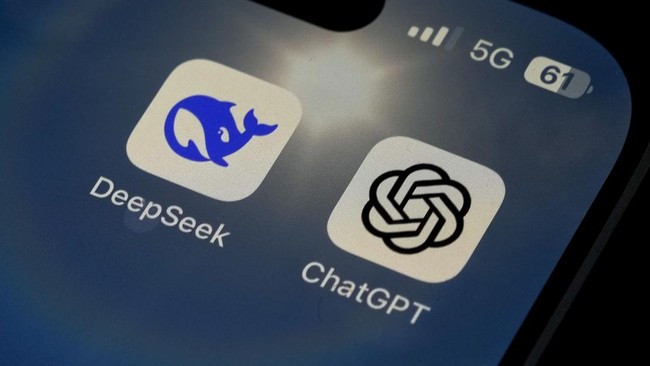
The global technology business world is witnessing an unexpected shift. Major US companies are beginning to abandon homegrown artificial intelligence (AI) models and switch to Chinese-made products. The primary reason is simple: significantly lower costs with equivalent quality.
Soaring AI usage costs are causing many companies to question the expensive fees charged by leading US AI models. China, meanwhile, offers comparable capabilities at a far more affordable price. As reported by the Financial Times, big names such as DoorDash, Airbnb, and the German engineering giant Siemens are now adopting Chinese-made AI tools.
Beyond lower costs, Chinese models generally use an open-weight approach, opening parameters and usage values to users. This approach allows user companies to customise usage according to their specific needs. Data from OpenRouter, a platform providing access to various AI models while monitoring their usage, shows that leading Chinese models like DeepSeek and Z.ai are now surpassing the usage of US competitors like Anthropic’s Claude and OpenAI’s ChatGPT. Amidst heated geopolitical rivalry, cost efficiency has become the main deciding factor.
“Chinese models have now become inevitable,” said Eugene Cheah, CEO of AI platform Featherless AI. “Companies are beginning to realise, ‘Hey, we don’t need the best model, we can use a faster and cheaper one that is still adequate’.”
US AI models have long been considered the most advanced. However, that view is slowly changing. The launch of GLM-5.2 from Chinese startup Z.ai last month sparked heated discussions in Western tech circles. Key Silicon Valley figures acknowledged its capabilities are equal or nearly equal to US systems, despite much lower usage costs.
This moment has arrived at an opportune time. Over the past year, giant corporations worldwide have invested heavily in AI implementation to boost productivity. However, many are burdened by ballooning bills. One company was reported to have spent US$500 million in a single month on Claude usage. While that figure is unusual, the Ramp AI Index notes that the most active AI adopters spend an average of US$7,500 per employee each month. If usage scale cannot be reduced, the best option is to find a cheaper alternative.
Andy Fang, co-founder of DoorDash, revealed that his company cut costs significantly by moving “entry-level tasks” to models made by Moonshot AI, another Chinese startup. Meanwhile, San Francisco-based startup Lindy has completely stopped using Anthropic’s models and switched to DeepSeek V4.
“Companies have strong reasons to shift some workloads to more efficient models. Why pay a premium for Anthropic or OpenAI, if for many required tasks, Chinese models are already sufficient?” said Sam Bresnick, a researcher at Georgetown University’s Center for Security and Emerging Technology.
Cost is not the only reason. Open-source models give companies greater control over processing sensitive data and make it easier to customise for business needs. Furthermore, trust in the US as a leader in AI governance is beginning to wane, especially after the Trump administration suspended access to Anthropic’s Mythos model for foreign users. “The suspension of Mythos access is the event with the most tangible impact. It exposed the risk of relying on just one party for all operational needs,” said Aidan Gomez, CEO of Canadian AI group Cohere.
This phenomenon also has the potential to significantly impact the technology ecosystem in Indonesia and Southeast Asia. According to TechRT’s, users in Indonesia contribute approximately 4% of total DeepSeek app downloads worldwide.