
US Citizens Divided Over Proliferation of Surveillance Cameras
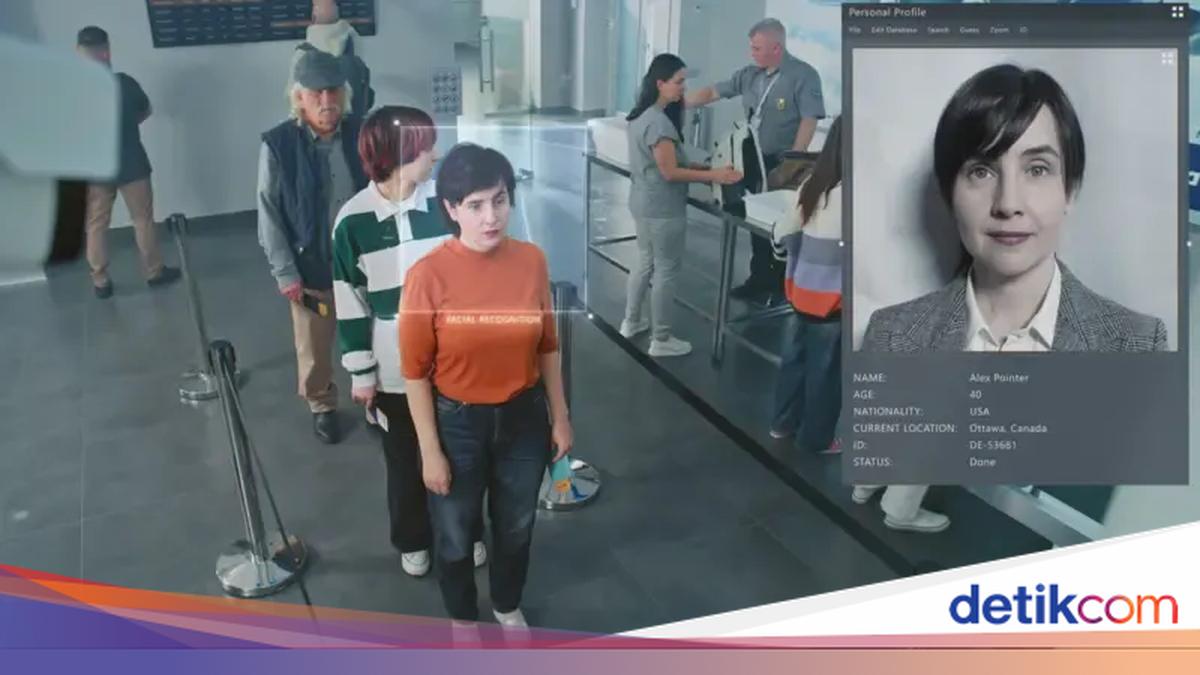
In the tug-of-war between privacy and security, it is vital to understand the extent of the surveillance infrastructure surrounding you. I did not tell anyone that I was meeting Michelle Dahl, the executive director of the Surveillance Technology Oversight Project, a watchdog group for surveillance technology. However, as I greeted her in Brooklyn, New York, the system already knew we were together.
“All of this is almost invisible if you are not looking for it,” said Dahl, pointing towards a lamp post. There, two small cameras bearing the New York City Police Department (NYPD) insignia were hidden behind a black plastic dome. These cameras are part of the NYPD’s massive AI-based surveillance platform, the Domain Awareness System (DAS).
“Every police officer in this city can access it via their phones and display the profile of almost anyone walking around,” she noted. The platform connects over 80,000 cameras with drones, social media data, and vehicle tracking systems capable of following a car’s movement even as it crosses state lines. According to Dahl, the system could reveal whom I met and where I travelled in the past week. My entire life: tracked.
Every day, across the United States, your life is also being recorded by an expanding mass surveillance system that reaches much deeper than many realise. Controversy surrounding the US surveillance technology company, Flock Safety, has emerged in recent months. However, that company is merely one player in a massive industry. Flock and supporters of surveillance technology argue that society must find a compromise between privacy and security. But is the sacrifice worth it?
To answer this, it is essential to understand how widespread the current surveillance network actually is. Therefore, I attempted to search for surveillance cameras in my own neighbourhood. You can do the same, even without leaving your sofa.
‘The more you look, the more cameras you will see.’ Some people concerned about surveillance might view Flock as the primary issue. However, New York demonstrates that the problem is far broader. Even though that company does not operate here, our activities remain under monitoring. Dahl led me on a surveillance tour towards the BBC office in Manhattan, pointing out cameras and various other monitoring devices along the way.
After ten years of covering privacy issues, I thought I was well-acquainted with surveillance practices. Yet, I was still shocked by the vastness of the infrastructure recording our every movement. Within just a few steps, we stopped and looked around. I counted 16 different cameras. “I suspect these cameras are owned by business owners, building owners, and property tenants,” she said. According to Dahl, this does not include cameras operated by the city government.
“But the NYPD can likely access them easily. If there is an investigation, they often simply request the footage from the owners, and people usually hand it over.” Some camera providers, such as Amazon’s Ring, even have automated systems that make it easier for police to request and receive footage directly from users. Public space cameras have become so commonplace that I almost no longer notice them. But, with Dahl’s help, my attention was drawn back to their presence: small capsule-shaped cameras hanging in front of shops, dark grey devices mounted on building corners, and sophisticated dual-camera systems owned by the city that can pan, tilt, and zoom to highlight individuals of interest.
I tried to count them as we walked, but the number of visible cameras was so high that it was impossible to keep counting while talking. “The more you start noticing, the more you will see,” said Dahl.
Why is Flock’s presence being questioned? These systems can record and store your every movement, and Flock has become a primary symbol of mass surveillance. In recent months, the company has faced a wave of bipartisan opposition across various regions of the United States. One reason is the immense reach and power of Flock. The company states it operates over 100,000 cameras spread across 6,000 communities across the US. Flock is best known for its vehicle tracking technology which, according to the company, scans cars up to 20 billion times every month. However, the company is also developing facial recognition technology that can be used to track individuals.
Such technology allows law enforcement to conduct investigations far beyond their jurisdictions. A sheriff in Texas was reported to have accessed over 83,000 Flock cameras across the US to hunt for a woman linked to an abortion case, including in states where abortion is legal. Flock states that the technology they develop helps maintain public safety and contributes daily to solving criminal cases that might otherwise remain unsolved. However, in at least 46 cases, law enforcement officers have reportedly used the Flock system for unauthorised purposes, including stalking partners, ex-partners, or strangers. Following months of negative press, Flock has implemented several security mechanisms to detect and prevent misuse.
Source: jawawa.id (https://jawawa.id/newsitem/us-citizens-divided-over-proliferation-of-surveillance-cameras-1791287965)
Originally published by detikcom (https://news.detik.com/bbc-world/d-8695272/warga-as-terbelah-sikapi-menjamurnya-kamera-pengawas), translated from Indonesian