
US-China Tensions Escalate Ahead of Trump-Xi Meeting
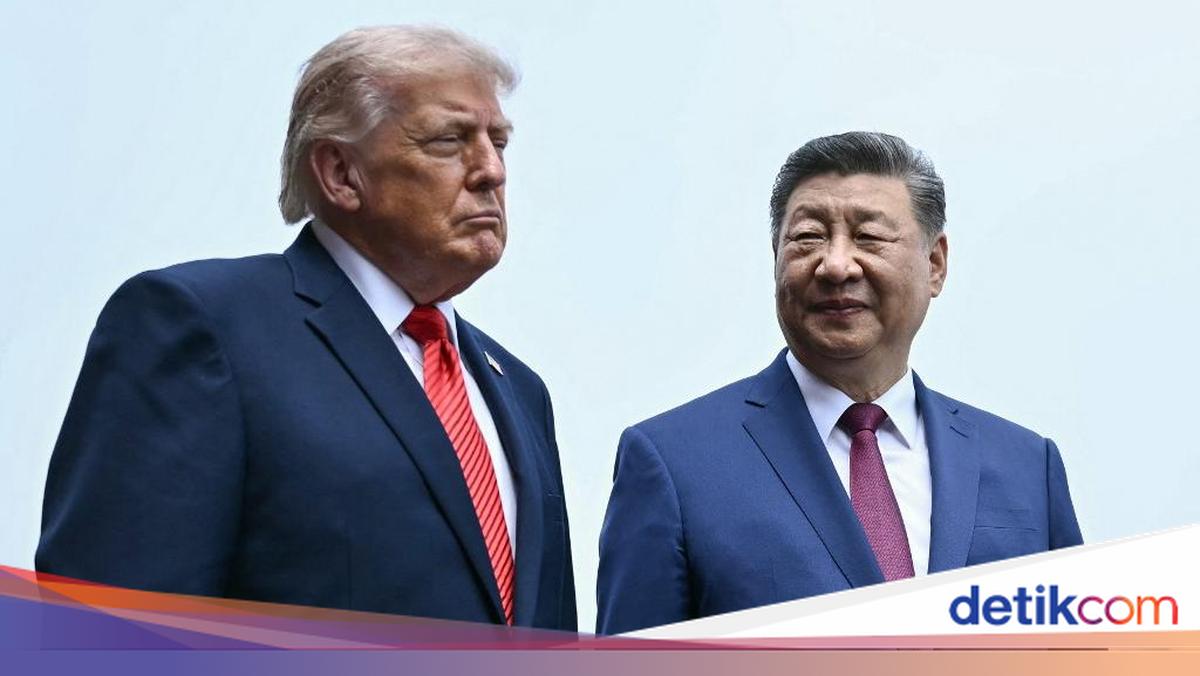
Chinese President Xi Jinping is set to visit the United States to meet with US President Donald Trump, though significant tensions persist between the two nations ahead of the summit.
According to reports from AFP on Tuesday (22/9/2026), Chinese authorities have confirmed that Xi Jinping will conduct a visit to the US from Wednesday (23/9) to Friday (25/9). Chinese Foreign Ministry spokesperson Guo Jiakun stated that Xi and Trump will discuss several key issues, including “conducting in-depth exchanges of views on major issues concerning China-US relations, world peace, and development.”
Guo noted that China intends to work with the US to enhance strategic stability, with both nations seeking to strengthen dialogue and “manage differences appropriately.” Washington has also announced that Trump and Xi will meet this week. The meeting between the leaders of the world’s two largest economies is expected to aim at easing tensions regarding trade, technology, and broader strategic issues.
According to a US official who requested anonymity, Trump will personally welcome Xi at Joint Base Andrews on Wednesday (23/9), which would be a rare occurrence. Speaking to journalists aboard Air Force One on Sunday (20/9), Trump stated, “I will discuss almost everything with him.”
Xi’s visit takes place while the trade war between China and the US continues to intensify, shadowed by the threat of military confrontation regarding Taiwan. While both nations have maintained a form of tariff ‘armistice’ for nearly a year, no permanent agreement has been reached.
Heightened tensions are also being felt by third parties. According to DW, German and Chinese entrepreneurs meeting in Düsseldorf for a business cooperation dialogue last week expressed confusion over the unending trade conflict between the US and China. So far, no tangible results have emerged even after Donald Trump’s brief visit to Beijing in mid-May.
Stakeholders recognise that this dispute extends beyond imports, exports, and balance sheets; the friction between the world’s two largest economies has profound implications for global politics. “China’s economy is weakening. Companies are worried about the continuity of their businesses, which need to expand into overseas markets immediately,” said an anonymous participant from the Chinese dialogue, who previously led a Chinese SOE branch in Europe.
Market regulations in the US and EU are becoming increasingly stringent and indistinguishable, with ideological considerations playing a role. “As long as the US is in conflict with China, the EU will not be willing to cooperate with us if it contradicts its own interests,” the participant added.
A specific example is electric vehicle (EV) mobility. The EU is striving for an electric transition and aims to drastically reduce CO2 emissions in the transport sector. However, Brussels is seeking additional tariffs on cheap Chinese EVs, suspecting an unfair competitive advantage due to high government subsidies—a claim China denies.
German car manufacturers, including VW and BMW, have rejected these tariffs, fearing a drop in sales due to potential retaliatory measures from China. Mercedes has also warned against rushing into such import duties.
The US position is even more resolute. “Zero Chinese electric vehicles,” stated President Donald Trump in mid-September following his visit to Ireland. “Europe is suffering greatly because of it. With tariffs of 100 to 150 per cent, so far I have prevented the entry of Chinese cars,” Trump explained.
European Commission President Ursula von der Leyen described this as a second ‘China Shock’. The first occurred 25 years ago when China joined the WTO, leading to an influx of cheap Chinese products. The second ‘China Shock’ stems from China’s advancements in cutting-edge technology and industry, such as battery and communication technologies.
“We see the impact on societies and factories across the entire EU. This is causing deindustrialisation in European industrial hubs. This cannot be tolerated,” von der Leyen stated during her 2026 State of the EU speech.
Tensions have also flared regarding the US stance on Iran. Recently, China reacted strongly to the US move to ban Iranian airlines from operating worldwide starting 23 September. Beijing authorities openly opposed Washington’s move, labelling it an “illegal unilateral sanction.”
China remains a major economic partner and diplomatic supporter of Iran. China condemned the US action, stating it lacks international legal basis. “China consistently opposes illegal unilateral sanctions that have no basis in international law or authorisation from the UN Security Council,” asserted Foreign Ministry spokesperson Guo Jiakun during a press conference in Beijing.
This condemnation follows statements from US Treasury Secretary Scott Bessent, who indicated that all Iranian airlines would cease global operations starting 23 September. Bessent warned that Tehran-based airlines would face significant difficulties operating globally due to US sanctions. There has been no direct response from Iranian authorities to Bessent’s statement, which comes as the Trump administration demonstrates its determination to increase economic pressure on Iran.
Source: jawawa.id (https://jawawa.id/newsitem/us-china-tensions-escalate-ahead-of-trump-xi-meeting-1790121187)
Originally published by detikcom (https://news.detik.com/internasional/d-8674889/as-china-tegang-jelang-trump-bertemu-xi-jinping), translated from Indonesian