
US-China Meeting: The Strengths of Both Countries and Leaked Agenda Details
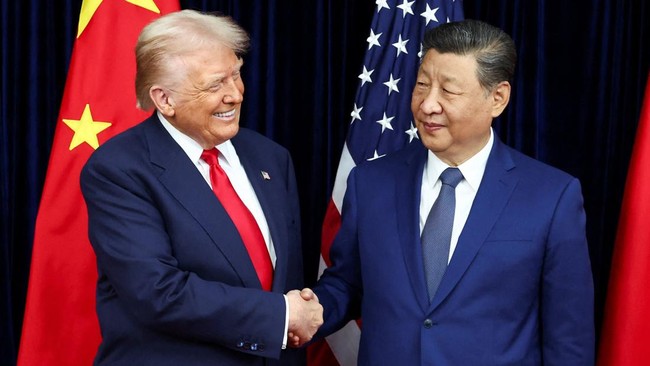
US President Donald Trump and Chinese President Xi Jinping are scheduled to hold a strategic meeting in Beijing on 14 and 15 May 2026. This meeting represents the first face-to-face agenda in a series of four planned before the end of 2026.
International observers often label the US and China as the “G2”, two powers that dictate the direction of the global economy. Interactions between the two leaders play an essential role, with massive impacts on the future of AI, the architecture of global supply chains, and the resolution of ongoing conflicts in Taiwan and the Middle East.
Current relations between Washington and Beijing are at a fluctuating point. US leadership tends to adopt a transactional approach, while China assumes an increasingly assertive posture.
Both view economic and technological dependencies as national security risks. Expectations of a major diplomatic breakthrough are considered overly optimistic, so realistic targets include curbing destructive conflicts and finding a minimal balance to maintain global market stability.
Global Economic Concentration and Power Shifts
Based on projections from the International Monetary Fund’s World Economic Outlook April 2026 edition, the global Gross Domestic Product is estimated to exceed US$126 trillion. This fundamental data highlights a highly concentrated world economy.
The four major countries—namely the US, China, Germany, and Japan—collectively control about half of global economic activity. The US dominates absolutely with a projected GDP of US$32.38 trillion, representing 25.6% of global output. China holds second place with a GDP of US$20.85 trillion, accounting for a 16.5% share.
The growth rates of the two countries show polarisation. In 2026, the US is projected to grow at 2.3%, while China leads the expansion rate at 4.4%.
China’s achievements come amid heavy domestic obstacles, including demographic slowdown and a property sector crisis. This contrasts with the stagnation of Germany and Japan, projected to grow only in the 0.7% to 0.8% range.
In addition to GDP, the real strength of the two countries is reflected in their export capacities in the global market. Entering the second quarter of 2026, the foreign trade performance of these two giants remains solid despite high tariffs.
The latest data shows that total US exports in March 2026 reached US$320.85 billion. Meanwhile, China recorded more aggressive performance with total exports in April 2026 at US$359.44 billion.
China’s high export figures affirm its role as the world’s manufacturing hub, while US exports are driven by the technology, services, and energy sectors.
Economic dynamics are also coloured by a shift in the axis towards Asia. India is projected to achieve aggressive growth of 6.6% with a GDP of US$4.15 trillion, opening opportunities to displace the UK and Japan by 2028.
Indonesia maintains a strategic position with a projected GDP of US$1.54 trillion and stable growth of 5%, despite facing manufacturing pressures due to geopolitical tensions. On the other hand, high US tariff policies since 2025 have delivered shock effects to traditional trading partners like Canada and Mexico.
Equity Market Valuations and Foreign Investment Accumulation
US dominance is evident when analysing global equity market valuation metrics. Based on the S&P Global BMI indicator, the US stock exchange controls 61.0% of worldwide market capitalisation.
In contrast, China, ranking fourth, contributes only 2.8% of total global equity valuation. This extreme disparity represents the maturity of capital market infrastructure, governance transparency, and massive participation by international institutional investors in Wall Street.
Although lagging in public equity markets, China demonstrates resilience in attracting direct foreign investment. The US still leads with a total accumulated foreign investment stock of US$10.5 trillion, accounting for 23.7% of the global share.
However, China consolidates its position in second place with an accumulation of US$3.8 trillion, equivalent to 8.6% of the global share. China’s appeal to multinational businesses remains solid despite regulatory barriers and geopolitical tensions, evident from a sharp surge in foreign investment compared to US$950 billion in 2012.
Tariff Stalemate and Trade Balance Restructuring
The main agenda that will dominate negotiations in Beijing is the bilateral trade dispute. For a decade, the two countries have been trapped in a mutually damaging economic conflict.
Escalation peaked in early 2025 when tariffs exceeded 100% levels. The situation shifted to a phase of minor tariff reductions or a ceasefire, but the reality is structural deadlock. China holds control over rare earth metal supplies, while the US restricts capital flows and imposes high-tech export sanctions.
The risk of policy miscalculation in trade still looms. The US is investigating industrial overcapacity and forced labour practices in China, which could serve as grounds for raising tariffs again.
In retaliation, Beijing on 2 May 2026 activated a blocking instrument that authorises financial sanctions on multinational companies complying with US sanctions. This policy forces global executives to choose their priority economic blocs.
Data records a significant contraction in the US goods trade deficit against China. The deficit, which peaked at US$382.28 billion in 2022, continues to show a shrinking trend.
In 2025, the deficit figure was successfully reduced to US$202.07 billion. Entering the first quarter of 2026, the total deficit was recorded at US$33.49 billion. The decline in US imports from China confirms the effectiveness of global supply chain restructuring and the impact of protectionist tariffs.
Geopolitical Constellation, Cybersecurity, and Future Technology
While the US delegation seeks to focus negoti
Source: jawawa.id (https://jawawa.id/newsitem/us-china-meeting-the-strengths-of-both-countries-and-leaked-agenda-details-1778406683)
Originally published by CNBC Indonesia (https://www.cnbcindonesia.com/research/20260510081931-128-733737/as-china-bertemu-ini-kekuatan-kedua-negara-dan-bocoran-agendanya), translated from Indonesian