
US Charges Former Cuban President Raul Castro: Who Is He?
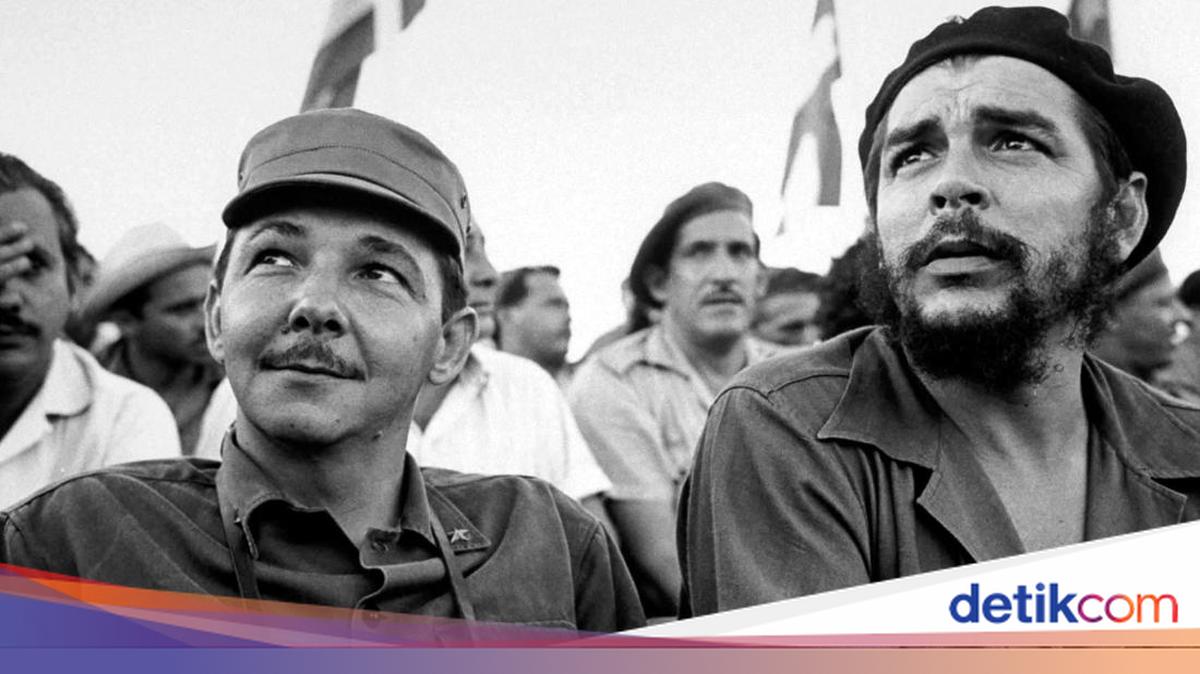
The United States has charged 94-year-old former Cuban president Raul Castro with murder. Castro is accused of playing a central role in the shooting down of two light aircraft belonging to the exile group Hermanos al Rescate on 24 February 1996. The incident killed four people and triggered one of the biggest crises in Cuba-US relations. Castro faces four murder charges, along with conspiracy to kill US citizens and aircraft destruction, according to Acting US Attorney General Todd Blanche.
The case holds significant weight, not only due to the precedent of Venezuelan President Nicolás Maduro’s arrest last January but also because of Castro’s pivotal role in contemporary Cuban history. Although Raul has always been in the shadow of his brother Fidel, he was a key figure in the military and intelligence apparatus of the regime, culminating in his formal assumption of the presidency in 2008 and leadership for a decade. In 2018, Castro handed over the presidency to Miguel Díaz-Canel and three years later stepped down as head of the Communist Party. However, analysts believe he remains the most powerful figure in Cuba’s power structure.
Castro was married to Vilma Espín, a prominent revolutionary figure he met during the guerrilla campaign that overthrew Batista. She died of cancer in 2007. The couple had four children, including Mariela Castro Espín, a member of Cuba’s National Assembly and director of the National Centre for Sex Education (CENESEX), and Alejandro Castro Espín, director of state security intelligence and counterintelligence.
Castro differed from revolutionary icons Fidel Castro and Che Guevara. He cultivated a more pragmatic, greyer image without developing a large personality cult. Nevertheless, his portraits often hung alongside Fidel’s in Cuban government offices.
As president during the era of reform and thaw with the US (2008-2018), Castro, who had been involved in the revolution alongside Fidel and Ernesto ‘Che’ Guevara and played a key military role for decades, reached the peak of his influence after assuming power between 2006 and 2008. He temporarily took over the presidency in 2006 after Fidel’s severe illness and was formally appointed president two years later. Unlike Fidel’s charismatic and ideological style, Castro presented a more pragmatic, less verbose image.
During his tenure, he pushed for limited economic reforms—the largest since the Soviet Union’s collapse—including expanding space for small private businesses, allowing home and vehicle sales, easing some migration restrictions, and opening markets partially. He also reduced the state bureaucracy and promoted new forms of self-employment. These reforms coexisted with the continuation of Cuba’s one-party political system established after the 1959 revolution. Under Castro’s leadership, international human rights organisations consistently criticised the lack of freedom of expression and civil and political rights, as well as suppression of opposition.
His presidency’s most significant moment came in 2014 when he and then-US President Barack Obama announced the restoration of diplomatic ties after over half a century of hostility. This historic step led to reopened embassies, improved transport links, increased contacts, and Obama’s 2016 visit to Havana—the first by a US president since the 1959 revolution. When Fidel died in 2016, Castro led official tributes, announced his brother’s death on television, organised a state funeral, and pledged to uphold socialism. However, economic and political openness remained limited, and parts of the process were reversed after Donald Trump took office in 2017, a year before Castro handed power to Díaz-Canel.
Raul Castro was born on 3 June 1931 in Birán, eastern Cuba, into a wealthy family of Ángel Castro and Lina Ruz. Like his brother Fidel, he studied at a Catholic school in Santiago de Cuba before moving to Havana for secondary and university education. In the late 1940s and early 1950s, he participated in protests against the government of Carlos Prío Socarrás and later against Fulgencio Batista’s dictatorship (1952-1958). Unlike Fidel, who was initially more influenced by Cuban nationalism, Raul showed early signs of…