
US Cancels War Drill with South Korea, China and North Korea Could Benefit
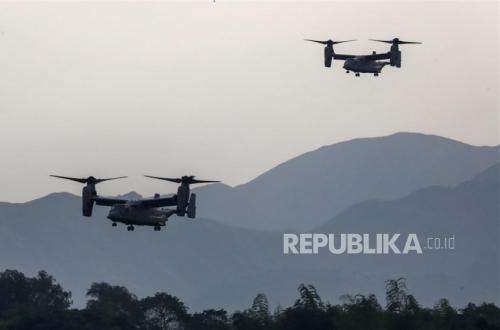
The United States has cancelled a large-scale amphibious landing exercise with South Korea scheduled for September 2026. The decision is the latest sign that the prolonged war with Iran is draining Washington’s military personnel and assets from Asia, a region that is the centre of US strategic competition with China and the front line against North Korea.
The exercise, known as Ssangyong or Twin Dragons, typically brings together thousands of US and South Korean Marines in operations involving landing from the sea, seizing beaches and moving troops inland.
Reuters reported on Monday, 24 August 2026, that the South Korean Marine Corps confirmed the US had cancelled the exercise. The US Marine Corps had already informed Seoul in June that American troop availability would be limited due to operational needs arising from the Iran war.
Thus, the immediate reason for cancelling Twin Dragons was not a diplomatic decision to appease North Korea. Washington faces a more fundamental problem: troops normally available for operations and exercises in Asia are now needed in the Middle East.
Troop availability for division-level exercises will be limited, a South Korean Marine Corps spokesman told Reuters. Seoul and Washington are still discussing the possibility of holding the exercise at another time. No replacement mechanism has been announced to make up for the lost training opportunity this year.
The cancellation is significant because Ssangyong is not a ceremonial exercise. In the 2024 exercise, for example, more than 13,000 personnel were involved along with more than 20 warships, 30 aircraft and 40 amphibious assault vehicles. F-35B stealth fighters, helicopters, amphibious assault ships and landing forces were deployed simultaneously.
The US Navy, in a report on Tuesday, 3 September 2024, explained that the exercise included penetration operations from sea and air, seizing beachheads, ground operations and exercises to neutralise enemy forces. The aim was to improve combat readiness and the ability of the two countries’ forces to operate as a single force.
In other words, when the exercise is cancelled, what is lost is not just one military agenda item in the annual calendar. The US and South Korea lose the opportunity to simulate one of the most complex war operations: moving thousands of soldiers, ships, aircraft and command systems from two countries in a single combined operation.
US-South Korea military cooperation is rooted directly in the Korean War of 1950-1953. After the armistice on 27 July 1953, Washington and Seoul signed a Mutual Defense Treaty on 1 October 1953.
That treaty became the foundation for the American military presence in South Korea to this day. The US State Department records that about 28,500 American military personnel are stationed in South Korea to help deter and confront the North Korean threat.
Combined military exercises then developed during the post-war era. The framework of large-scale annual exercises known today strengthened in 1976. That year, the US and South Korea began Team Spirit, a large field exercise that tested Washington’s ability to send additional troops from outside the Korean Peninsula if war broke out. In the same year, the South Korean government mobilisation exercise Ulchi was combined with the US command exercise to become Ulchi-Focus Lens.