
US Business Groups Warned Over Prabowo's Investment Offers: CRI
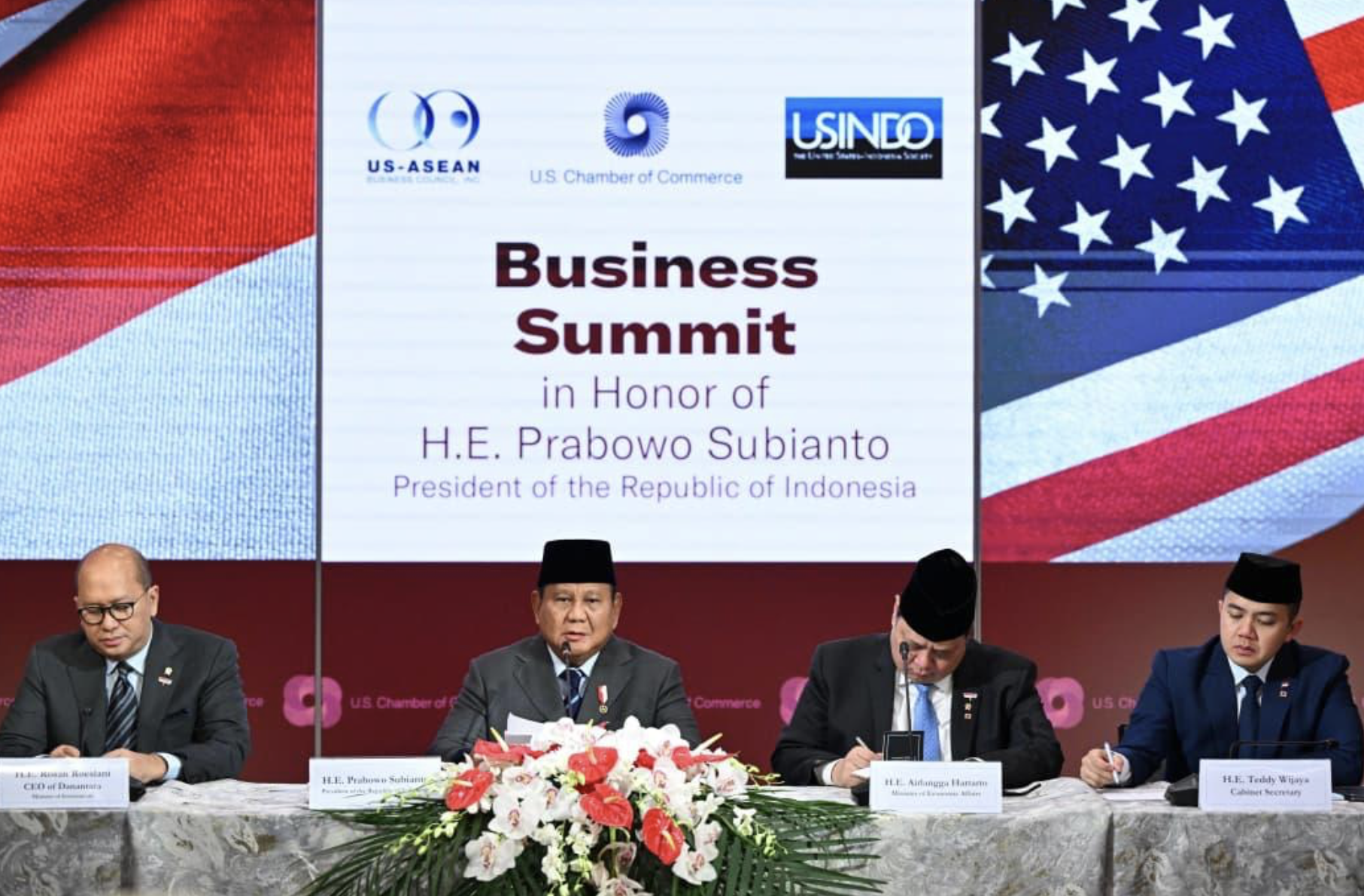
US business groups must heed concerns over human rights violations and environmental protection during meetings with Indonesian President Prabowo Subianto. CRI warns that mineral exploitation in Indonesia is rife with conflict, environmental damage, and alleged human rights abuses.
The meeting between the President and business leaders took place at the US Chamber of Commerce (USCC) in Washington DC on Wednesday (18/2) local time. President Prabowo Subianto invited US businesspeople to invest and do business in Indonesia.
“We hope for a stronger American presence in our economy,” Prabowo said.
Climate Rights International (CRI) has urged US businesses to consider human rights and climate issues related to the nickel industry, large-scale deforestation plans, and proposed legislation reportedly aimed at restricting freedom of expression and civil society funding.
Brad Adams, Executive Director of CRI, stated that the business groups hosting President Prabowo – including the US-ASEAN Business Council, US Chamber of Commerce, and US-Indonesia Society – must clarify that large-scale deforestation, poor treatment of local communities by the nickel industry, and severe environmental damage are key concerns for US firms considering investment in Indonesia.
“Businesses seeking investment opportunities in Indonesia must be vocal in supporting human rights, environmental protection, and climate action, or they risk becoming complicit in serious violations,” he said in a press release received by the editorial team on Wednesday (18/2/2026).
CRI has sent a letter to the organisations attending the meeting with President Prabowo, stating that Indonesia’s nickel industry threatens local communities’ rights, damages the environment, and contributes to the climate crisis. Three CRI reports over the past two years have documented pollution, health issues, and the destruction of fishing livelihoods due to mining and nickel processing.
Additionally, there are issues of land conflicts, forced relocations, hazardous working conditions, threats to indigenous peoples’ ways of life, intimidation of environmental defenders by security forces, censorship, and coal usage causing large-scale emissions.
CRI’s records indicate that since taking office in 2025, President Prabowo has announced initiatives that reverse progress made since the fall of Suharto’s authoritarian regime in 1998. As part of the apparent national food security plan, Prabowo has initiated large-scale deforestation and land clearing linked to serious human rights abuses and increased militarisation.
The government has announced plans to convert 2.3 million hectares of protected forest into agricultural and energy plantations, which would be Indonesia’s largest deforestation project in history. These projects could lead to forced relocations, threats to indigenous rights, and loss of traditional livelihoods. As home to the world’s third-largest tropical rainforest, Indonesia’s deforestation from these projects would be a disaster for global emissions.
Local communities and civil society in Indonesia have protested these projects, with some cases resulting in arrests and police violence. In January 2026, the Ministry of Law released an academic manuscript justifying the development of a bill on Combating Disinformation and Foreign Propaganda.
Although no public draft of the proposed legislation is currently available, leading Indonesian human rights organisations are deeply concerned that if adopted, the law could be used to criminalise local communities, journalists, activists, and civil society groups critical of the Indonesian government.
According to CRI, US business groups must be cautious when investing in sectors linked to serious human rights violations, large-scale deforestation, and suppression of free speech.
“As in the US, the right to freely discuss government policies is fundamental and must be unreservedly supported,” he said.