
US Bombers Depart UK as Tensions Escalate in Strait of Hormuz
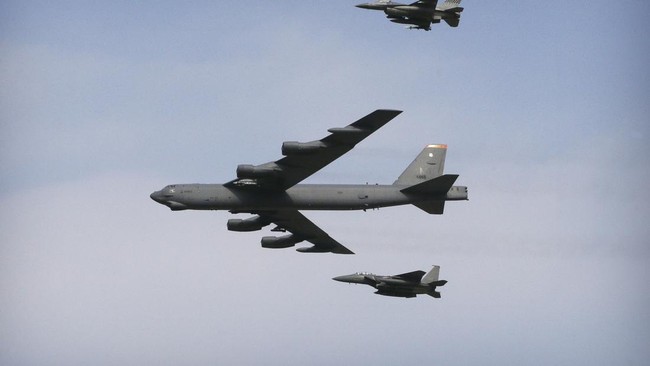
The United States has withdrawn all B-1 bombers stationed at the RAF Fairford military base in the United Kingdom. This decision follows the discovery of a suspected terrorist attack plot around the base.
This withdrawal occurs as tensions in the Middle East intensify. Simultaneously, at least two tankers have been reported under attack in waters near Oman and Iran.
Citing a Pentagon official who was not authorised to discuss sensitive military movements, all B-1 bombers at RAF Fairford have been relocated to their bases in the US. Military flight monitors had previously observed dozens of B-52 and B-1 bombers operating from RAF Fairford since the onset of the Iran war. On Sunday, several B-1 aircraft were seen leaving the base.
RAF Fairford, located approximately 160 kilometres west of London, has served as a vital base for US bomber operations in various Middle Eastern conflicts for decades. The withdrawal follows the arrest in London last week of a dual UK-Iranian national suspected of planning a terrorist attack, an incident linked to security breaches at RAF Fairford in late September.
Six individuals were detained during the investigation before being released on bail. British authorities have linked the suspected plot to Iran, though Tehran has denied any involvement.
Amidst these developments, the situation in strategic Middle Eastern shipping lanes is also heating up. The United Kingdom Maritime Trade Operations (UKMTO) reported that at least two vessels were attacked over the last two days in waters near Oman and Iran. On Saturday, the UKMTO received reports of a crude oil tanker being hit by an unknown projectile approximately four nautical miles off the coast of Oman. A day later, another tanker was reported attacked in the Strait of Hormuz, causing damage to the vessel’s engine room.
Attacks on vessels in the Strait of Hormuz have occurred periodically in recent weeks. The Strait of Hormuz remains one of the world’s most strategic energy corridors. Before the US and Israel-Iran war broke out on 28 February, approximately one-fifth of the world’s oil supply passed through this route. Iran has reaffirmed that the Strait of Hormum will not be fully reopened until its demands are met. Iranian Parliament Speaker Mohammad Bagher Ghalibaf stated that seven conditions must be met, including the cessation of what Iran calls US aggression, an end to the naval blockade of Iranian ports, the end of economic warfare, and the release of Iranian assets.
Tensions have also spread to Saudi Arabia. The Iran-aligned Houthi group claimed to have launched ballistic missile and drone attacks against Saudi oil company Aramco’s facilities in Riyadh. The group stated the attack was retaliation for Saudi strikes on Sanaa and other regions in Yemen. Reuters reported plumes of smoke and flames visible around Aramco facilities south of Riyadh on Saturday. Saudi authorities and Aramco have yet to comment on the reports. If confirmed, the incident could represent a further escalation in a conflict that has expanded across multiple fronts in the Middle East.
Investors are concerned that a large-scale conflict in the Middle East could erupt again. “It is not a question of whether the conflict will return, but when it will return with full force,” said Bader Al-Saif, founder of Al-Saif Consulting, during a CNBC Access Middle East programme.
A series of attacks on shipping and threats of escalation have driven energy prices up in recent weeks. Such conditions could increase global inflationary pressures and drive up government borrowing costs. Oil prices surged following reports that the US is sending a third carrier strike group to the Middle East alongside amphibious forces carrying approximately 2,000 Marines. However, prices eased slightly after G7 nations announced the release of diesel and crude oil reserves to alleviate pressure on consumers.
In Friday’s trading, Brent crude closed down 6 cents to US$102.25 per barrel, while West Texas Intermediate (WTI) fell by US$1.76 to US$91.11 per barrel. The situation demonstrates that Middle Eastern geopolitical risks now involve not only military conflict but also the security of shipping lanes and the stability of the global energy supply.
Source: jawawa.id (https://jawawa.id/newsitem/us-bombers-depart-uk-as-tensions-escalate-in-strait-of-hormuz-1791161552)
Originally published by CNBC Indonesia (https://www.cnbcindonesia.com/news/20261005071039-4-773217/semua-bomber-as-tinggalkan-inggris-selat-hormuz-makin-panas), translated from Indonesian