
US Autonomous Combat Drones Set to Fly Alongside F-35
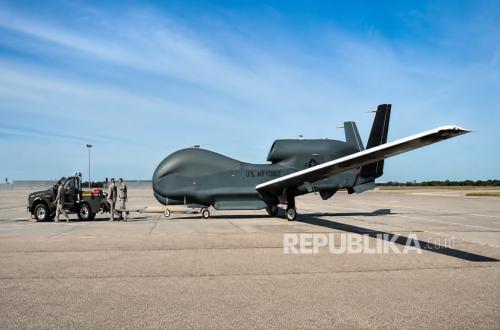
The United States Air Force (USAF) is preparing to take a new generation of unmanned combat aircraft to testing stages much closer to actual warfare operations. Collaborative Combat Aircraft (CCA) will, for the first time, participate in a large-scale deployment exercise during Emerald Flag in December 2026, featuring a scenario that integrates semi-autonomous combat drones alongside fourth and fifth-generation fighter aircraft.
This move marks a new phase following previous tests where the YFQ-44A Fury prototype, manufactured by Anduril, flew in formation with the F-35 stealth fighter. During Emerald Flag, the focus will shift from mere formation flying to more complete air power integration, encompassing communication, command and control, mission execution, and the development of human trust in aircraft capable of performing tasks autonomously.
Lieutenant Colonel Lyndon “OTTO” Bartlett, Director of Operations for the Experimental Operations Unit (EOU) at Nellis Air Force Base, stated that the Air Force has never previously brought CCA into a real-world large-force employment exercise. “The first will take place at Emerald Flag. It will be carried out in December,” Bartlett said during the Air, Space & Cyber Conference 2026, as reported by The War Zone (TWZ).
The EOU has been leading operational experiments on the two primary CCA candidates: the FQ-42 Vengeance by General Atomics and the FQ-44 Fury by Anduril. In June, the US Air Force decided that its initial operational CCA fleet would consist of a mix of both aircraft types.
While full integration in large-scale exercises is set for December, joint flights with the F-3<0xA0>5 have already commenced. Reports indicate that the YFQ-44A Fury has previously flown in formation with the F-35 during US Air Force testing. Anduril confirmed that these flights took place during Agile Combat Employment exercises at Creech Air Force Base, Nevada, in July. During those flights, the Fury and F-35 flew together, though F-35 pilots did not yet directly control the drone.
The company is now moving towards more complex stages. Jason Levin, Senior Vice President of Air Dominance and Strike at Anduril, stated that the company has begun testing known as ‘quarterback integration’. Under this concept, manned fighter crews will eventually be able to issue commands to the drones via interfaces such as tablets.
Anduril has reportedly tested this integration through hardware and software simulations and on its own aircraft, with further demonstrations expected in the coming months. The concept is not merely an F-35 accompanied by a drone; the CCA is designed to be part of a single combat package, receiving mission objectives and executing specific tasks with high autonomy to expand manned aircraft capabilities without putting additional pilots at risk.
Emerald Flag holds significant importance as the US Air Force has long used the exercise to test combat networks, communication architectures, and new command and control systems. Bartlett noted that the December exercise will be the first time the Air Force conducts an end-to-end demonstration of the CCA chain, with drones participating in offensive air operations alongside fourth and fifth-generation aircraft.
While the initial scale may be small, such testing is vital for building trust in the CCA—something difficult to achieve through simulation alone. Trust is a critical issue because CCA are not designed like the MQ-9 Reaper, which is conventionally flown by operators from ground control stations. Bartlett emphasised that these aircraft are not remotely piloted aircraft; they do not have pilots.
Instead, the CCA uses mission autonomy agents to perform parts of its tasks, meaning flight policies, command structures, and interactions with air traffic control must be redesigned. However, ‘autonomous’ does not mean the aircraft can make all decisions regarding the use of force without human intervention. The US Air Force programme focuses on mission autonomy—the ability of the system to execute assigned tasks within specific parameters while humans maintain oversight and direction of the mission.