
US and Saudi Arabia Sign Civil Nuclear Cooperation Agreement
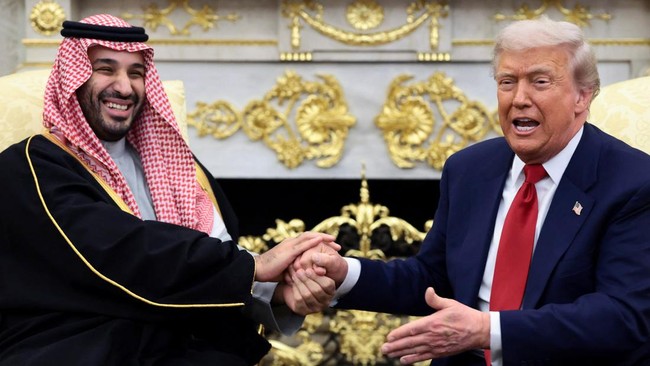
The United States and Saudi Arabia have officially signed a cooperation agreement to develop a civil nuclear programme in the kingdom. The deal establishes a legal framework for long-term collaboration, enabling American companies to supply nuclear technology and equipment to Saudi Arabia.
US Energy Secretary Chris Wright and Saudi Energy Minister Prince Abdulaziz bin Salman signed the bilateral agreement on nuclear safeguards, which is designed to ensure the programme adheres to international standards. “We will uphold the highest standards of nuclear safety and non-proliferation by leveraging the world’s best nuclear technology and scientists from the United States,” Wright stated.
Under the US Atomic Energy Act, civil nuclear cooperation with foreign nations requires congressional review before taking effect. The agreement will now be sent to Congress for scrutiny under Section 123 of the Act.
The deal has sparked immediate criticism from Democratic lawmakers, who argue it could exacerbate tensions in the Middle East, particularly as Washington continues to pressure Iran to curb its nuclear ambitions. Senator Chris Murphy of Connecticut warned that the agreement could trigger a regional nuclear arms race and reduce incentives for Iran to limit its own programme.
Proponents argue the agreement offers significant opportunities for American industry. Westinghouse CEO Dan Sumner described it as a historic step that would strengthen energy security and expand business opportunities for US companies. Westinghouse’s AP1000 pressurised water reactor is among the technologies that could be deployed. Other firms, including Bechtel, BWX Technologies, and Centrus Energy, are also expected to benefit. Jonathan Hinze, president of nuclear market research firm UxC, noted that without such an agreement, American companies would be shut out of the Saudi market, likely losing contracts to competitors from France, Russia, or China.
Saudi Arabia currently relies heavily on fossil fuels for domestic electricity generation, with natural gas accounting for nearly 60% and oil for around 40%, according to the International Energy Agency. The development of civil nuclear power is intended to help the kingdom, the largest oil producer in OPEC, reduce domestic oil consumption and free up more crude for export.