
US and Israel at Odds over Iran — Why?
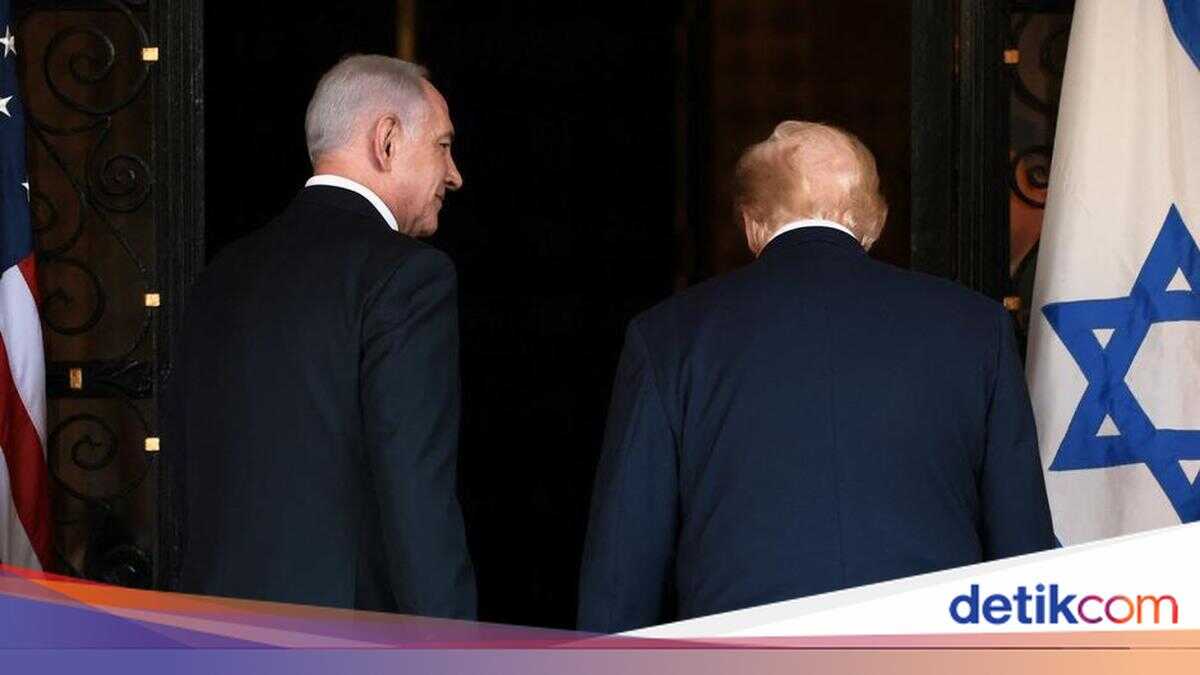
The political closeness between the United States and Israel over decades has often been described as virtually seamless. Yet every time Iran’s name surfaces at the negotiating table, strategic and tactical fissures between the two allies re-emerge.
Their solidarity becomes crucial ahead of US negotiations with Iran scheduled for Tuesday (17 February) in Geneva, Switzerland. From Washington’s side, special Middle East envoy Steve Witkoff and President Trump’s son-in-law Jared Kushner are expected to attend, whilst Tehran will be represented by Foreign Minister Abbas Araghchi.
On paper, Washington and Tel Aviv share the same objective: Iran must not become a nuclear power and must not expand its regional influence. However, the interests, timelines, and methods chosen by the two nations differ sharply.
These differences have become increasingly apparent amid domestic turmoil in Iran — large-scale protests in January and February that were violently suppressed — as well as tightening American sanctions. The intensity of communication between Donald Trump and Benjamin Netanyahu has also increased, signalling that Iran has once again become the axis of diplomacy between the two heads of state.
Agreement on the threat, disagreement on priorities
Both the United States and Israel see threats not only in Iran’s nuclear programme but also in its ballistic missile development and Tehran’s network of proxy militias. In principle, according to political analyst Reza Talebi from Leipzig, there is no fundamental difference: both wish to prevent Iran from becoming a nuclear superpower and expanding its influence in the Middle East.
Yet differences emerge on the classic question: how to achieve that goal, and what risks each side is prepared to bear.
For Washington under Trump, the priority is to reach a new deal with Tehran. The strategy is known as “maximum pressure” — a combination of harsh economic sanctions and military deterrence signals.
Conversely, Israel views any agreement with Iran with deep suspicion. For the Netanyahu government, the issue is not merely the content of an agreement but rather the assumption that Iran would comply with it over the long term.
US strategy: Pressure to bring Iran to the table
According to foreign policy and Middle East security analyst Shokriya Bradost, American policy is clearly directed towards a new deal. To force Tehran back to the negotiating table, Washington is tightening sanctions, particularly on Iranian oil sales. The target: to drain the regime’s revenue sources and close off every economic “breathing space.”
This pressure is intended to push Iran into surrender — or at least into making major concessions — without triggering a large-scale regional war.
Military instruments remain on standby but serve more as a deterrent. The deployment of aircraft carriers in the Middle East region and rhetoric about military options function as a show of strength. Although Trump has speculated about “regime change,” Bradost assesses that a large-scale attack remains only a last resort. Washington is reluctant to be drawn into a prolonged war or occupation of Iran and has no concrete plan to forcibly overthrow the regime.
Israel’s perspective: A narrowing window
Israel views the situation with greater urgency. In a speech in Jerusalem, Netanyahu emphasised that any deal with Iran must include the complete dismantlement of Iran’s nuclear infrastructure and the removal of enriched uranium — not merely restrictions on enrichment levels.
Furthermore, according to Israel, Iran’s ballistic missile programme and its support for proxy actors in the region must also be included in any negotiating package.
“There must be no enrichment capability whatsoever — not just halting it, but dismantling the equipment and infrastructure that enable enrichment,” Netanyahu stated firmly at the annual conference of presidents of American Jewish organisations. He added that he was sceptical Iran would honour any agreement with Trump.
Whereas Washington opts for gradually increasing pressure, Israel is pushing for swift and decisive action. Netanyahu fears that future political changes in America could once again strengthen Iran’s position. For this reason, Israel hopes for more direct American involvement — militarily if necessary.
Political and strategic interests
These differences are also inseparable from a broader context. Netanyahu’s visit to Washington is not solely about Iran but also an effort to repair Israel’s international image. According to Talebi, Israel’s reputation in America and Europe is eroding — which in turn reduces Washington’s readiness to appear as an unconditional supporter of major Israeli military action against Iran.
For the United States, the considerations are more complex. Washington must balance Israel’s interests with the positions of European allies, global energy market stability, and the risk of regional escalation.
From the White House’s perspective, a limited deal with Iran might buy time and prevent a wider conflict — even if it does not fully address all of Israel’s security concerns.