
US and Iran Sign Temporary Peace Agreement: Key Details Revealed
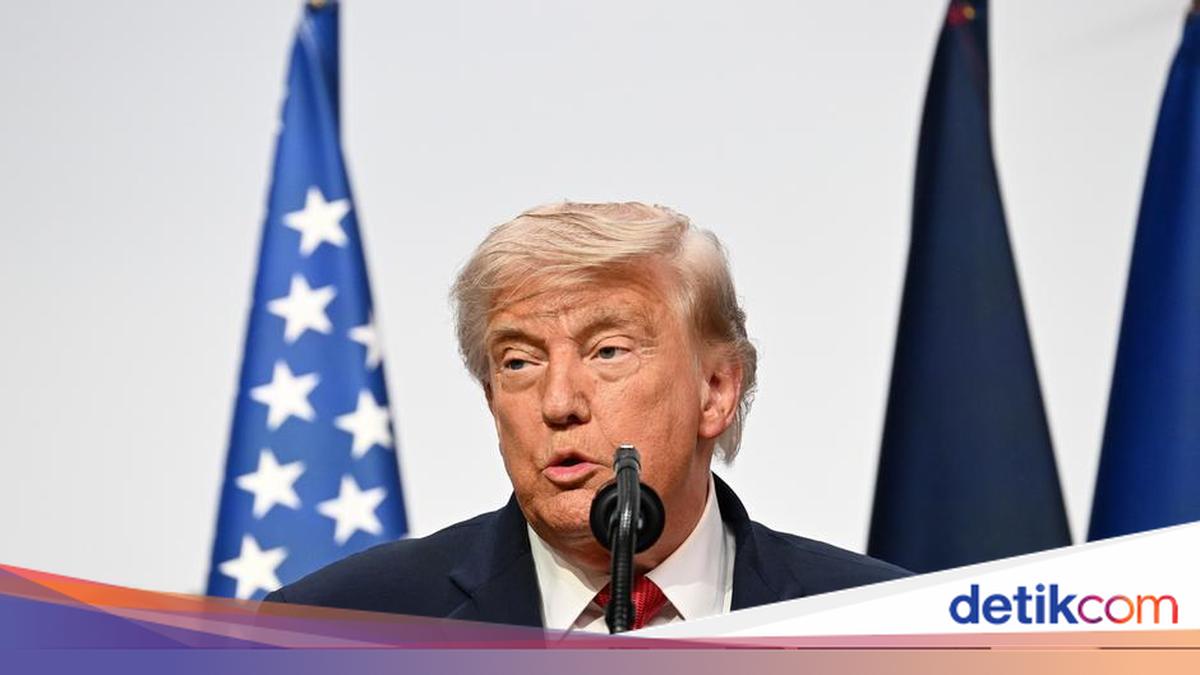
The White House has stated that President Donald Trump signed a Memorandum of Understanding (MoU) to end the war with Iran while at Versailles, France. The signing process was not witnessed by the media. “It’s been signed,” Trump said as he left the Palace of Versailles after attending a dinner with French President Emmanuel Macron. “I signed it at Versailles. I just signed it.” Throughout history, many important treaties have been signed at Versailles to end wars or territorial disputes. The most famous is the 1919 treaty that formally ended World War I, though its harsh terms for Germany are considered by some historians to have been a trigger for World War II.
On Thursday (12/06), Iran also confirmed that it had signed a temporary agreement to extend the ceasefire for 60 days and reopen the Strait of Hormuz. “We have completed the text of the Islamabad Memorandum of Understanding with the presidents’ signatures. Now it is time to test the implementation of the agreement,” said Foreign Ministry spokesman Esmaeil Baqaei, according to the state news agency IRNA. Baqaei added that the official signing ceremony, previously planned to take place in Switzerland, is no longer necessary. Pakistan, which acted as mediator, stated that a ceremonial signing event would be held on Friday (19/06).
Pakistan’s Prime Minister Shehbaz Sharif also confirmed on X that the US and Iran had signed the agreement and agreed to Pakistan as the mediator. According to Sharif, the agreement “will take effect immediately,” with Iran promptly reopening the Strait of Hormuz and the US ending its naval blockade.
Following the signing of the temporary agreement to halt hostilities for 60 days, the next challenge is implementation. The agreement extends a ceasefire originally reached in April 2026, although both sides have exchanged attacks in the months since. A senior US official read out the 14-point temporary agreement to the media. Under the agreement, all military operations on all fronts, including in Lebanon, will be halted “immediately and permanently” for 60 days. Both parties also committed to “respecting the sovereignty and territorial integrity of each other and not interfering in each other’s internal affairs.”
The Strait of Hormuz, which had been blockaded, will be gradually reopened. One clause states that Iran will “make every effort” to guarantee the safe passage of commercial vessels through the Strait of Hormuz for 60 days without charge. The document also states that shipping traffic will resume “immediately,” taking into account the need to remove technical and military obstacles and conduct mine-clearing operations. The closure of this vital shipping lane has had a significant impact on the global economy.
The agreement also addresses Iran’s nuclear programme and the potential development of nuclear weapons. “The Islamic Republic of Iran reaffirms that it will not acquire or develop nuclear weapons,” the memorandum states.
Key points of the agreement include: The US, Iran, and their respective allies declare an immediate and permanent cessation of all military operations on all fronts, including in Lebanon. The US and Iran agree to respect each other’s sovereignty and territorial integrity. Both parties commit to negotiating and reaching a final agreement within a maximum of 60 days, which can be extended by mutual consent. Following the signing, the US will begin lifting the naval blockade of the Strait of Hormuz, with the blockade fully ending within 30 days. Shipping traffic will return to pre-war levels. Iran will guarantee the safe passage of commercial vessels without charge for 60 days. The US and its partners will formulate a plan worth at least $300 billion for the reconstruction and development of Iran. The US commits to ending all types of sanctions against Iran. Iran reaffirms that it will not acquire or develop nuclear weapons. Iran will also reduce its stockpile of uranium enriched to lower levels under the supervision of the International Atomic Energy Agency (IAEA).
Editor’s note: The agreement does not clarify whether Iran is required to surrender or transfer its nuclear material abroad. Until a final agreement is reached, Iran’s nuclear programme will remain in its current state, while the US will not impose new sanctions or deploy additional troops. The US Department of the Treasury will provide exemptions for the export of crude oil, petroleum products and their derivatives, and related services from Iran, including banking, insurance, and transportation transactions. The US commits to fully reopening access to frozen or restricted Iranian funds and assets. The US and Iran will establish an implementation mechanism to monitor compliance with the memorandum of understanding and adherence to the future final agreement. After the signing, and once points 1, 4, 5, 10, and 11 of the memorandum have begun to be implemented and are continuously applied, the US and Iran will commence negotiations on a final agreement focusing on the remaining points. The final agreement will subsequently be ratified through a binding UN Security Council resolution.