
US and Iran Reportedly Agree to Reopen Strait of Hormuz
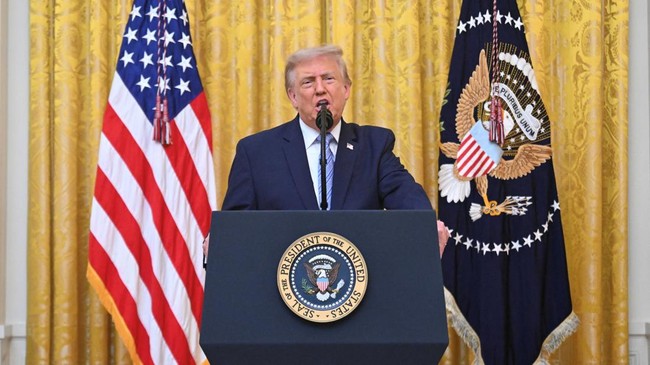
The United States, Iran, and Oman are reportedly close to reaching a temporary agreement to reopen shipping lanes in the Strait of Hormuz. The administration of President Donald Trump is said to be targeting an official announcement on Wednesday (5/8/2026) local time. Citing Axios, discussions on the agreement have been ongoing for several weeks and aim to revive a ceasefire between the US and Iran, whilst opening the door for renewed negotiations regarding Tehran’s nuclear programme. This development comes after Trump decided last weekend to postpone plans for a major military strike against Iran in order to give diplomacy a chance. However, if an agreement is not reached soon, the military option reportedly remains on the table. According to information from two regional sources and a US official, the draft agreement regulates ship traffic management in the Strait of Hormuz for a 60-day transitional period, with the possibility of extension. Under the scheme, all vessels entering the Persian Gulf would use the northern lane within Iranian waters. Meanwhile, ships exiting towards the Arabian Sea would use the southern lane in Omani waters, under joint coordination with Iran. No fees or levies would be charged to vessels transiting during this 60-day period. Additionally, the parties will work together to clear naval mines from the middle lane of the Strait of Hormuz within 30 days. Once the lane is declared safe, it will be used for two-way traffic under a permanent agreement to be negotiated by Oman and Iran. If realised, the deal would grant Iran a greater role in managing ship traffic in the Strait of Hormuz, a position it did not hold before the armed conflict broke out. However, a similar effort nearly succeeded about three weeks ago, when mediators believed Iran had agreed to a deal, but Tehran subsequently launched attacks on ships in the region, triggering two weeks of fighting and bringing the region to the brink of a wider war. Regional sources say the mediation process involves not only Oman but also Qatar, Pakistan, and Saudi Arabia. The White House has also played an active role in the negotiations, including through intensive communication between President Trump’s special envoy Steve Witkoff, Iranian Foreign Minister Abbas Araghchi, and Omani Foreign Minister Badr al-Busaidi. According to two regional sources, Araghchi agreed to the deal in principle last weekend, pending approval from Iran’s Supreme Leader Mojtaba Khamenei and the Supreme National Security Council. A US official and one regional source indicated that the approval process was completed on Tuesday, paving the way for a potential official announcement soon. The Strait of Hormuz is one of the world’s most strategic energy chokepoints, with approximately one-fifth of global oil trade passing through the narrow waterway, making any developments regarding its security a primary concern for energy markets and global investors.