
US Alliance with Asian Allies Tested as Military Drills Are Cut
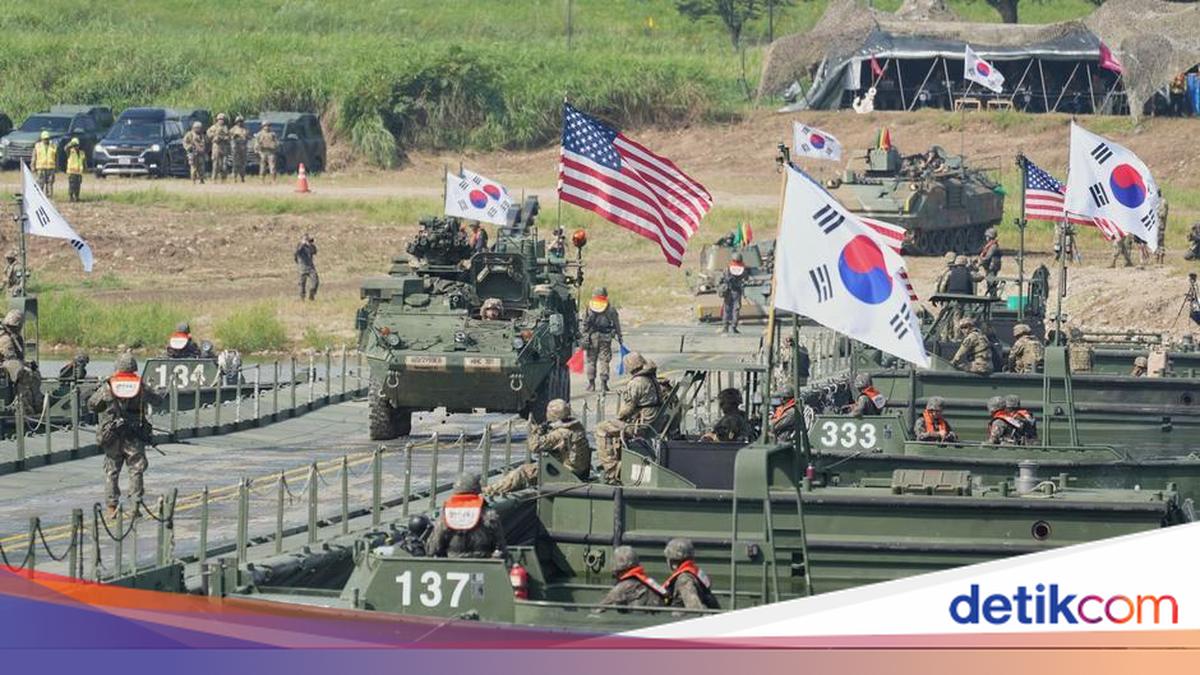
South Korean President Lee Jae Myung on Tuesday (18/8) stressed the importance of the defence alliance with the United States, after US President Donald Trump ordered a reduction in joint Washington-Seoul military exercises and said communication with North Korean leader Kim Jong Un was going “very positively”.
Meanwhile, Japan affirmed that security cooperation with the United States and South Korea is “crucial” for regional stability.
Trump on Sunday (16/8) abruptly announced that the Pentagon would scale back joint military exercises with South Korea, which he called “inappropriate and hostile”. A day later, Trump said the decision was linked to his relationship with Kim and Seoul’s refusal to help the US-Israel war against Iran.
At a cabinet meeting on Tuesday, Lee said South Korea’s national security would grow stronger if its alliance with Washington remained solid.
“As we build our strength, our value and importance as an ally will grow,” Lee said.
Trump cuts drills, Seoul affirms alliance
The 11-day Ulchi Freedom Shield exercise began on Monday (17/8), as planned. The exercise is designed to improve readiness for a possible war with North Korea.
The South Korean and US militaries had previously said this year’s exercise would be similar in scale to previous years and would incorporate lessons from recent conflicts, including the experience of North Korean troops on the Russia-Ukraine battlefield. Both countries also stated that the exercise is defensive in nature.
However, it is not yet clear which parts of the exercise will be reduced following Trump’s order.
South Korea’s presidential office said the exercise does not reflect “any intention to attack North Korea or raise tensions on the Korean Peninsula”. Lee also said the fundamental purpose of the exercise is not “to treat a particular entity as an enemy, but to protect the safe and peaceful daily lives of the people”.
Japanese Defence Minister Shinjiro Koizumi on Tuesday voiced support for security cooperation between Japan, the US and South Korea.
“As Japan faces the most serious and complex security environment of the post-war era, cooperation between Japan, the United States and South Korea is vital for regional peace and stability,” Koizumi said during a visit to Australia.
Trump had previously linked the reduction in exercises to South Korea’s reluctance to help Washington in the war against Iran.
“Wait a minute. We have 39,000 troops there, protecting you from Kim Jong Un, your neighbour, and you won’t help us in a very easy military operation in Iran. That’s strange,” Trump said.
Trump praises Kim, communication back in focus
On Monday (17/8), Trump said Kim had responded to the approach he had made. Asked whether Kim had actually given a response, Trump replied, “Yes, he has.”
Trump said the communication was at a “very positive” stage, but gave no further details. He also again praised Kim.
“I actually made the situation much safer. Kim Jong Un has always treated me with great respect,” Trump said. “I understand him. He understands me.”
Trump and Kim met three times during Trump’s first term in the White House, but have not met since Trump returned to office.
South Korea’s presidential office previously expressed hope that the good personal relationship between Trump and Kim could pave the way for “meaningful dialogue” between the two countries. However, South Korea’s Unification Ministry said it could not confirm whether communication between Trump and Kim had actually taken place.
“Communication channels between the two sides do exist, but we cannot verify the specific content of those exchanges,” a ministry spokesperson said.
North Korea itself has not yet given a public response to the development. North Korea’s Foreign Ministry previously accused the US and South Korea of planning increasingly provocative exercises and pledged to respond with a “new level of deterrence”.
Concerns over US commitment grow
Trump’s policy shift has sparked concerns about the reliability of Washington’s security commitments in East Asia. The US stations around 28,500 troops in South Korea as part of the country’s defence since the 1950-1953 Korean War, which ended in an armistice without a peace treaty.
US Democratic Senator Jack Reed condemned the decision to reduce the exercises and said China and Russia are “watching how easily this president abandons America’s allies”.
In South Korea, concerns have also emerged amid declining trust in the US. A JoongAng Ilbo and East Asia Institute survey showed 46.4 percent of respondents considered the US an “untrustworthy partner”, while 45.4 percent considered it “trustworthy”. This is the first time since the question was first asked in 2017 that more respondents said they did not trust the US.
Leif-Eric Easley, a professor at Ewha University, said Trump views alliances as investments that must yield returns.
“Trump views alliances as investments that should pay regular dividends, or reserve funds that can be drawn upon when other projects are not going well,” Easley said.
Meanwhile, Lee’s office said Seoul and Washington are still discussing practical and military contributions South Korea could make to help restore freedom of navigation in the Strait of Hormuz.
Amid these developments, the US is also moving the aircraft carrier USS George Washington from the Pacific region to the Middle East to replace the USS Lincoln, which has completed a long deployment. The change comes as US allies in the region face pressure to increase their defence spending.
Source: jawawa.id (https://jawawa.id/newsitem/us-alliance-with-asian-allies-tested-as-military-drills-are-cut-1787115208)
Originally published by detikcom (https://news.detik.com/dw/d-8625023/pangkas-latihan-militer-aliansi-as-dengan-sekutu-asia-diuji), translated from Indonesian