
US Again Bans Palestinian President from Attending UN General Assembly
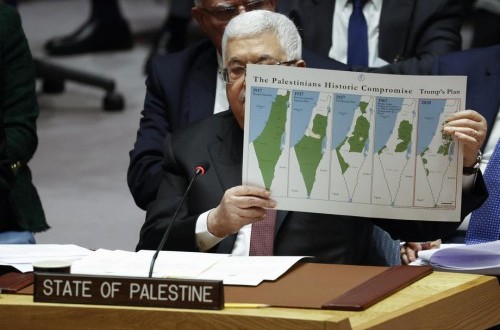
NEW YORK – The United States government has refused to grant a visa to Palestinian President Mahmoud Abbas to attend the UN General Assembly in New York next week. This move repeats a similar action that drew widespread criticism last year.
In a statement on Wednesday, the US Department of State stated it would expand visa restrictions to include members of the Palestine Liberation Organization (PLO) and officials from the Palestinian Authority (PA).
The Palestinian Ministry of Foreign Affairs condemned the decision as an “unjustifiable step that contradicts efforts to restore trust, develop Palestinian-US relations, and create the political climate necessary for the implementation of a two-state solution and the achievement of peace and stability in the region.”
The US Department of State stated that the expansion of restrictions on PA officials was being implemented as a “consequence of their failure to implement reforms—which contradicts their commitment to the United States—as well as their ongoing activities that undermine the prospects for peace.”
Abbas is among those barred from entering the United States to attend the meeting.
The Trump administration took similar steps last year, obstructing Abbas and other senior Palestinian officials from attending the UN General Assembly in person. This decision triggered criticism regarding Washington’s role as the host of the UN headquarters and prompted calls to move major UN meetings regarding Palestine to Geneva. The UN General Assembly subsequently voted 145 to 5 to allow Abbas to deliver his speech remotely.
As part of the reasoning for again banning Palestinian officials, the US explicitly cited Palestinian efforts to pursue legal action against Israel through international courts and to garner broader international recognition for a Palestinian state.
“The Palestinian Authority is taking steps to internationalise the Israel-Palestine conflict, including through the International Criminal Court (ICC) and the International Court of Justice (ICJ), [as well as] seeking to bypass negotiations by seeking unilateral recognition,” the US Department of State statement read.
In response, the Palestinian Ministry of Foreign Affairs rejected the US claim that “the steps taken by the Palestinian people to pursue the United Nations (UN), the International Court of Justice, and the International Criminal Court are actions that undermine peace.”
“Pursuing the path of international institutions and international law is a legitimate right of the State of Palestine and a peaceful and legal way to protect our people and their rights. This cannot be equated with the policies of occupation, settlement construction, annexation, forced displacement, and settler violence, which are the real threats to a two-state solution and the opportunity for peace,” the statement added.
This move once again places Washington and Israel in a position at odds with much of the international community regarding Palestinian diplomatic representation and statehood status.
Palestine is recognised by 157 UN member states, representing more than 80 per cent of the organisation’s total membership.
The US decision comes amidst increasing violence by Israeli settlers and the forced displacement of residents in the occupied West Bank. In August, the UN stated that settler violence had reached “unprecedented levels,” with over 1,430 incidents recorded as of 10 August.