
US$10 Million in Exports Held Up, PT Dua Kuda Workers' Union Highlights Curator's Performance
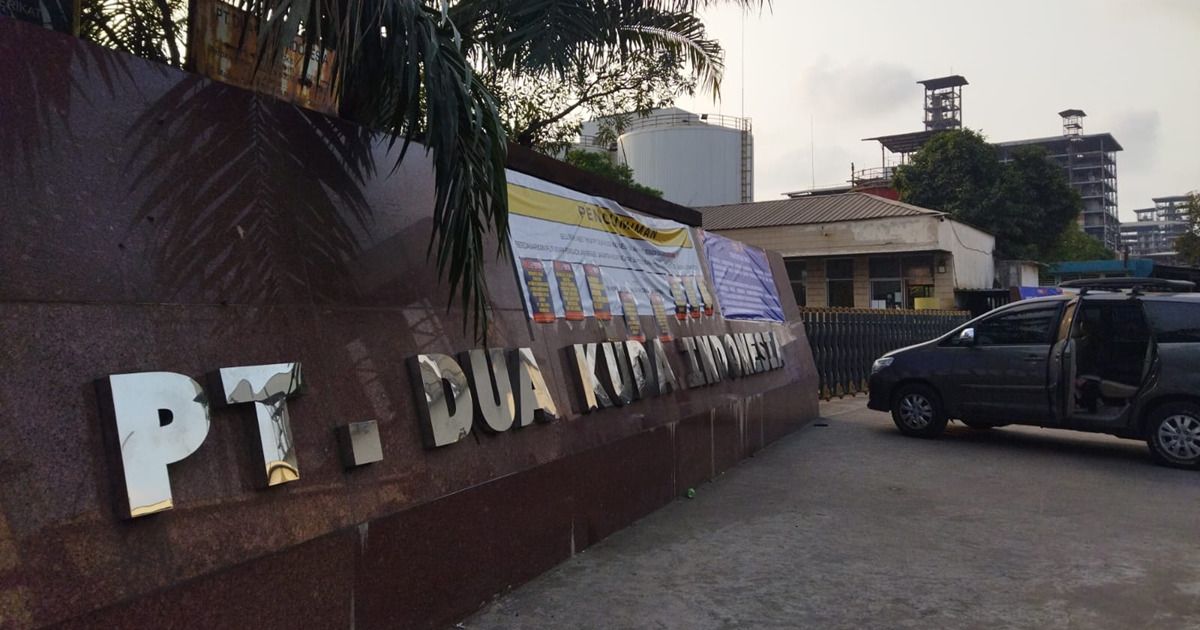
The workers’ union of PT Dua Kuda Indonesia has highlighted the suboptimal implementation of the company’s going concern process, as production activities continue to face obstacles in the export process. This situation is considered to have the potential to hamper efforts to maintain the company’s operations amid bankruptcy proceedings.
PT Dua Kuda Indonesia is a manufacturer of chemicals and processed palm oil derivative products (oleochemicals). Established in 2006 in the Jakarta Bonded Zone, the company is a subsidiary of the Chinese group Zanyu Technology Group Co., Ltd.
The company was declared bankrupt by the Central Jakarta Commercial Court on 12 March 2026. This decision sparked widespread controversy because the oils and fats producer, which has been operating since 2006, was considered financially healthy, leading to rejection from workers and protests over legal certainty for foreign investment in Indonesia.
Ridwan, a representative of the PT Dua Kuda Indonesia Workers’ Union, said the main issue currently lies in the customs system in the KBN Marunda area, which has locked the company’s export activities. According to him, the company can still carry out the production process, but the resulting products cannot be released for export. This condition makes the going concern scheme that has been running less than optimal.
“So we can produce but cannot release the products for export,” said Ridwan in a written statement on Sunday (16/8/2026). The workers’ union together with management have conveyed the issue to the Supervisory Judge, requesting that obligations to customs and excise authorities be resolved promptly so that the products that have been produced can be exported again. “Without the export of these goods, it seems the going concern is in vain, futile. We can produce but cannot get the goods out,” he said.
According to Ridwan, the issue of payment to Customs and Excise is one of the main obstacles. The curator argues that the bill is included in the list of fixed receivables, so payment to one party could potentially trigger similar requests from other creditors.
However, from the workers’ union’s perspective, the settlement of these obligations should be viewed in terms of its benefits for the company’s operational continuity. “Logically, these rules are made for the benefit. So they should prioritise that benefit,” said Ridwan.
He considered it ineffective if the costs of running the going concern have been incurred, but the company cannot sell and export the products it has produced. The workers’ union is also pushing for the third phase of the going concern to be approved immediately because raw material and product inventories continue to decline. Ridwan assessed that delays in resolving customs payments are also slowing the company’s operational recovery, while the company’s legal counsel has previously raised objections several times regarding the curator’s attitude, which was deemed less than professional.
From an operational perspective, the product inventory known to the workers’ union currently stands at around 5,000 tonnes and has begun to be sold to the domestic market because exports cannot yet run normally. This condition has prompted the workers’ union to request that the third phase of the going concern be approved immediately. “The stock itself is dwindling day by day because sales are continuing. That is why we are emphasising to the curator that the third phase should be approved immediately,” said Ridwan. Production continuity requires certainty of raw material supply as well as smooth sales, especially through export markets.
Based on information from the interview, the products that cannot be exported are estimated to reach around 7,815 tonnes with a value of around US$10 million, although this figure is an estimate that still requires further confirmation from management regarding the details of the affected commodities. Ridwan explained that there is a significant difference between domestic and export selling prices, so the obstruction of exports has the potential to reduce the company’s revenue. Amid the operational and bankruptcy issues, the payment of workers’ salaries and allowances has so far continued to run normally.
“As for salary payments, plus allowances, they are still running normally to this day,” he said.
The delay in BPJS payments that had occurred was still considered within tolerable limits because it was related to administrative processes.
The continuity of the going concern is very important not only for the company and creditors, but also for the jobs and incomes of the workers. The latest meeting with the curator showed room for more open communication, but the workers’ union assessed that there has been no concrete change in resolving the issue.
“Up to now, what we read or see from the curator is still the same. It means their performance, in terms of professionalism, seems lacking in our view,” he said. He questioned the effectiveness of the going concern if the company is allowed to buy raw materials and produce, but the resulting products cannot be exported.
All of the company’s export activities are currently affected by this issue. The raw materials that previously entered, around 6,000 tonnes, are estimated to be able to produce around 7,000 tonnes or more of products after processing. If the export route is reopened, these products can be immediately absorbed by the market so that the company’s production and sales cycle can return to a more normal pace. “It should have been finished if exports were opened. The goods would have been sold out and the production and sales circulation would be normal,” said Ridwan. The workers’ union is still evaluating the next steps while waiting for developments in communication between the curator, the Ministry of Law and Human Rights, and other relevant parties.