
URI, Leadership, and the Transformation of Public Services
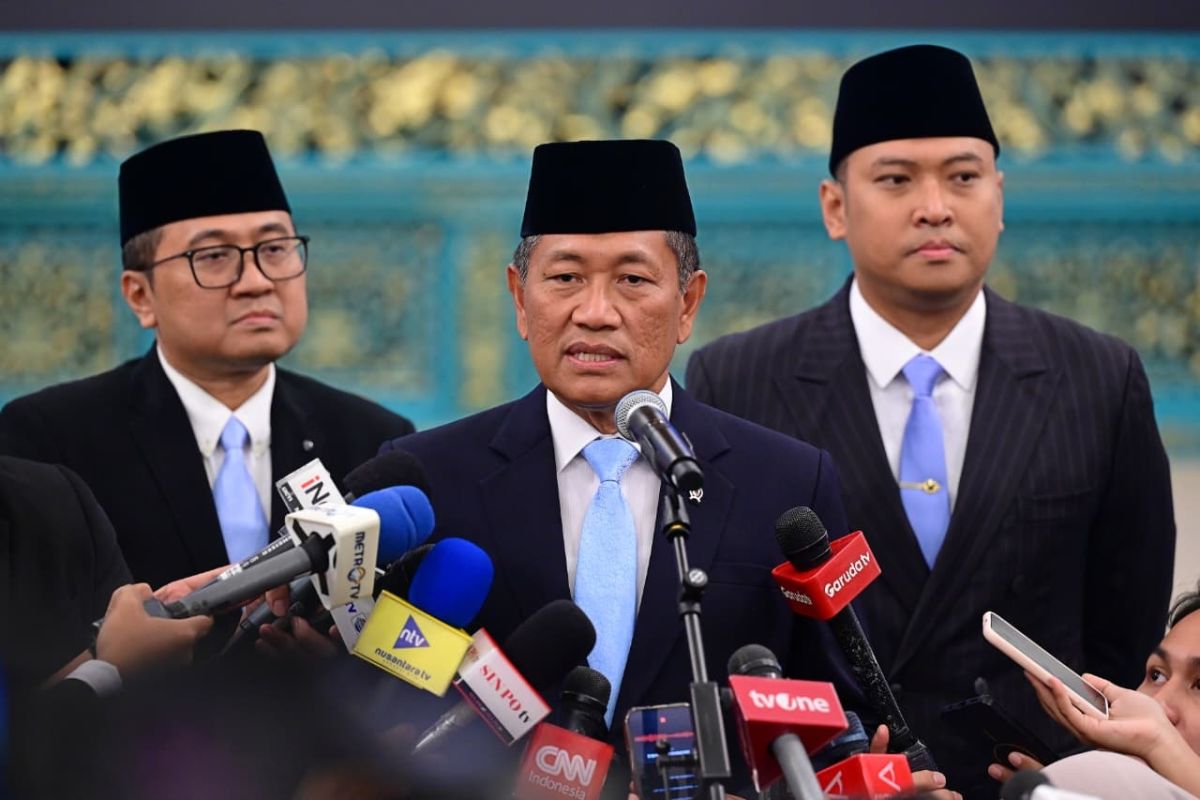
Jakarta (ANTARA) - On 22 July 2026, President Prabowo Subianto inaugurated the Governor and Deputy Governor of the Universitas Republik Indonesia (URI), marking the beginning of a new phase in the development of Indonesia’s national education ecosystem. Based on the Decree of the President of the Republic of Indonesia Number 8/P of 2026, Donny Ermawan Taufanto was inaugurated as the Governor of URI and Yos Sunitiyoso as the Deputy Governor of URI.
The formation of URI is inspired by long-standing practices in several countries. Various nations possess specialised educational institutions designed to prepare prospective leaders for strategic positions within the government. One example cited is France, which previously operated the École nationale d’administration (ENA) and has since transformed into the Institut National du Service Public (INSP) as an educational institution for prospective public officials.
Within the institutional structure of URI, the Governor oversees the National Education Management Agency. This agency, in turn, oversees the Excellence School Management Agency, the Higher Education Management Agency, and the National Institute of Public Administration (LAN). The placement of LAN within the URI ecosystem indicates that the government is not building a new institution from scratch, but is instead consolidating agencies that already possess extensive experience in human resource development.
Statements from URI Governor Donny Ermlaman Taufanto reinforce this policy direction. According to him, LAN will eventually be integrated into the URI structure with an expanded range of tasks and functions.
To date, LAN has focused on the development of civil servants (ASN); however, moving forward, its scope of development will be expanded to include the preparation of human resources for state-owned enterprises (BUMN). This means that the function of LAN will evolve from a competency development agency for civil servants into an institution that plays a role in preparing leadership and management for the public sector.
In the ‘President Prabowo Answers’ programme released by Bakom RI, President Prabowo Subianto also discussed the discourse regarding the formation of specialised academies for regional heads and directors-general within ministries and agencies. This discourse is part of the development of URI as an institution projected to provide specialised education for prospective and incumbent government leaders. Proposed forms include academies for governors, regents, and directors-general.
Following the development of these ideas, these academies are ultimately projected to remain within the structure and auspices of URI. Thus, President Prabowo’s initiative is not merely about establishing new educational institutions, but also aims at the strengthening and integration of educational and training institutions for public officials.
This model is important to view as part of the effort to build a more integrated government leadership development system. Education for regional heads and high-ranking bureaucratic officials does not stop at increasing individual capacity, but is directed towards establishing standards for competence, leadership, and sustainable governance.
Strengthening URI
In bureaucracy, implementing institutional innovation, whether through mergers or similar processes, is not an extreme measure, provided it ensures that government organisations can respond to social, economic, and political dynamics with greater flexibility. The main point to convey is that this expansion of mandate brings regulatory consequences that are not simple. Institutional integration cannot be achieved through changes in organisational structure alone; it must be accompanied by the arrangement of legal norms that provide certainty regarding the position, authority, institutional relationships, and coordination mechanisms between organisations within URI.
If the government’s chosen policy path is to expand the authority of the National Institute of Public Administration (LAN)—either through its integration into URI or by adding new functions to provide education for employees of state-owned enterprises—the most fundamental aspect is ensuring that its regulation aligns with the existing legal framework. Currently, the position and function of LAN are still regulated under Law Number 20 of 2023 concerning Civil Servants (ASN).
Source: jawawa.id (https://jawawa.id/newsitem/uri-leadership-and-the-transformation-of-public-services-1789750749)
Originally published by Antara (Indonesian) (https://www.antaranews.com/berita/5748297/uri-kepemimpinan-dan-transformasi-pelayanan-publik), translated from Indonesian