
Urgent Need for Human Trafficking Law Reform: Addressing New Modus Operandi and Ensuring Victim Justice
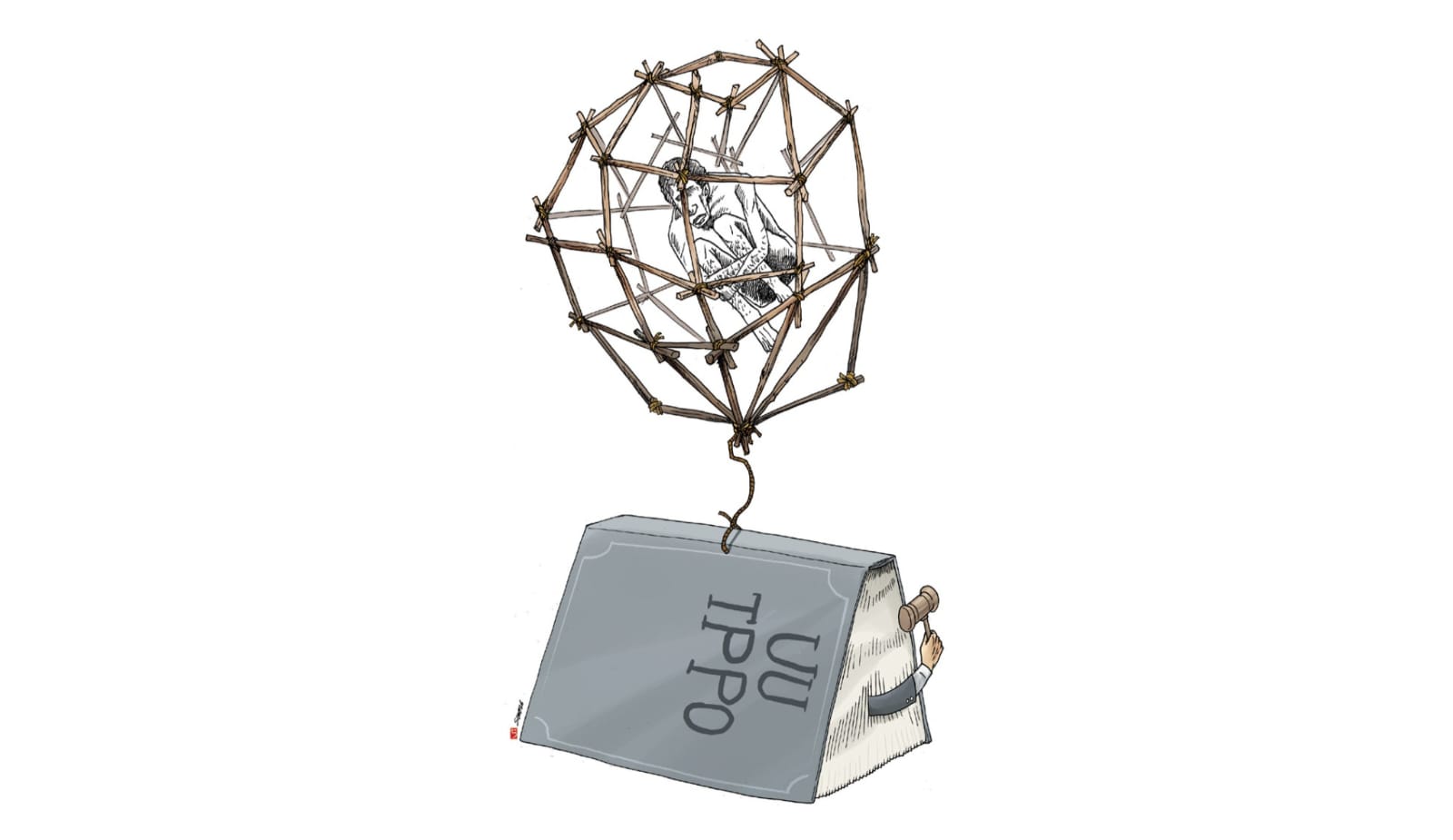
Technological advancements and social dynamics have drastically shifted the landscape of crime in Indonesia. However, our national legal framework remains stuck in the past. Law Number 2/2007 on the Eradication of Human Trafficking (UU TPPO) is no longer sufficient to stem the complexity of such crimes. The urgency to revise the UU TPPO is not merely an academic discourse, but a pressing necessity to protect citizens from increasingly sophisticated and covert modern slavery practices.
One of the primary reasons for this legal reform is the inability of Law No. 21/2007 to encompass new modes of operation, particularly cyber-based crimes such as online scamming. Human trafficking no longer always relies on conventional mechanisms like physical detention or transport; instead, it is operated by hackers and online facilitators without the need for direct interaction. Even more concerning, recruitment patterns are now dominated by social media without face-to-face contact. The targets have also expanded into formal and academic sectors, as seen in the case of the ‘Kampus Merdeka’ internship programme to Germany, which involved 33 universities.
Every 30 July, the world observes the World Day Against Trafficking in Persons—a momentum that should serve not just as a ceremony of compassion, but as a call for a critical evaluation of the legal architecture built to protect humans from modern slavery. In Indonesia, this architecture rests on the UU TPCO, an instrument that, after nearly two decades, is showing structural cracks that can no longer be patched by judicial interpretation or technical policies alone. It requires a comprehensive revision.
Normative Gaps
The UU TPPO was formulated in an era when human trafficking was imagined as a conventional crime limited to face-to-face recruitment, physical cross-border movement, and exploitation in domestic or localised settings. However, crime does not wait for the law to evolve. Online exploitation through social media recruitment, digital debt bondage, and forced labour controlled from outside territorial borders via messaging applications are realities not fully captured by existing articles. This creates a ‘norm gap’—a distance between the written law and the reality it intends to regulate. As this gap widens, the law loses its grip at the most critical moments, precisely when crime mutates faster than legislative revision.
This urgency is exacerbated by a more fundamental issue: the UU TPPO, like many of our criminal laws, remains too focused on punishing field perpetrators and fails to ensnare the intellectual architects behind them. The principle of criminal liability that only targets the ‘executing hand’ without reaching the ‘designing brain’ is a failure known by modern criminal law experts as structural impunity—a situation where the legal system systematically fails to apprehend those most responsible because they are hidden behind organised crime networks.
Alongside the vulnerability of new methods, the aspect of victim recovery in judicial practice remains far from just. Restitution rights for victims often hit a wall of legal uncertainty. In many court rulings, the provision of restitution is frequently accompanied by the option of substitute imprisonment, lasting only about 2-3 months to a maximum of 1 year, as noted in research by I Kadek Sudiarsana regarding restitution fulfilment in Kupang, NTT.
Consequently, perpetrators tend to choose additional imprisonment rather than paying financial compensation, ultimately leaving victims without any financial recovery. This failure in execution is further worsened by the absence of asset forfeiture powers during the early stages of investigation. Ironically, current law enforcement often settles for apprehending low-level intermediaries with weak economic power, while the intellectual actors and corporate distributors continue to evade the law.
The weakness of this handling system has direct implications for the physical and psychological safety of survivors. Many trafficking victims are simply sent home without receiving proper care in safe houses or assistance with social and economic reintegration, making them highly vulnerable to re-victimisation. Current handling also frequently ignores the suffering of survivors, such as the case of Mariance Kabu, who suffered severe physical and psychological trauma resulting in disability, yet faced neglect or even negative stigma from her own community. The state must not allow survivors to struggle alone amidst the shadows of trauma and social alienation.
Victims are Subjects, Not Objects
This is the critical point that must be academically asserted: the paradigm for handling human trafficking must no longer stop at the logic of repression against perpetrators, but must shift decisively towards a victim-centered approach. Modern victimology teaches that victims are not merely pieces of evidence or functional witnesses for the state’s proof, but legal subjects with substantive rights to recovery.
The relevant legal maxim here is ‘restitutio in integrum’—restoration to the original state—a principle asserting that criminal justice is incomplete without restorative justice for the victim.