
Urban Rail in Jabodetabek: Infrastructure Gradually Shaping the Direction of Society's Civilisation
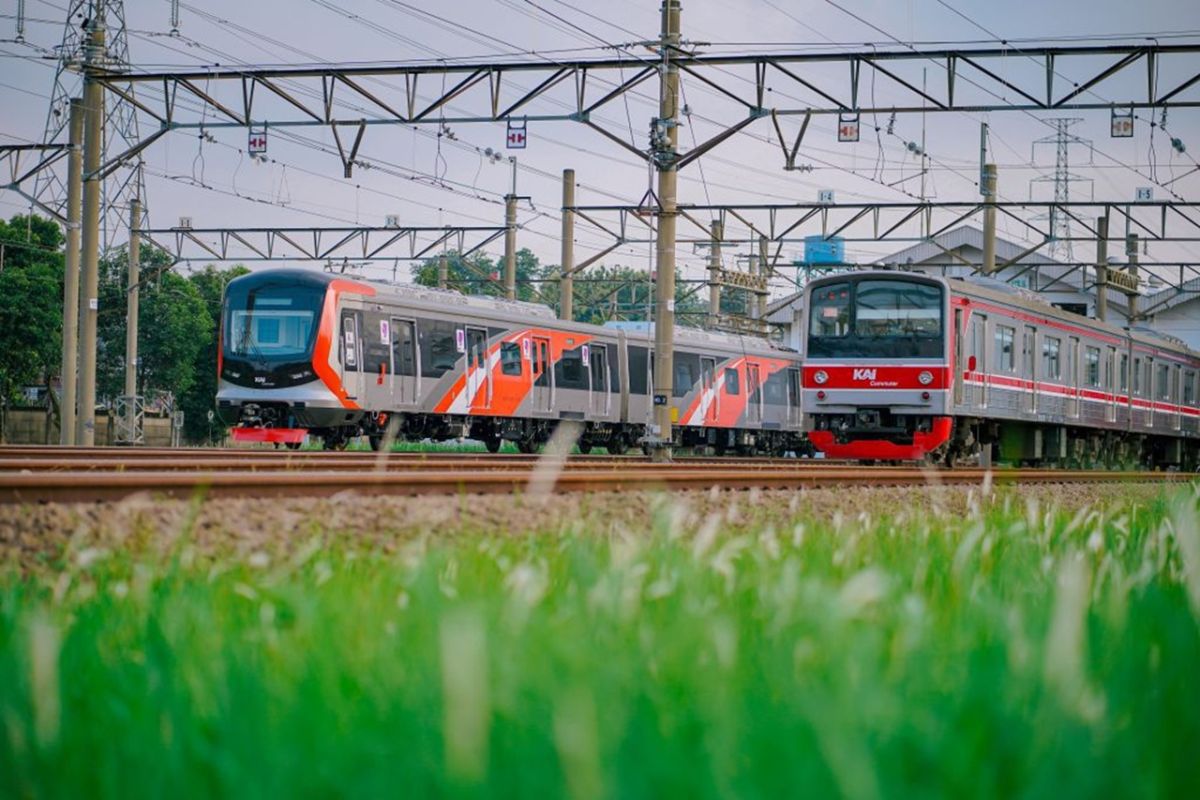
In the continuously developing Jabodetabek area, mobility has become an essential part of daily life. Travel time, arrival certainty, and daily costs influence how society works, carries out activities, and organises its life.
In this condition, the KRL Jabodetabek service has evolved into a transportation system that has a broad impact on society. Improvements in service, capacity additions, and ease of intermodal transfers are shaping new, more efficient and affordable mobility patterns.
Vice President of Corporate Communication at KAI, Anne Purba, stated that changes in societal behaviour occur alongside improvements in transportation system quality.
“When the transportation system is built to be more reliable, society will follow naturally. The choice to use public transport emerges because the service provides convenience, affordability, certainty, and a sense of security,” said Anne.
This trend is evident from the growth in passenger volume across all KRL Jabodetabek lines. On the Bogor line, the number of passengers increased from 102,054,022 in 2022 to 133,040,885 in 2023, then 145,920,264 in 2024, and reached 155,009,997 in 2025. From January to March 2026, the number has reached 38,203,481 passengers.
On the Cikarang line, the number of passengers was recorded at 55,660,235 in 2022, increasing to 71,636,443 in 2023, then 84,426,385 in 2024, and reaching 85,936,774 in 2025. In the first quarter of 2026, the number of passengers has reached 21,717,664.
The Rangkasbitung line also shows consistent growth, from 43,317,716 passengers in 2022 to 62,085,471 in 2023, then 69,999,362 in 2024, and 77,552,716 in 2025. From January to March 2026, the number reached 20,197,205 passengers.
On the Tangerang line, the number of passengers increased from 15,333,812 in 2022 to 21,451,515 in 2023, then 24,430,279 in 2024, and 27,280,453 in 2025. In the first quarter of 2026, the number of passengers was recorded at 6,987,364.
Meanwhile, the Tanjung Priok line also shows an upward trend, from 1,599,107 passengers in 2022 to 2,676,363 in 2023, then 3,377,633 in 2024, and 3,531,311 in 2025. From January to March 2026, the number of passengers reached 873,658.
The growth across all these lines reflects gradual changes occurring in societal life. More regular travel times allow daily activities to be planned better. Time previously spent on journeys can now be used for work, study, or rest.
From a cost perspective, affordable fares keep mobility accessible to various societal layers. This efficiency provides room for expenditure on other productive needs such as education, health, and household requirements.
Changes in transport mode choices also impact road conditions. Traffic density decreases, journeys become smoother, and accident risks can be reduced. The environment improves due to reduced pollution from private vehicle use.
Around stations, economic activities grow following passenger movements. Vendors, onward transportation services, and housing develop within an increasingly active ecosystem. Connected mobility directly drives societal economic movement.
KAI views that appropriate transportation infrastructure can shape societal habits in the long term. When networks become more connected, capacity increases, and services become more integrated, the shift to public transport will occur naturally and sustainably.
Strengthening urban rail systems in various cities outside Java and Sumatra is becoming increasingly relevant as mobility needs rise. Consistent network and capacity development will expand benefits for society while encouraging more efficient lifestyles.
“Transportation infrastructure that is continuously strengthened brings increasingly reliable public services. The impact is felt in societal life, journeys become more efficient, time is better preserved, and activities can run more productively,” Anne concluded.