
Urban purification on the brink of oblivion
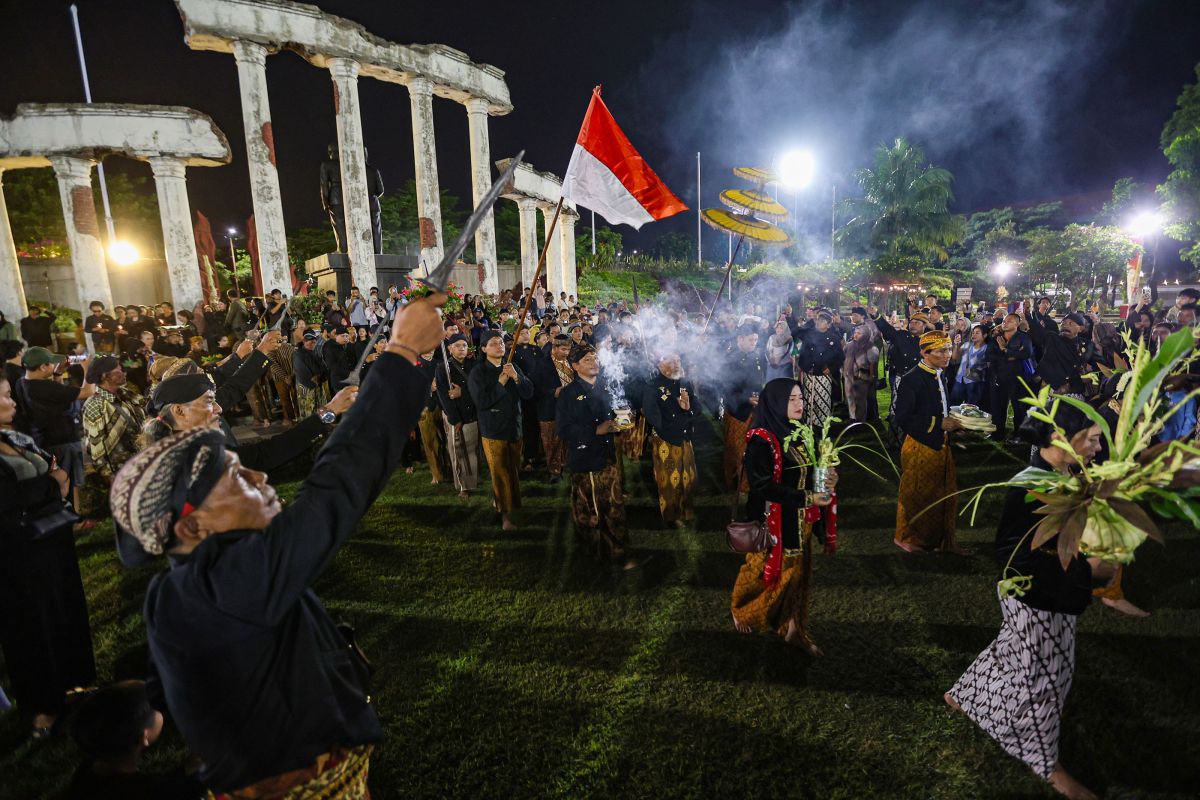
Surabaya (ANTARA) — The sound of gamelan music pierced the air at the Heroes Monument area in Surabaya on that evening. A gunungan (ceremonial construction) was carried slowly, Javanese chants were sung, whilst wayang kulit shadow puppets began performing the story of “Dewa Ruci” before residents who had gathered from across the city.
Amidst metropolitan traffic, tall buildings, shopping centres, and digital screens that never sleep, Surabaya suddenly seemed to pause and reflect on itself.
The Ruwatan Kota (city purification) ceremony held by the Surabaya City Government on Surabaya’s 733rd founding anniversary was more than just an annual cultural agenda. Behind the offerings, processions, and wayang kulit performances lies a far more profound question: what exactly is a modern city like Surabaya attempting to purify?
In Javanese tradition, ruwatan is understood as an effort to expel sengkala (misfortune) or negative energy so that life returns to balance. This ritual emerged from the understanding that humans do not live in isolation, but exist within relationships with nature, social spaces, and spiritual values.
When this tradition is transferred to modern urban spaces, its meaning expands. What is being purified is not merely the individual, but also the direction of development, collective memory, and even how a city treats its people.
At this juncture, Surabaya’s ruwatan becomes compelling to examine more closely. It is not merely cultural romanticism, but rather a mirror of the anxiety of a large city searching for equilibrium amid the acceleration of our age.
Surabaya has grown as a metropolitan city with an increasingly rapid rhythm. Streets are being widened, business districts are expanding, and apartments and commercial centres continue to emerge. By many indicators, Surabaya ranks amongst cities with progressive economic and infrastructure growth in Indonesia.
However, modern urban development almost always carries the same risk. Cities become efficient, but gradually lose their inner space.
This phenomenon is evident in increasingly individualistic urban life. Traditional city villages are displaced by modernisation, spaces for resident interaction are shrinking, whilst younger generations are more familiar with global digital culture than the local traditions of their own surroundings. Surabaya is not alone in facing this situation. Major cities around the world experience the same.
Several cities have subsequently attempted to find their way home through culture. Seoul has revitalised the traditional cultural area of Bukchon Hanok Village as part of South Korea’s modern city identity. Japan maintains local festivals amidst technological advancement. Even Paris preserves traditional markets and public art spaces as part of its city’s social identity.